August 28 2026
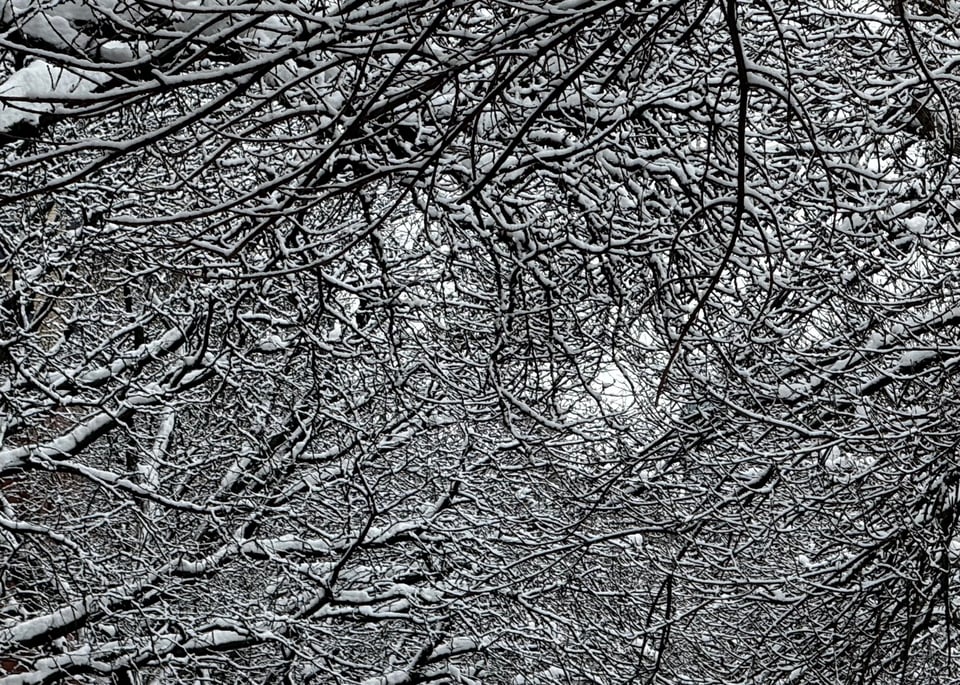
The trees give you an idea of when Tim died: more specifically, it was eight months ago. On January 25th, I was about to get off the couch and go to a screening at Anthology Film Archives. I checked my email in that compulsive way I keep vowing to renounce. Someone I knew once had written to say that Tim Thomas had died in his sleep the night before.
Tim was my roommate and bandmate and first serious collaborator and something like a brother. We spent almost every day of 1988 and 1989 together. When I started dating Deborah in 1990, the frequency of our meetings dropped. By the end of the Nineties, Tim and I were talking only intermittently. There was no precipitating event or judgement—it was standard young people dispersal. We had a lovely lunch together in 2013 and I meant, as one does, to see him more.
After his death, there were weeks of Tim feelings and Tim memories but no spiritual movement. I could not reach the stage when the dead leave their cloudy corner and take up a spot in daily life. (They don’t sit still any more than we do.) My process didn’t start until July, when I read something Sarah Nicole Prickett said about her late brother in a conversation with Patrick Cottrell: “I think about him more now than when he was alive. It’s like that’s where he’d gone to live, inside my head.” So Tim, my Tim, could be in my head and, given the right circumstances, maybe meet some people. We don’t always get to know the people that we know. The friends and family in Tim’s life today did not necessarily meet the kid I knew in college, when I was also a kid.
I made my first studio recording in the summer of 1987 with Tim, and our band, Dolores. We did three songs. When the rough mix was done, Tim and I dropped acid and went to the beach. We listened to the songs in his car and I was positive I had made the right choice. I was twenty and I was always going to be in a band. When we were done swimming and looking at our toes, we went to the record store on Thayer Street. I bought Sonic Youth’s Sister and Tim bought Pleased To Meet Me by The Replacements. He made enormous meat and bean tacos at his apartment. I don’t miss drugs but I wish I could have that day again, or to love things the way we did that day.
That fall, we stared living together on Benefit Street and, in November of 1987, we recorded a full album with Dolores. Dolores was me on bass and guitar and vocals, Tim on vocals and guitar and trombone, Alex Wright on bass, and Dave Reid on drums. When I am less embarrassed by my own efforts, I might upload the whole tape. For now, I will share the one song I love without qualification. It’s a cover of “Tomorrow Never Knows,” from Revolver, and it’s Tim’s show. He sang and played guitar and produced it. (On this track, I am playing a bass with all the strings tuned to D, most of my playing distorted and feeding back.)
A loved one dying can signal our own small death, the letting go of the person who knew the one who passed. My 1987 Sasha is more gone now. And for the people who live in our heads, what happens when they don’t show up? When they get waylaid? When we don’t carry them often enough or well enough? And what if the person only lives in our head, because nobody ever met them?
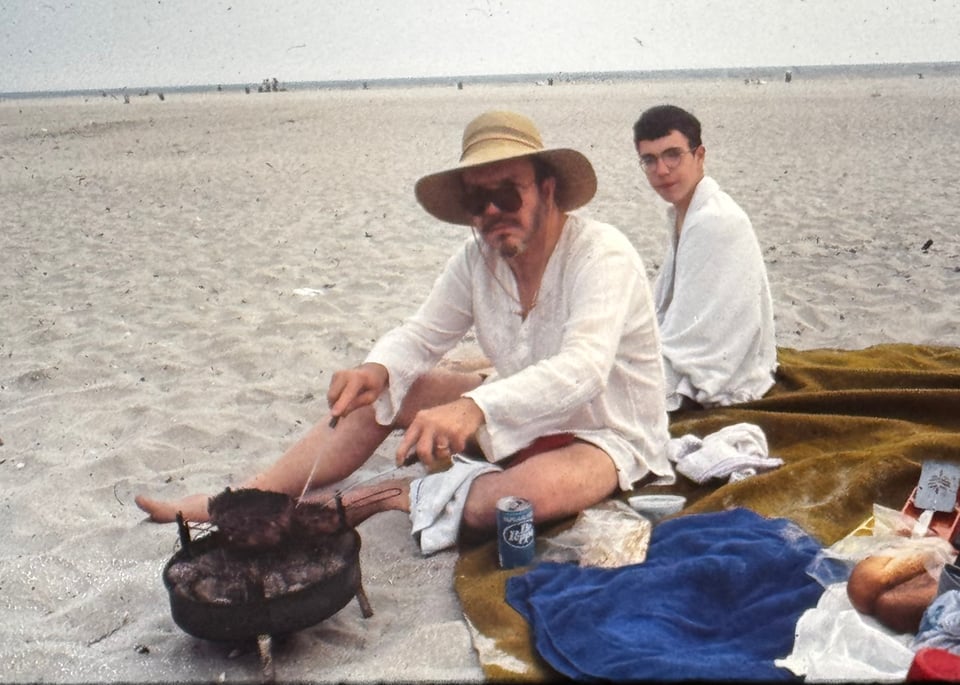
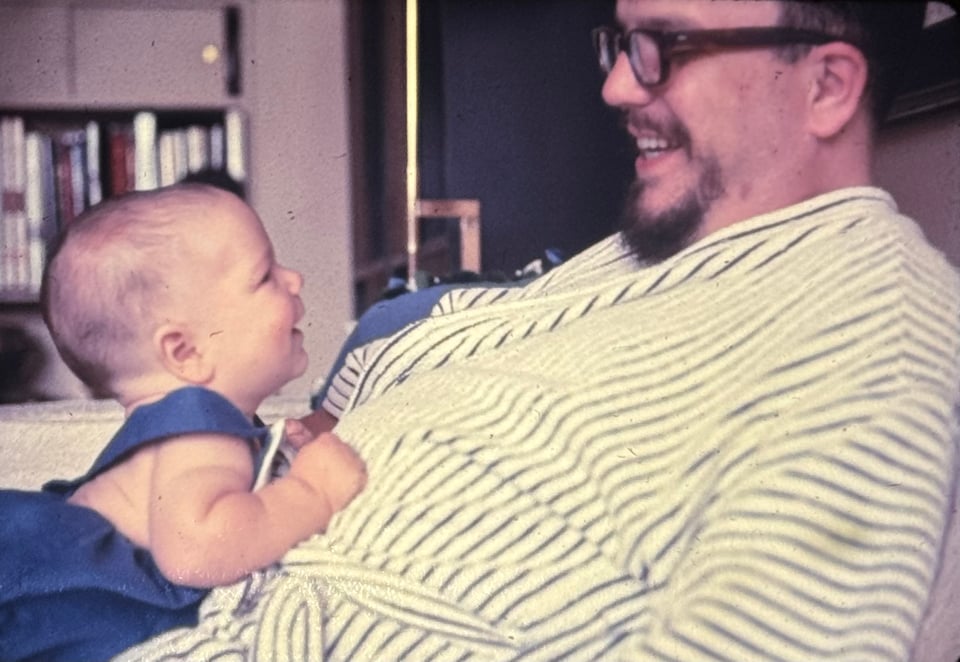
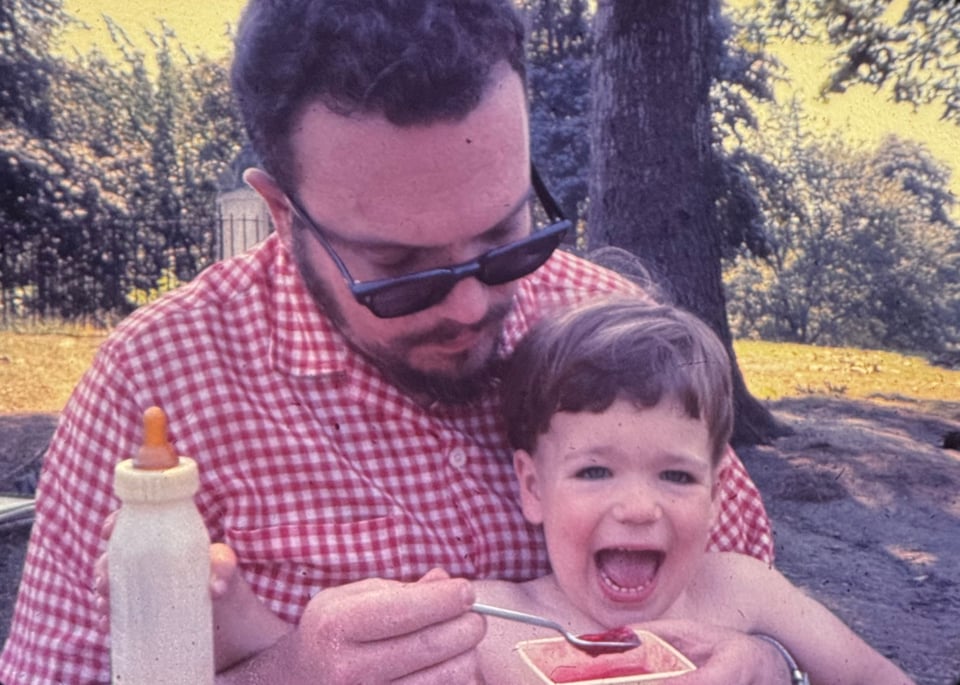
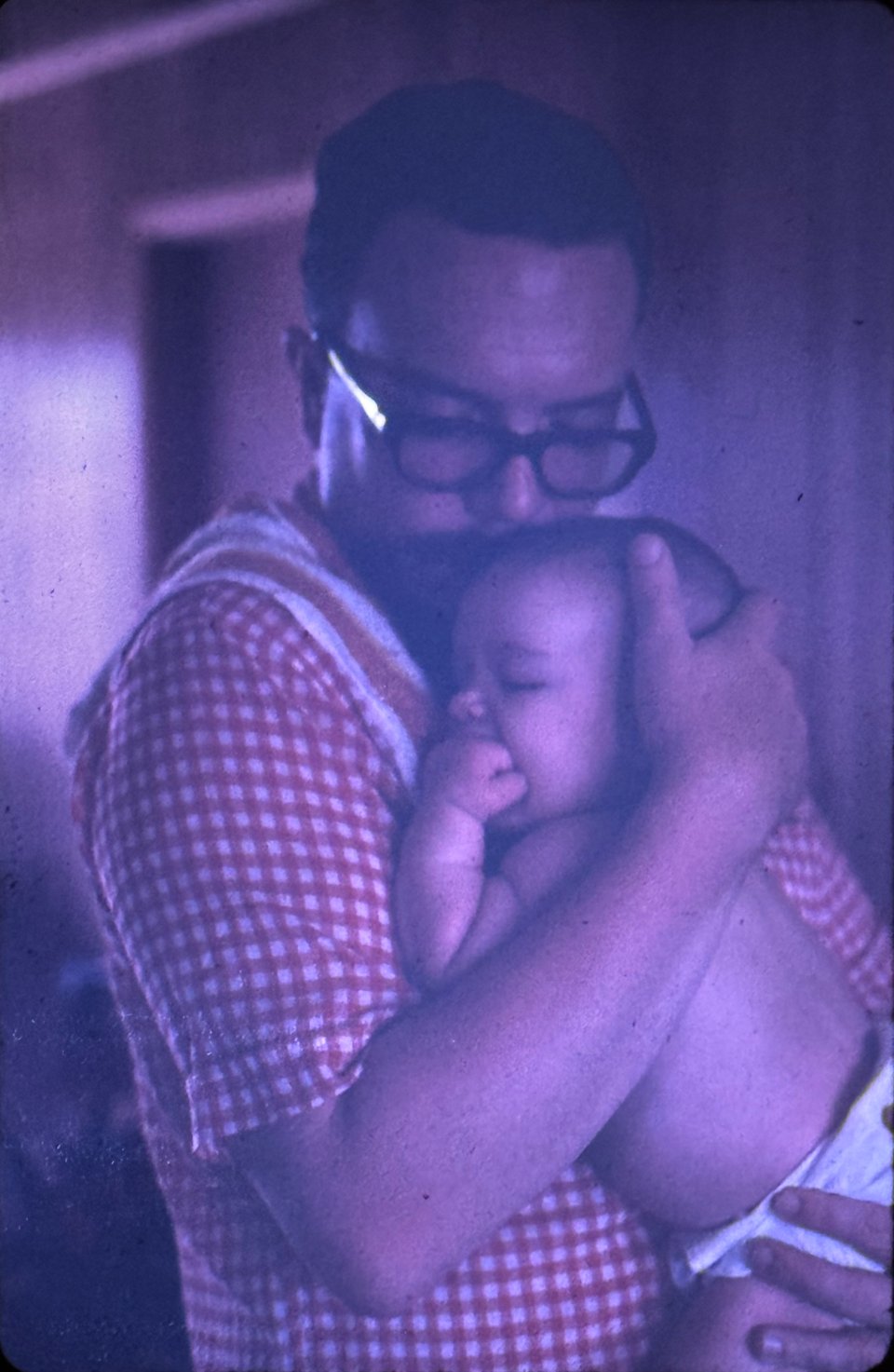
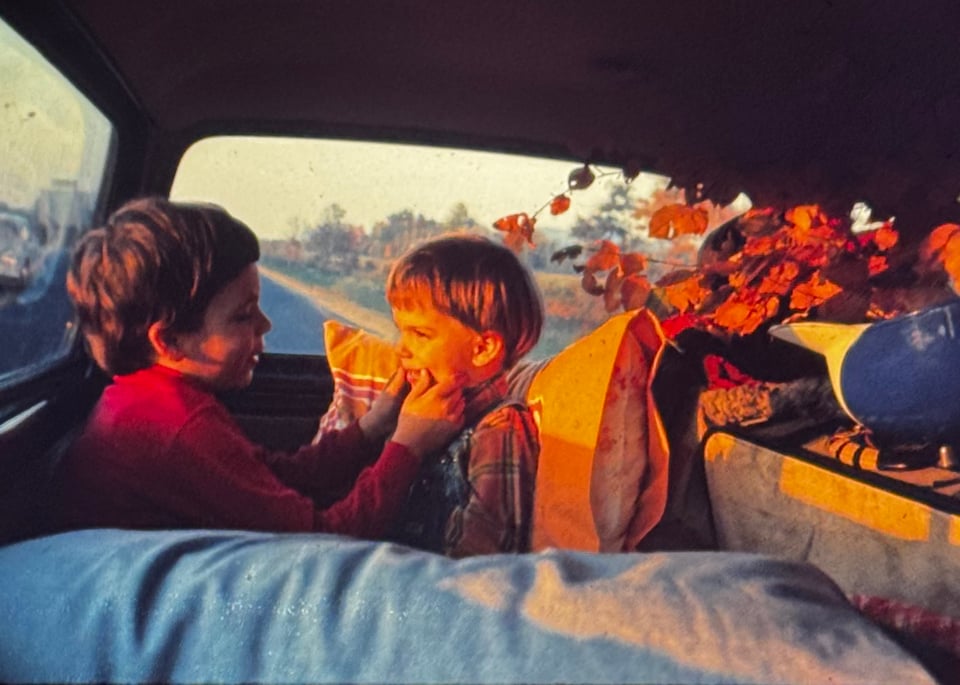
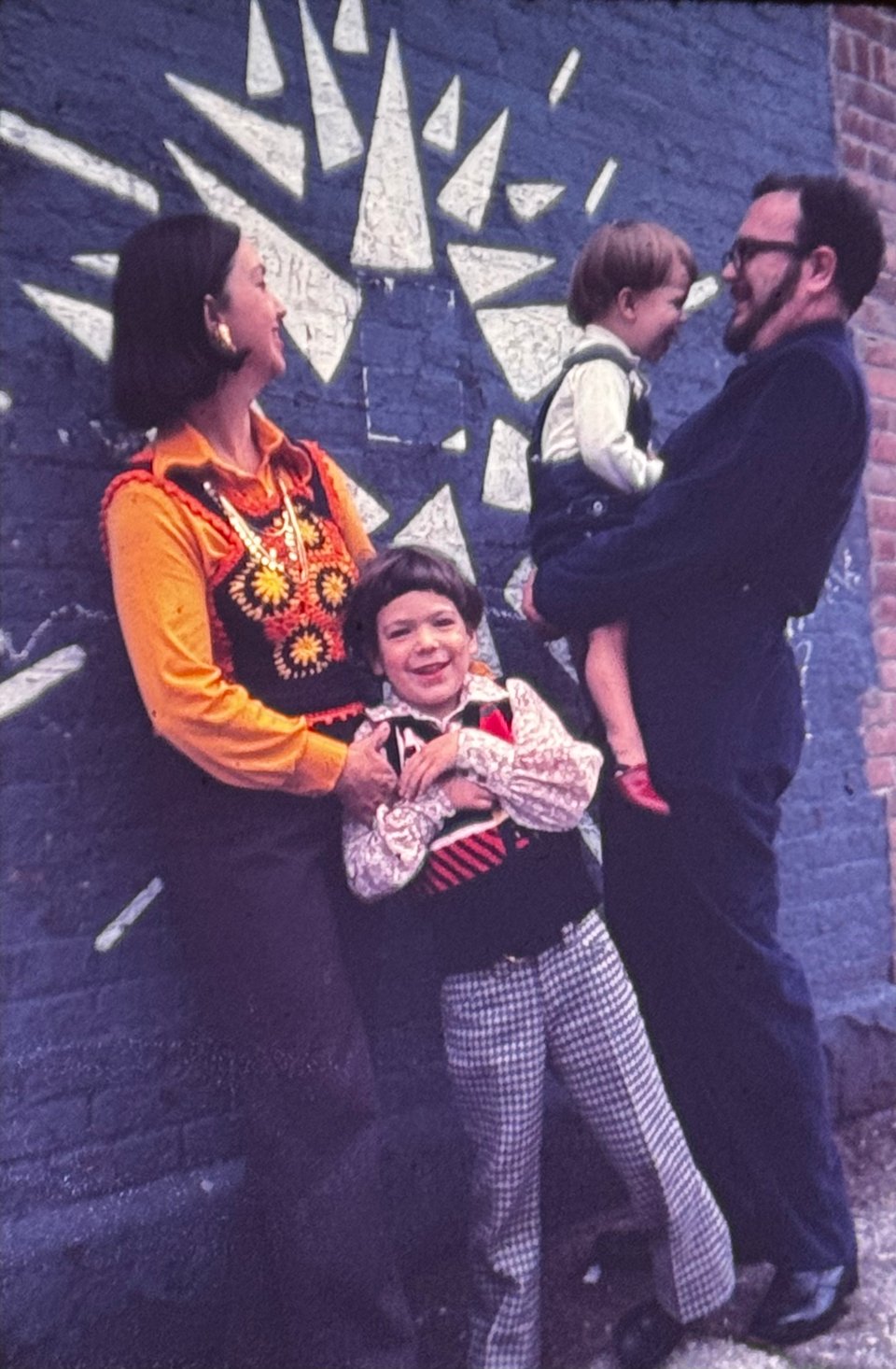
Nobody in my life, other than my brother and mother, knew my Dad. Neither of my kids met him, as he died right before Sam was born, when I was 30. Heidi and her kids never met him. Nobody I’ve ever worked with met him. I feel a little like I am making him up when I talk about Robin C. Jones. We are going through slides my parents took, which is the source of the photos you see here. They’re not unknown to me because we used to have little slide viewings as a family but it’s more than thirty years since I’ve looked at them. I know that he cried easily and was in good spirits almost always and loved me unconditionally. If I needed evidence, there are some letters. And these images.
At some point in 1989, Tim Thomas and I went to Fire Island with a few of his friends. One day, around dusk, when we were swimming, the weather turned. To me, it just seemed like some wind and rain. I was a decent swimmer and a veteran of Jones Beach, which I believe is the beach my dad and I are sitting on above. Tim and I were down the beach a ways from everyone else. I dove in and swam a bit and decided to turn around when the tide flipped me over and sucked me down. Down and up were not available to me. I didn’t know how deep the water was or how far out I was. I surfaced for maybe a second, tops, and went back down. The endless safety discussions and procedures and protocols were not so common then. I had no idea what to do, if there even was an option. And then Tim was there, pulling me out of the water. He was a big, loving guy and this was maybe his biggest, most loving moment. I will never know exactly how he happened to have his eye on me. But he did. I was a bit embarrassed to tell the three women we were with about what happened, as I had a crush on at least one of them. I don’t remember what we did actually say.
I assume Tim taught his two kids to swim. The memorial is in October, so I’ll have a chance to ask.
Tim was generous to a fault and wore his passions openly. I was a bit finicky, so when I brought home the Nick Drake Fruit Tree box set, my main worry was that Tim would get big thumbprints on the vinyl. And he did. But if I love Pink Moon, Tim somehow loved it more and added some of Drake’s songs to his solo acoustic shows, which were beautiful. I couldn’t sing, really at all, and I wasn’t playing any solo shows. I made tapes for dance parties and posters for gigs.
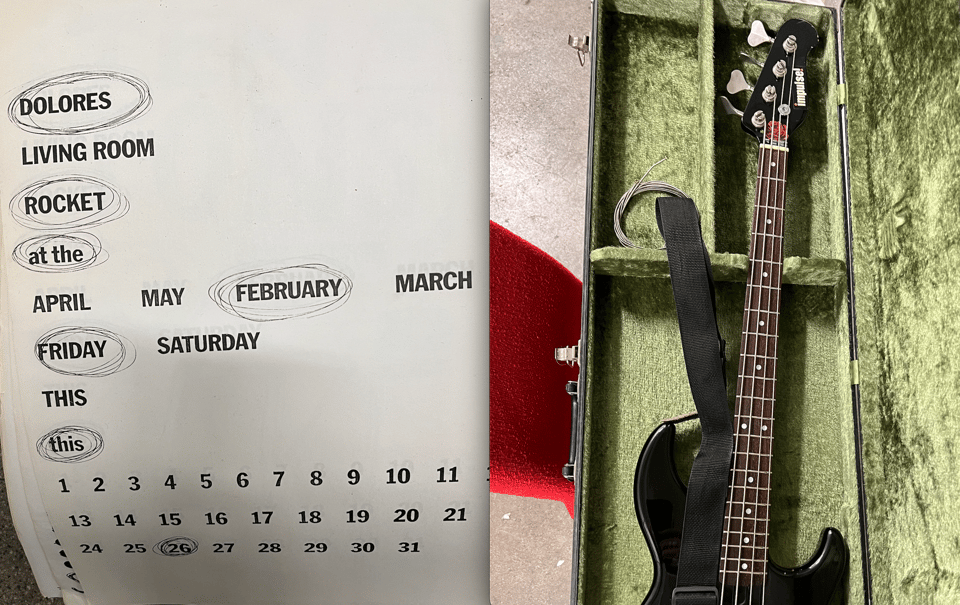
We all moved to New York in 1988 and Tim and I kept living together, in a huge roomy apartment on 6th Avenue and Flatbush. Dolores limped along and then stopped moving. I moved to Manhattan and started Ui in 1990; Tim kept playing out with Babe the Blue Ox. We went to each other’s shows until we didn’t. I am looking forward to hearing about all the people he became after that, all the life beyond the limit of Tim in my head.
only if you can
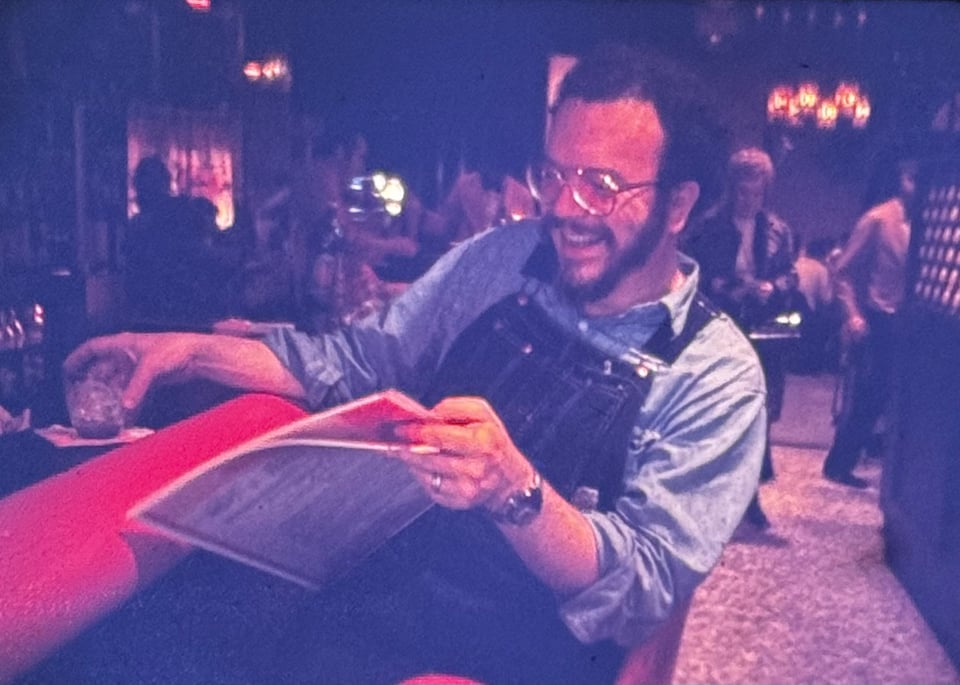
I am trying to make less of these smaller deaths, to hopefully give up the pointless task of arriving at a conclusion. Ui felt like the band I had been waiting for and was a deeply satisfying project. At the time, it seemed important to think of it as some kind of crystallization or manifestations. From thirty years later, the photos do something different. The other people in the frame are of more interest than any concept of a personal goal. When I’m dead, I’ll know what my purpose was.
In November, Tortoise played Bowery Ballroom and I was able to take my step-daughter, Piper. I saw some old friends, heard Johnny Machine talk about the barber shaving the Spiderman logo into his hair (I could not see it but it was plausible), and heard some songs I had heard many times before. I went home and dove into an older life, with a different outcome.
Tortoise was the first band to bring Ui on the road. I sent a copy of our EP from 1993 to Touch & Go Records, where Doug McCombs (Tortoise bassist) was working. He intercepted it, copped permanently, and then called me at the end of 1994 to see if we wanted to do some shows along the East Coast in May. It was our first opportunity to get out of New York, and away we went with Labradford and Tortoise. This show at Chicago Filmmakers in May of 1995 was one of the ones we didn’t play. We got to kick back and watch Tortoise play. I recommend downloading that show.
An even better example of what the band sounded like then is this show at the Dead Pigeon in Muncie, recorded a few weeks before we joined the tour. I only know what the first version of Tortoise sounded like by looking up the 1992 and 1994 shows that make up only eight of the 220 shows on the Internet Archive. For a moment, there was even a bit of singing. The version of the band we got to know had Dave Pajo in place of Bundy K. Brown, replaced a few years later by Jeff Parker. It was the second iteration of the band, the one that surfaced into a moment of attention. You can hear why — the tension and momentum of a punk rock band was still running under the surface of something that was trying to zoom its way out of whatever rock was. Watching McEntire and Herndon play drums at the same time was a little like having my memory erased. Whatever bands I had been raised to look up to seemed a little pale next to this band we saw every night for two weeks. I didn’t know they were my Grateful Dead until that Bowery Ballroom show. It didn’t seem possible to let go of whatever I thought the Nineties were going to be and then it was. It was their decade and so many of these compositions are just written on my bones somewhere.
The Tortoise boots were all I listened to for the better part of six months, especially after Tim died. Some kind of synthetic summoning, there. We did try to look up our own live shows, but Ui was a very bad name for an internet world, as it stands for User Interface. I will link one show for you, a year after the Tortoise tour, when we were touring with Trans Am. We played on June 7th, 1996 at Lounge Ax, and a legendary taper named Aadam Jacobs taped the show and very politely gave us a DAT copy after the show. (Aadam was standing much closer to Wilbo’s amp than mine.) Should you be interested, you can check out some of these songs on Lifelike. These albums are all available digitally from The Numero Group and should be out on vinyl before I die, hopefully. Going back to the 1995 and 1996 shows, it struck me that two bands both with two bassists (sometimes) and no singing (mostly) were able to reach vastly different conclusions (and that synth DI is often too loud). I also forgot how much I love Wilbo’s melody on “The Piano.”
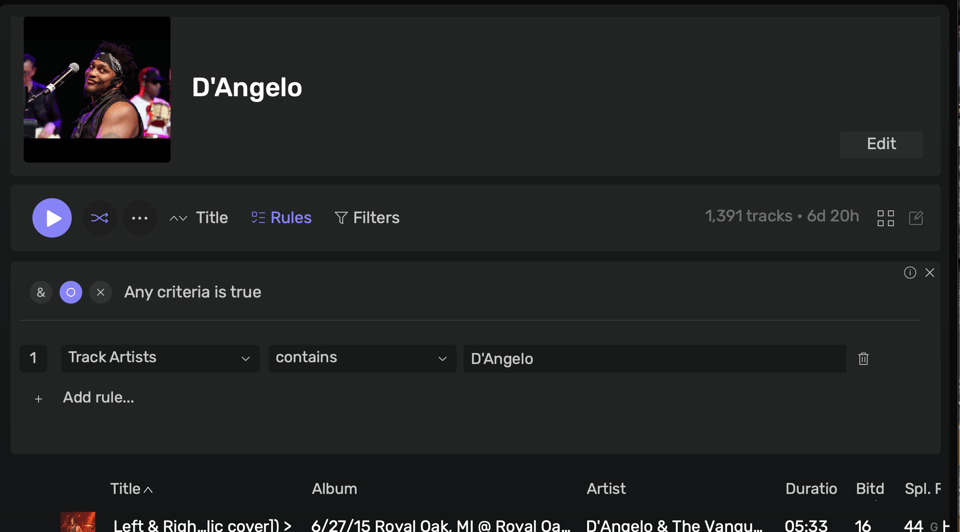
When I started this post, in February, there was a massive Google drive folder of D’Angelo live shows and demos just sitting there for all to enjoy and mourn. It’s gone now, though easily retrieved through all the regular channels. Here, death turned the window on its side and what I heard is that D’Angelo and I (only seven years apart) came up listening to a lot of the same songs.
He and his band—first, the Soultronics and then, the Vanguard—were covering the songs I knew from high school years listening to WBLS and Kiss FM: “Din Daa Daa,” “Sardines,” and other songs that don’t get into the old school noontime drivetime mixes as much as “The Show” and “It Takes Two.” D’Angelo also played the work of the people who inspired his inspirations, thinking here primarily of Prince. So you will hear lots of Funkadelic, Curtis Mayfield, the Meters, a sort of backwards vortex of Black American music that sweeps hiphop into the middle of the historical frame and blurs the edges. In a project distinct from the studio albums, his live shows managed a not embarrassing mode of tribute that made all of these phases as good as each other. When he played songs that were sampled by Gang Starr and A Tribe Called Quest and Jungle Brothers—Mandrill being a clutch moment—the band sometimes played them as the loops they became, sometimes as their original, unedited selves. We are nowhere close to getting sick of this playlist that is six days long. D’Angelo is also my Grateful Dead.
Eight shows of the larger Aadam Jacobs collection are Fugazi show and, between those and the Albini version of In On The Kill Taker, I listened to enough Fugazi this year to decide they are also my Grateful Dead. I suppose one variable is seeing a band often enough to have a sort of twinned or tripled consciousness of their music, including the anticipation of seeing them again. In this case, that will only apply to Tortoise.
What I really listen to, all day every day, is Jogging House.
It doesn’t take that many words if you tell the truth: fewer that 750, in this case. Louis-Georges Schwartz knew Joshua Clover, certainly in a way I did not. They met in 1978, which is a lot of someone to carry in any head. This passage struck me: “When we were exiled together in Iowa City Joshua got an MFA and I studied film. In January we watched Desert Storm in Iraq like a Missile Command screen in an arcade, and in March we watched Rodney King get beaten nearly to death on the 210 by LAPD. When Joshua got a gig spinning records at a warehouse, I wrote Boss DJ Ivan Boesky on the sign at the door. Joshua was filled with hope when Los Angeles exploded in May of 1992.”
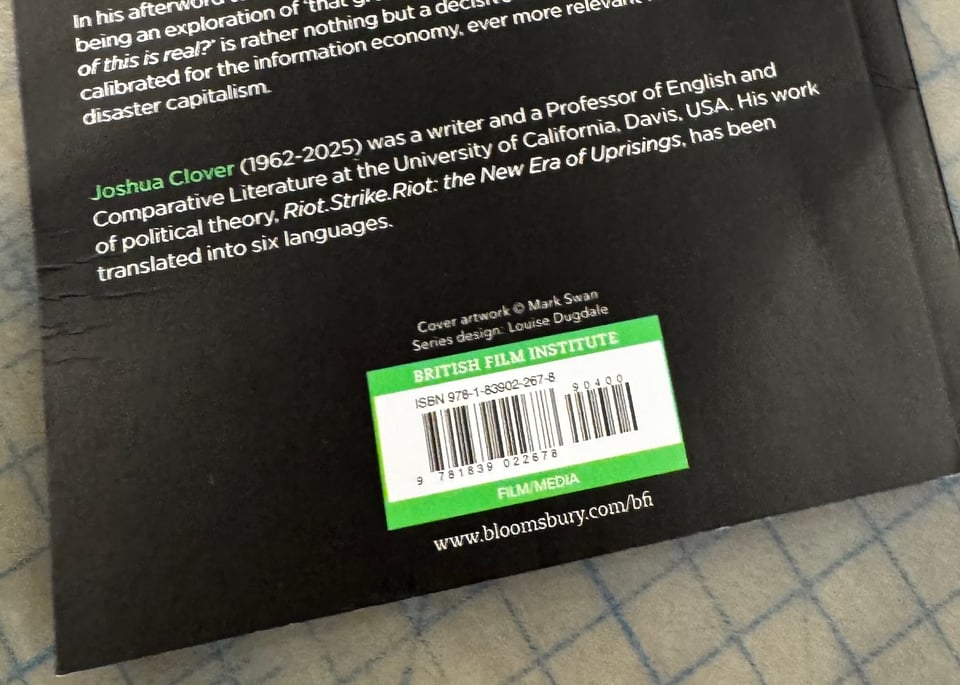
I saw his name on the back of a book this week and it was the first time I had seen him referred to as someone from the past.
I am grateful to everybody supporting me here. The best piece of how writing is playing out as a rent-paying proposition comes courtesy of Charlotte Shane. I recommend that one, in full. And that’s inaccurate—she describes writing explicitly as her hobby, though all of her reporting and theories match my own experience. If both the love and money are gone, what to do next?
Obviously, podcast. There is now a Patreon for the podcast called starless stateless that I am developing with producer Sina Rahmani. You will know Sina from his essential podcast, The East is a Podcast, and other people he works with, like Lara Sheehi, Adnan Husain, and the Makdisi brothers. Donate there or here, no paywalls ever, let’s hope we make it to next year.
never a paywall and this really helps