writing about 2025
Wasim Said:
Two o’clock after midnight.
The rain is falling. My tent sways right and left. My little brother beside me is shivering. Dogs are barking, and my hands tremble from cold and from humiliation.
I argue with myself: Now I will sleep. Enough wakefulness. I must sleep to escape the hell I am living.
It answers me: Are you fleeing from one hell to another?
The souls of those I love are waiting for me there.
I cannot sleep.
I take my pen and paper; the faint glow of my phone lies beside me.
Lightning stirs the tent—thunder from the sky, and the thunder of planes.
I decide to write that this genocide has stripped us of our dignity, and has exported to the world an image that does not resemble our truth an image of humiliation and abasement.
I begin to write…
Suddenly!
A torrent of water destroys the tent, floods me and my brother as we lie on our bedding, and ruins everything I own.
I continue writing on my phone after losing my papers. It is three in the morning, inside the tent of one of my relatives. The stench of his little daughter’s urine chokes me—he is unable to provide diapers for her; he can barely feed her. It is the only tent in our camp that is still usable.
Twenty of us are inside it.
My clothes are soaked. I shiver, and I remember…
How the water forced its way in from the right side of the tent and destroyed it.
How it drowned us.
How my brother jolted awake in terror, shaking.
How he called me by my name—pleading, afraid, in need.
And I was silent, trembling, powerless…
Powerless.
Powerless.
Powerless.
My father’s face. My mother’s screams. My siblings’ cries. The pleas of our neighbors in their tents, the crying of their children.
The sounds of rain, of thunder, and of the thunder of planes.
What was I like as I stood in the middle of the camp’s street, the rain pouring down on my head—or, to be precise, it was the bombs of the sky that were pouring down on us. As for the rain, that was what used to fall on our trees, when I was in my home, with my family gathered around our heater, watching it and enjoying it…
The water reached just below the knee.
A man screaming at the sky, begging it, asking for its mercy—then breaking into hysterical laughter.
A wife screaming at her husband to take their newborn child and protect him…
He shouts back at her to be silent and wait for the verdict of fate…
His shouting to conceal his helplessness.
A cold, trembling hand pats my shoulder: Come on, my son.
Come back to the tent—you’ll fall ill if you stay.
My father walks ahead of me.
I walk behind him.
The sound of our feet struggling through the water.
The sound of our thoughts struggling.
I could hear what was turning in my father’s head
exactly what was turning in mine.
We enter the tent. Before me are my younger siblings, my mother, my grandfather, my relatives—everyone soaked, bewildered, broken, crushed, despairing…
Suddenly!
All the sounds around me fall silent, even the sound of my thoughts,
even the trembling of my limbs and the pounding of my heart.
And one question echoes:
Am I human?
Are they human?
And it is still echoing….
Reality is bitter.
Extremely bitter.
They are literally monsters.
(Wasim Said is the author of Witness to the Hellfire of Genocide, and is on X here. He manages this community fundraising campaign. Please give whatever you can.)
Neeraja Murthy: I’ve been thinking about the instinct to just run away during the second full year of genocides. Every settler ran away from something, no matter how aspirational their story. I challenge my mom all the time about why she came here and created Americans and she always tells me there were much better opportunities here. I used to see it as such a brave journey, but I now understand the abject fears that present themselves as careerism. I still showed up to work during the second full year of genocides. So many of my best childhood memories are a capsule of the isolation of growing up far from the family home, alone in my bedroom. The death of D’Angelo in October transported me back there at age 13. Voodoo was one of the first albums I pirated when I stopped buying CDs. I thought I found the hack because I got to explore so much music for free, but now I have to derive my taste from scratch over and over because I can’t physically peruse what would have been decades of curation. The forced destruction of memories and built worlds overseas maybe wouldn’t be possible without our chosen destruction of our own memories and built worlds here.
D’s abrupt final delivery of “how. does. it. feel.” preceding the ethereal instrumental leading into his sweet lullaby-like vocal “Africa is my descent, here I’m far from home” is a thought structure I've calcified as a note to self to counteract the instinct to run away. Connect, get close, and use the bond to build an altar at which to honor alienation and suffering rather than let it lead to despair, then use this as foundation to build a world that remembers what they want you to forget.
Tiana Reid: Mostly time blurs but I will always remember 2025 as the year of Melissa, the category five hurricane that hit Jamaica in late October, a week or so after my first visit in too long. I keep writing and deleting things, mostly about my family. I fear my severe self-editing is not the point of this but maybe I have nothing else worth sharing. Nothing I want to share. Or maybe I just can’t get into it. I’m sorry. But then I think: 2025 was not like that at all. I tried, but not hard enough, to be radically open to sharing, to that which we have in common, which sometimes is not very much at all.
Eli Coplan: It's January 2nd and it's already dark out. I’d told myself 2026 would be the year I’d finally stop procrastinating, but now I'm trying to build a thermoelectric freezer into a 1960s drum set in three weeks. The idea being that with enough cooling units, high amperage, efficient heat transfer, and the right set of connectors, the drums could grow cold enough for a layer of frost to form upon their surface from the air.
The frost is transcendent. It shimmers in the light. It's like snow but it doesn’t fall from the sky—there’s enough water in the air. Heat is pumped from the surface, then absorbed into liquid coolant and cycled out through an advanced German radiator, where it’s dissipated into the air. (This drum set is a fountain.) I spent every day of the holiday season ordering parts online. Three Canadians helped me smuggle the radiator across the border. This feels myopic, but most of the time, life in New York is pathologically social and I’m enjoying a short break, buoyed by the promise of socialism.
2025 was the year that the Whitney Museum destroyed its Independent Study Program (est. 1968) in service of Zionism. Later, while phone banking for Zohran, amidst more heartening experiences of democracy a man I dialed informed me that I was a Nazi and that he would be coming after me. His name is David Carey. Google revealed him to be the senior vice president of public affairs and communications at the global media company Hearst, as well as a current trustee of the Whitney Museum of American Art.
This drum set has something to do with the forces of nostalgia that govern collective will, or that seemed to until this year (the object world remains a gerontocracy). For now, I’m in my apartment reading about the thermal conductivity of various greases to try to reckon with the passage of time. I went to sleep around three telling Sasha I’d send this in the morning. I woke up and we bombed Venezuela.
Rosie Stockton: This was a year I learned to stop mistaking the result and the cause. Spinoza taught me that. Found the space between immanence and transcendence and ran out of gas, shifted into neutral, tried to coast. Slowed down the timeline. From the perspective of infinity, it was Real aftermath hours. Just because you can take something apart doesn’t mean you can put it back together again. Engines, butterfly wings, love. Cared less about the heart than the blood running through it. Felt my own finger tips. Which is to say I got way less into formalism, way less into math. Wiled out, I could feel myself behind myself, I was ahead of thought, I was ahead of the disavowal. I was so ahead I was behind. Stopped running from and started running toward. Stopped running altogether. To know anything about love I read up on taxes. I studied debt and leverage and commuter train routes. I studied the loopholes. The history of negativity and supply chains. Did my chores. Applied myself. Had a candle lit pretty much from dawn till dusk. Went into public and was dazzled by the world, vulnerably. Drove back and forth to Chino each week to learn how to love more militantly. Colluding with the AI soil, jacked with chemicals, with fences, with Afterpay, with my friends, depleted by deadlines, weather events, a month of ash. Arsenic, chromium, and benzene, the air revolted, the political economy of staying screamed, sighed, asked for help. Bernadette said it: nothing outside can cure you but everything’s outside. Still, I panicked thinking about what the wind could do to me. Plead with my analyst to tell me exactly what was wrong with me as a birthday present, just this once, just for fun. Canst thou not minister to a mind diseased/ Pluck from the memory a rooted sorrow/ with some sweet oblivious antidote?? My friend had been teaching his sophomores Macbeth. Famously, he taught me, the patient must minister it to himself.
Ozayr Saloojee: This year, my mother’s tremor—benign, familial says one doctor; maybe Parkinson’s says another—moves her right hand, her writing hand, her touch-my-check-with-this-hand hand, her quilting hand, her sewing hand, her baking hand, her sign-my-daughter’s-birthday card-hand. The tremor moves her hand unconsciously, in flutters sometimes big and sometimes small. Her hand moves in widening circles today, in lessening orbits yesterday, last week, last month. Her hand is conducting an orchestra that she herself cannot hear, but that I imagine is beautiful.
I spend much of this year trying to notice her more, to notice her hand more, when it moves, when it’s still, when it’s holding something. I try to do this in a quiet, indirect way—she has a gentle shyness—so that it doesn’t make her notice my noticing, or make her self conscious. So, over this past year, I looked at her hands and then, incrementally, I looked at her more, trying to see her—really see her—as much as I could.
I notice her hand shakes when she watches the news. Her hand shakes when the news is so overwhelming. Her hand shakes when there is no tenderness or softness in this world. Her hand shakes when she wants to cook, but can’t, but it stills when she watches her granddaughter fry those samosas just like she would have done.
In turn, I try to think about my hands over this past year. They write a syllabus. They write an op-ed. They make drawings of canopies and gardens and minarets. They press send on e-mails that hope to find you well. I press my hand into the soft fur of my cat’s belly and feel his purr travel from my fingers and up into my shoulder. I think of my hand on my wife’s in the car, as I touch my daughter’s face to wake her from sleep. At the end of this year, just a day ago, I woke up and noticed my own hand – my writing hand, my drawing hand, my op-ed-writing hand, my year’s reflection writing hand – shake. I willed it to stop but couldn’t. I counted. Almost 40 seconds. Benign and familial, I hope.
She said—my mother—on that same day at the end of this year, looking at her own hand, at a knuckle on a quiet hand on the table in front her: “It looks like a heart. I have a heart, there.”
I had a plan for writing this reflection on 2025. It was all mapped out in my head. Then just before I pressed send to Sasha, I saw online, that in mass graves in Gaza, the Israeli occupation forces used zip-ties to bind the hands of murdered adults, youth and babies. Send.
Aditi Rao: The year 2025 dared to ask the question: “how much more dogshit can we stuff in this carcass?” I fear 2026 will answer, “piles more.”
But before the new year proves me right, I’ll live by the microbial hopes these past months offered. One came from a woman outside my door filming my home’s Palestine flag who I believed was doing so doxxing-ly. I opened the door readied for confrontation only to realize she was FaceTiming family in the Occupied Territories. “Sorry for lurking,” she said, “I just wanted to show them something beautiful.” One came when 12 of my comrades rejected an extortionary plea deal that would dismiss their charges of trespass during the encampments for the cost of upholding mine alone. We stuck it out, and in July, after 14 months of court hearings, we won, together. One came each of the 87 times I read Etel Adnan’s Arab Apocalypse. One will come tonight with the 88th.
One came on my wedding night. I got married this year to a gorgeous woman who takes the world as urgently and earnestly as I do. After the celebrations, we made our way with a train of dearests to a favorite spot. As we pulled up, we encountered a group the mirror image of our own— dressed-up, textbook diverse, and radiant. I turned to my fresh Wife and said “they must be from another wedding party,” she looked back and said, “more than that, I know that other bride.” My wife had gone to a dollhouse-sized college, the sort that went extinct a few years back when a dozen of this nation’s smallest schools were scrapped for parts by the phagocytic appetites of R1s around them. A statistical unlikelihood ensued. One of the 18 other graduates in her class had fallen in love, moved to Philadelphia, planned a November wedding, and decided to afterparty at a smallish joint south of South Street. That made two.
It was, I believe, a glitch. The universe’s plot had intended to send just one to Solar Myth that evening, but fate double-clicked. I entered married life more committed than ever to the existence of signs and omens and planetary trajectories and cosmic forces. Body doubles are also a source of hope.
If it’s decided that now is the time of monsters, let it be the time of magic too. More dogshit, nonetheless.
Ayesha Siddiqi: The greatest measure of ill health doesn’t exist in any doctor’s office or sealed spit sample mailed to the latest business advertising functional medicine. It exists in the experience of good health. For better or for worse, experiencing the alternative is the most sobering illumination of the true reality of any given state. You don’t know how bad you had it until you have it good, and of course vice versa.
As example, this year for me revealed a new level of health made obvious by which problems no longer existed in the background. The muscle developed in regular pilates and yoga evicted the pain that once lived between my shoulder blades. A more nourishing and balanced diet phased out food allergies I’d grown accustomed to bearing. I didn’t understand how poor my immune system had been until I noticed that paper cuts and bruises no longer took months to heal. In this timeline too are profound horrors; genocide fast and slow, the abdication of the commons to the highest bidder with the cruelest agenda, a goose step towards climate collapse.
Across every measure; social, political, environmental, we are facing extermination and offered the illusion of choice between being either a victim or agent of fascism. I wrote about how a disproportionate fixation on physical aesthetic markers has become the dominant response to this terrain of threat, especially among those most responsible for it. Residents of the imperial core are retreating into the seemingly more manageable scale of vanity, justifying it as medically urgent – all while the political moment demands poses more aggressive than Warrior 1 and 2 on a spongy mat.
When daunted by the amount of microplastics and pesticides that may be entering my bloodstream I think of the Romans who drank water from lead pipes, the Victorians whose homes were painted with lead, and the modern Americans guzzling protein powders revealed, this year, to also be full of lead. What we see as “norms” are just a function of short memories (potentially a side effect of all the lead).
I know enough history to know the winners barely write it; they don't even read it. True knowing resides in comparison—which often, but not always—takes time to reveal itself. Just ask the old people that eschew banks in favor of mattress undersides or who know about which towns to never stop in when traveling alone. It won’t take much longer for their caution to be timely for more of us once again. So much has changed, so little changes.
I don’t write ‘best of’ year end lists. I don’t care for anything affirming a linear perspective of time, except birthdays. And as far as an exercise in “looking back” and “remembering” goes, it’s funny to contain it to after Christmas. When I was younger and more dramatic, or just dehydrated, I was aghast at the idea that it’s even possible to ever not be Remembering — burdened by all that has been, will be, and never be again, I didn’t want to create homework about it through lists and announcements. This year I’ve been wondering what comparisons we’ll live to make and on which side of them we’ll find ourselves.
Isabella Hammad: What to say? A “ceasefire,” a “ceasefire,” ongoing carnage. I was in New York for the first five months of the year, researching and writing. I spent a huge amount of time with friends, old ones and new ones, which was the saving grace. Some have aged suddenly, visibly. I sighed a lot in the library. I went on a book tour to too many countries and hated myself, talking on stages, I would like to stop talking altogether. I finished a novel, I still don’t have a title, I started thinking about a new novel, I taught a workshop, I remain geographically confused, I am getting woo-woo about the energies of places, I’m not sure how much of that is just the substance of my own mind: the slippery polluted air of Athens, eternal port; Palestine’s thick persistent frequency; Berlin’s grave sour history. Beirut’s frenzy. Even the buildings seem nervous in Beirut. I liked Barcelona’s southern lightness, the way everyone is always running a little late. Unlike Switzerland, where I was the only one.
Sunny Iyer: Yesterday, I finished reading Jean Genet’s Prisoner of Love, a sprawling dream sequence of his years with the fedayeen during both Black September and Sabra Shatila, interspersed with time spent among the Black Panthers. This book transformed me and I can’t imagine a better way to end the year.
At the time of writing (1970–1985), the Palestinian struggle was increasingly lonely, rife with betrayal and misapprehension. Their neighbors in Jordan and Lebanon were traitors. Bobby Seale was in prison. Genet’s “mirror-memoir” is like a retroactive antidote to this loneliness, and the uncompromising spirit that he so lovingly characterizes in the fedayeen and Panthers is “quixotic, fragile, brave, heroic, romantic, serious, wily, smart.” I think of Friendship in Friendship's Death. She arrives on earth also incidentally amidst Black September—an apparition and a witness. She is a key to peace. When Friendship resolves to join the fedayeen, she says: “Here on Earth, sacrifice has a meaning, because every day is a day of the dead.”
Prisoner of Love contends with failure, which is something that preoccupied many of us this past year. The failure to disrupt the temporality of war and the masquerading of a slight change of pace as ceasefire. The failure to make good on promises. The failure to feel totally, earnestly present. Throughout the book, Genet repeats, “trying to think the revolution is like waking up and trying to see the logic in a dream.” I’m not a pessimist! I feel ashamed that I had an exceptionally good year despite all this. My only rollover resolution is to learn how to do a headstand. If I could transform this shame into guilt, would it have more revolutionary potential?
Friendship, sacrifice, defeat, friendship. The excess of failure is the kind of love that resembles valor in desiring against all odds. I loved a lot this year. I fell in, out of, and more in love. I tear up when I think about how much I love my friends… how beautiful they all are. I’m lucky to love and be loved.
Ania Szremski: This year, the building in which I live, built in 1927, really began showing her age. So many leaks from the ancient pipes, lights flickering due to coco-jumbo wiring, cracks in the walls emerging—my beloved says that means the foundation is shifting. He gives the building about fifty years before it is condemned, which is something new for me to worry about when I’m trying to fall asleep. I always used to worry about fires, but now I can also worry about building collapse, and that my beloved will be deported, total destruction of home and family. My father, terrified by the news in the US, has throughout the year been urging us to flee to Poland, although he himself is worried about a nuclear attack there; I come from a very nervous family.
The concrete wall separating the building’s trash alley from the driveway of our neighboring building suddenly collapsed this fall, with an all-at-once thud that made our building quiver. Metaphor!
My building is owned by a man who goes by Harry, who fled the Bosnian genocide with his family in the ’90s and wound up in Ridgewood, Queens, where he bought this edifice back when the units were rent-controlled and rent was $80 a month. I have never had a landlord of whom I was not scared, and Harry is no exception, except listen to this:
We had torrential rains here in NYC this fall, and we stayed huddled up inside for a day or two, the dog refusing to go out, and I noticed some miserable-looking pigeons on the fire escape. I didn’t do anything to help them, because, honestly, what could I do? But here’s what Harry did: he noticed a particularly miserable pigeon on the building’s front steps. He picked it up and took it to the basement, where he gave it a little box to sleep in and fed it milk and seeds. When the rains stopped, he let the pigeon go. Love, amid the ruins.
David Markus: It’s New Year’s Eve and I’m thinking about something Ilan Pappé said in conversation with the Makdisi brothers some months back: “the rot is very, very deep...” He’s talking about Israel, but the words strike me as applicable to a more generalized structural decay. In the institutions within my purview, there’s not just the stink of decrepitude or corruption—something rotten in Denmark—but a sense of slowly accelerating disintegration.
The rot is deep in an academy that spent decades gargling with the language of inclusivity only to throw in with the gestapo at the first beckoning of its boards of trustees. The rot is deep in an art establishment that punishes its most principled representatives for daring to address the moral issues of our time. The rot is deep in a liberal establishment that devours the new to sustain the dying while the White House wallows in a kingdom of putrescence. The rot is deep in a society that bets its economic future on automating the remaining vestiges of rewarding human labor while further contributing to planetary despoliation. One could go on enumerating. The rot, as Hamid Dabashi reminds us, was there in the false universalism of Kantian metaphysics from day one.
Of course, if anything, Pappé’s words reflect not despair but an optimistic telos: the conviction that the fate of Zionism as a settler colonial project is already sealed. “The cracks are very extended in this building,” he remarks. And then later, of the quasi-Orwellian mediascape in Britain: “they’re…like…the dam that has so many holes, so, yes, sometimes they succeed in putting the fingers in the hole, but then other holes are coming.”
In 2025, there were some sizeable holes punched in the dams built to contain emancipatory sentiment—not least in the realm of New York City politics. What are my hopes for the new year? That “other holes are coming,” for lack of a better phrase. Which is not to limit the horizon of political action to hastening ruination. “Transpositions and upendings refuse and then reorder the world,” writes Anne Boyer, “a refusalist poet’s ‘against’ is an agile and capacious ‘for.’”
Yasmina Price: Tears and stitches. Occasionally occluded by the unreal feeling it must be a clerical error in the lifescript, I cannot escape this as the year a stranger took a blade to my face and left a thirteen centimeter reminder. I have a pocketful of superstitions but had never been moved to think there was anything inauspicious that number. Yet maybe. I find it confusing that it will soon be six months since that day and also it is no stranger than any other measure of time. Five centuries since 1492, 66 years since 1960, a few days since one calendar turned over, a few minutes to lunch.
I have most fully understood the assault not as an individual aberration but a fractal of the larger, greedier violences, that are unbidden and expected, banal and catastrophic, unevenly distributed and heaviest on the global majority. Like most nodes of pain and grief, it has been a generous teacher. It was clarifying. It was certainly strengthening of a familiar lesson, one about interdependence and interrelation and how no one makes it through this thing alone and how I would not be without my beloved constellation.
Two loose things:
1. this is a time of many, many, many monsters and calculated, abyssal, imperial lunacy
2. a shaheed, a martyr, is also a witness.
Memory and mourning walk hand in hand. We owe our dead everything. What I want most for them and for us is revenge, even as an impossible peace is likely the rightful way the compass points.
Forgiving me for fragmenting, this is the last part:
There are dead who sleep in rooms you will build
there are dead who visit their past in places you demolish
there are dead who pass over bridges you will construct
there are dead who illuminate the night of butterflies, dead
who come by dawn to drink their tea with you, as peaceful
as your rifles left them, so leave, you guests of the place,
some vacant seats for your hosts . . . they will read you
the terms of peace . . . with the dead!
— from The “Red Indian’s” Penultimate Speech to the White Man, Mahmoud Darwish (translated by Fady Joudah)
Suneil Sanzgiri: 2025 will always be the year I first visited Palestine. It was the year I felt the soil of the land in my fingers and helped cultivate and nourish the young olive and oak trees, apricots, almonds, figs, and grape vines while bombs rained down on Gaza just a few miles away, shaking the ground every ten minutes and leaving a putrid, metallic smell across the land. It was the year that I witnessed the obliterating cruelty of apartheid and occupation up close, pervading every aspect of daily life. It was the year I slept in padlocked shipping containers, unsure if the settlers would come unload their machine guns on us, or burn down the farm while we slept like they had several times before, hearing their sick, drunken singing and partying while we could feel the ground quake from the bombs. It was the year that I saw, on a clear day from the top of the hill, a bomb being dropped in north Gaza and felt its aftershock in my chest. It was the year I prayed in an ancient cave that belonged to the grandfather of the family hosting me while the roar of the Zionist entity’s warplanes shattered the sound barrier above our heads. It was the year I found out I was really good at building barbed wire fences to keep settlers off the land. It was the year I cleaned the shit out of pigeon cages and asked the family why they kept pigeons. They responded that because of the occupation and war, a lot of the native birds had left Palestine, and they wanted to release them when Palestine is free.
It was the year that when I returned, the overwhelming presence of the NYPD, the terror ICE inflicts on families across the country, and the daily violence of the Zionist occupation that I witnessed all began to blur together. Everyone warned me that coming back to the U.S. would be difficult, but I saw no difference between the brunch-going crowds across New York and the images of settlers on the beaches of Tel Aviv. It was not the first year I reckoned with my own status as a settler on stolen indigenous land, nor was it the first year I felt the weight of my complicity in the heart of empire, but it was the year that I began to make decisions on how to live otherwise and elsewhere from this cursed place. Though it will not remove the blood that’s on my/our hands, I can’t stand this place any longer, and I can’t see the violence of hyper-indulgence as anything but the dregs of the imperialist rot this place spews every day.
This was the year Abu Obaida was martyred, it was the year Anas al Sharif was martyred, the year Awdah Hathaleen was shot in the heart by the settler Yinon Levi for defending his home that I had visited just one month earlier from being stolen. It was the year that hundreds continued to be martyred and slept in freezing cold flood waters, even after the lies of a ceasefire persist, which is just continued genocide under a different name. It was the year that images of the blood of mass killings seen from space in Sudan barely made headlines. It was the year that someone I’ve been arrested with at Palestine actions and fought grotesque displays of Hindutva propaganda with since 2020, was elected mayor and made inexcusable concessions for everything he once stood for just to placate his detractors.
It was the year that I understood more about love and gratitude than ever before. Waking up next to my partner feels like a miracle every morning.
hannah baer: It’s New Year’s Eve and I’m in the busy lobby of a gentrification hotel waiting to say hi to one friend before I go to an endless string of parties. The friend I'm waiting for is unusual in several ways but one of them is that she is unusually pretty, gorgeous really, and so everyone I see is strikingly not her. Someone comes around the corner or crosses the room on the other side. Not her. Not her. What a loud part of going out to a busy party this is, looking for your person and then everyone else constitutes the shape of their absence.
If you're really focused on one thing, you find its lack everywhere. This is what heartbreak is like. It's also what it's like to live through late capitalism at the smoldering imperial core while for some reason holding onto hope for economic justice, an end to imperialist ethnonationalism, and a stranger spiritual third thing that Francois Tosquelles (who I spent 2025 thinking about too much maybe) called disalienation. In your bombed out surroundings you can feel, like a phantom limb, the organ of what's missing.
On Monday of this week I had an experience of being haunted by the absence of what I search for while watching Marty Supreme, having earlier that day wept reading Vivian Gornick's Romance of American Communism. Seeing the 1950s Lower East Side Jewish apartments in the movie where the men (including Tboymothee Chalamet) mistreat women and fight with each other about money, I remembered exactly what made me cry, 10 or so hours earlier, in Gornick's account of her childhood.
She describes being a young person watching her parents' friends, all members of the communist party, gathering in the kitchen of a small New York apartment to talk about the international situation. They were poets, intellectuals, philosophers, while also having menial jobs and, in Gornick's account, small lives. She talks about how in particular the righteous sense of historical belonging that communism offered enabled people whose lives were otherwise quite limited to feel--through their collectivity and contact--that their actions mattered and that their thinking and discourse and relating were part of something very large and very important. This is not what Marty Supreme is about. Marty Supreme is about individualism and grandiosity as a salve for poverty and desperation, a salve which ultimately fails, requiring one to take refuge in the heterosexual family. Spoiler alert? I dream of disalienated communism and I can find its lack of everywhere.
I am still in this lobby, waiting for my friend. She knows I'm coming, I texted, but she's not here yet. Should I call? There is more that we can do rather than simply wait for justice and solidarity, there is more to do than just notice her absence and pine for her. We can go out and search. We can fight injustice, and we can do creative work to understand justice, to encant justice and invoke her unmistakeable, beautiful form, not knowing from which room she'll enter but knowing, in part because of how closely we've held her in mind, that her arrival will be undeniable because she is gorgeous and not like anything else.
Laleh Khalili: What a hellish year it has been. It began with a genocide of Palestinians in full throttle and then with a fake ceasefire, the slaughter has continued at a simmer. There is slaughter going on elsewhere too: in Sudan, against boats in the Caribbean Sea, and in the detention centres of the US and Israel and their allies and clients. The chasm between the public and their leadership has never been more clear, with every institution's members disgusted by Israeli impunity and their leaders happily skipping along to the commands of the imperial metropole, the US, and its satrapi across the Atlantic. I am in my late 50s and have never felt such depth of despair, only mitigated by the integrity of the people who are putting their lives on the line (in prison cells, in protests, in direct action, and in direct resistance).
Ahmad Ibsais: There is something unbearable about sitting down to write a year-end reflection when it seems the last few years have not ended, when the dying continues, when the siege persists in slower motion but with the same murderous logic intact. I kept waiting for the right moment to sit with this grief, to process what we witnessed, to find language that could hold the weight of thousands upon thousands of my people dead, of children speaking English into cameras because they thought the colonizer’s language might save them, of fathers collecting pieces of their babies in plastic bags, of children cleaning their parents blood off the floor. But grief this large has no container. It spills into every morning, seeps into every quiet moment, transforms every celebration into something that tastes like ash. So perhaps the only honest thing to do is stop waiting for grief to become manageable and instead learn to write while drowning in it.
2026 will demand more from us than grief alone. It will require that we fundamentally change the ways we protest and organize. We cannot return to normalcy or the fiction that our city-street protests and large conferences are doing anything. We cannot accept the comfortable illusion that a pause in airstrikes while occupation continues represents anything close to justice. The cost of genocide must become unbearable. Arms embargoes that actually stop weapons shipments. Economic sanctions that hurt. Cultural and academic boycotts that isolate Israel. Legal accountability that sees every genocider and their supporter locked up. We must build the world we need rather than accepting the one they offer. And if Palestinians can survive genocide and still plant olive trees, still teach children their names, still carry return in their bodies like sacred inheritance, then those of us watching from positions of relative safety can manage the considerably easier work of refusing complicity and demanding liberation.
H. Sinno:
Ovid’s girl will
Be her mother’s son:
You will burn magnificently,
A sun you call virtue
Devotion a hunger,
A coal you grind
Into fine
Dust over blank pages
You swear have known milk.
You will do it over — committed to
The invisible translation.
Palm over parchment
Pleading for softened fiber
Sooner fire
Than believe the emptied page.
He will leave anyway.
Redact his own diaries
In the shape of a match
Then blame you for the ash.
You will wait anyway.
You would do it again.
Tasbeeh Herwees: I got really strong. I started lifting weights like it was a religion. I understood how people get taken in by cults. I turned flexing my arms into a party trick, took strangers to the gym with me. I formed calluses on the palms of my hands. I pictured myself fighting off real and imaginary aggressors, scenarios where I emerged a hero. I channeled all my displaced anger into punching the air. I punched the air again and again.
Fires followed me everywhere. In east hollywood just one block away from an evacuation zone i stuffed all of my most valuable things into a suitcase and fled to inglewood. Months later i was at a backyard party in austin and it started raining ash. Later that summer I landed in marseille to a backdrop of billowing smoke and an evacuation order we ignored to go to the calanques instead. The next month I was in Spain, biking around in a remote village in the north an hour outside of Valladolid, and i smelled fires again.
i think, when i remember 2025, i will remember the fires most. i will remember red skies. i will remember endless unfulfilled GoFundMes. i will remember TikTok videos filmed in concentration camps. i will remember the ones we love getting snatched up off the street, herded into unmarked cars. i will remember how we failed each other. i will remember how we reached for each other. i will remember the courage of my gorgeous friends, my beautiful, unemployable friends, my friends barefoot in my home, my friends piled up on my couch, laughing until i have to kick them out because im getting sleepy. i will remember danielle’s laughter in another room. i will remember helen stopping by with still-warm desserts. i will remember andrés in the kitchen, making stews and cracker crust pizzas and mixing beverages. i will remember the company of my neighbors, the nights out on the patio talking and imbibing for so long we are no longer speaking the same language. i will remember everything full of love, and i will punch the air, again and again.
Matt Longabucco: In December, I went out three nights in a row and didn’t sleep much in between. The first night I saw Nazareth Hassan’s Practice, a play in which the phrase “I am useless and that’s okay” first appears as a mantra of liberatory relief and is later revealed to be an element of indoctrination into a cult. The artist character who cynically engineers this reversal has his reasons: he’s being eaten alive by the patrons and institutions to whom his suffering is sweet, and has absorbed and weaponized their logic against them. The second night I saw a concert at the Barclay’s Center. The tickets were a birthday present for my daughter. She and I were waiting for the show to start when a woman two seats over threw up on the floor and across the puffer coats of a row of teenagers in front of her. No one in the arena could seem to locate a mop, so after having poured water bottles over slick nylon surfaces the teens as well as my daughter and I and a loner we adopted and had kept close were told to just go ahead into the pit. This is how we wound up fifty feet away from Lorde. At one point I turned around, curious to see what Lorde was seeing: 19,000 ecstatic people singing “Hammer” back to her, there’s peace in the madness over our heads, let it carry me u-u-u-u-up. The third night I watched Kleber Mendonça Filho’s The Secret Agent, a film in which images coalesce almost of their own accord to migrate through history, indigestible, passed from dream to dream, or more often nightmare to nightmare.
We’re being watched by generations, many. The archive is us, our faces. We can no longer trust our consolations, no matter how tender.
Sarah Nicole Prickett: I started having dreams set in a school with long hallways and no marked exits that turned every night into a war zone. I moved cities, choosing an apartment with an elementary school next door. I didn’t make the connection. (There might not be one.) In the morning it takes a few seconds to realize the children outside are screaming with happiness, it’s snowing again. Maybe longer, like twelve seconds—the length of time William James accorded to the ‘specious present.’ Alarmingly this may be the only time I’m alive to the state of the world.
Louis Allday: I’ve typed out and deleted the opening sentence of this entry dozens of times, unsure what to say (or not) about the past year. This indecision is not only because in the UK so many of my honest opinions are now grounds for arrest on anti-terror charges, but because beyond what is considered permissible by the genocidal UK state, more generally it sometimes feels there’s little left worth saying that’s not already been said by others more eloquent or rendered cheap by the actions of others more brave. Much of what I have dedicated a lot of my time and energy to for several years has been done in the belief that raising awareness, spreading knowledge and fighting back against propaganda can make a difference. While I still believe that to be true, it is an effort that has felt wholly insufficient and inadequate in the face of genocide. That is one of the reasons why I have spent the last year putting more of my time into trying to materially help those struggling to survive in Gaza. At times, this effort has felt similarly insufficient too in all honesty, but I do know it has made a huge difference to many families in the worst of circumstances. It has also given me the opportunity to befriend some wonderful people in Gaza. People like Samer, whose wife just gave birth and so he now has three young children to care for. His older two kids are of similar ages to my own and in moments between discussing more life and death practicalities and bank transfers etc, we have spoken about that and about being a parent. I remain in awe of his ability to carry on and try to be the best father and husband that he can be in conditions unimaginable to anyone not living through them. I feel absurd by comparison when I find myself struggling with the everyday difficulties and pressures of fatherhood and adult life.
One of the other amazing people in Gaza I've had the privilege of getting to know is Wasim who I was able to help publish his account of the genocide as a book. I was honoured to write the preface to the English translation. In addition to the Arabic original, an Italian translation has just been released and other languages, including Greek, are forthcoming. Wasim is still in Gaza and he recently started a fundraising campaign to help families around him without access to the internet and campaigns of their own, please support it if you can.
A small personal highlight of 2025 for me was fulfilling a 20 year long dream and visiting Iran. A highlight within that highlight was visiting a Zurkhaneh, an institution hard to describe concisely, but in essence a communal weight lifting and wrestling training centre that has roots dating back to ancient Persian traditions and over the last 500 years has also become infused with Shi'ism and the veneration of Imam Ali in particular. I had been excited enough simply to watch but was soon asked if I would like to join the training itself and ended up performing the entire 90 minute workout with the group's members, some of whom were well into their 70s and made the extremely difficult exercises look easy. It was a brief window into the almost comically rich, complex and welcoming culture of Iran that will last long in my memory. Within weeks of my visit, 'Israel' launched its war on Iran. Further aggression against it in the year ahead seems almost certain and it is incumbent upon all of us who oppose genocide to stand in solidarity with Iran, that is one of many things preoccupying my mind as we approach 2026.
Mary Turfah: I have been using the word garbage a lot. Will probably keep it up in 2026.
Brandon Shimoda: I was born on Hiroshima Day. My daughter was born on Nagasaki Day. She recently said: “I jumped on top of the bomb and turned it into a bowling ball.” I gave a talk on the night of February 28 in NYC in which I recited all of Hiroshima’s (many) appearances in the writings of Etel Adnan. I ended the talk by reciting these lines from Etel’s poem “Jebu” (in which Hiroshima appears twice): “Palestine is a land planted by eyes / refusing to be closed.” The talk was part of a symposium, organized by Omar Berrada and Simone Fattal, featuring talks/performances about/inspired by Etel and her work. Three of the other artists that night recited the same lines from “Jebu,” so the lines, and what they hold, kept repeating. It was clear what all of us, under Etel’s ancestral auspices, were reaching for. I keep forgetting that the line is not “planted with eyes,” but “by eyes.” What is the difference between being planted with and planted by? I think the difference constitutes a signal part of what this year has meant and will continue to mean, while insisting on the existence of those who hold, with their lives, the most transcendent part of its meaning. Two days later, I took a train to New Haven; the poet Natalie Diaz invited me to guest-teach her class at Yale. On my way, I walked through a cemetery. I wanted to visit the grave of a Japanese historian. The cemetery was empty, as most cemeteries are in the United States. It’s a facile indication of the kind of relationship Americans have with the dead, including their own, generally speaking. Snow was melting, the cemetery was mud. I shouldn’t say empty: there were raccoon prints on the historian’s grave. The class met in the basement of the Beinecke Library, which is extremely clean, with nearly-white carpeting. I forgot I was carrying the cemetery on my shoes, so I tracked mud, in cartoonish footprints, down the stairs, across the carpet, and into the classroom. I was embarrassed, at first, apologetic. But then I thought, isn’t this also a cemetery? (Also: how am I the only one?) The subject of my visit was creative research, i.e. how does a poet do research? It wasn’t until the end of class that I realized the answer was on the carpet: muddy footprints. The year kept restarting, over and over, more honestly under. It began, in part, when my friend Emiko Omori gave me a small ceramic snake, white, decorated with flowers on one side, nothing on the other side. Because it was the Year of the Snake. When Emiko was two, she and her family were incarcerated in the Poston (Arizona) concentration camp. She doesn’t remember, but she’s been making work about it her entire life; the work remembers for her. So does her sister, Chizu, ten years older (she’s 94 or 95); she organized/hosted a conference on incarceration, in Oakland in July. The snake has a long red line on its face denoting its mouth which, when looked at from above, is a smile; from below, a frown; from straight on, an expression of unnerving ambivalence. It’s divinatory that way. When I invited Emiko and Chizu to one of my classes (via Zoom), Emiko yelled through the screen “The atomic bomb was part of incarceration!” The anger of sisters who spent part of their youth in a concentration camp on a native reservation (Colorado River Indian Tribes) is inexorable, galvanizing, transcendent. The person who spoke after me on the night of February 28, was Huda Fakhreddine, writer, translator, scholar of Arabic literature. She said, “Etel Adnan showed me how to survive the narratives of war, the war of narratives. As I was trying to find my Beirut, after we had both come out of the bomb shelter and had to recognize each other in the daylight, Etel Adnan shared with me a discovery, a secret. It is possible to survive history and still live in time, all of time.”
Marianela D’Aprile: In the middle of autumn, for some weeks in a row, I noticed that the bewilderment of the new that marked my first year or two in New York City had dissolved into something else. There was, in its place, the pleasant over-treadedness of habit and the occasional sting of change. I looked at the calendar; I did some math; there it was: I have now lived here longer than anywhere else in my adult life. I spent much of what could be called my formative years not just moving around but never being sure that the place where I was was actually my home, sensing that it could be taken away from me at any moment. I never trusted that tomorrow would be the same as yesterday and believed that if it wasn’t there would be no way for me to survive. Rootlessness was both threat and way of life; I was a fish in a poisoned river. Now I’m sure that this place is my home, and it’s not just because of the number of years I’ve lived here—I’ve become my own home, too. I love this city and I love the place where I sleep at night: rent-stabilized, so as long as I hold up my end of the bargain no one can take it away from me, which is more than can be said for most deals in this life. The idea that something unknown might happen to me is no longer terrifying; in fact I’m looking forward to it.
Jennifer Lena: On the 3rd of January, my unconscious father jerked his hand out from mine as I sat hospital bedside, murmuring reassurance. He woke later that night and called my mom to tell her he was dying. She went back to sleep. Weeks later she’d borrow my shoes to cross a pebble beach and wordlessly wave his ash bag into the Connecticut River.
He doesn’t speak through me much anymore, maybe because I fled the country, maybe because I wanted it so badly. It's better than all the birthday gifts he never bought. “They may not mean to” but I think this guy in particular very much did.
Then Joshua died, and Jonathan Sterne, and just days ago my cousin Rich. My demons have started a new refrain, “it's coming for you, soon.”
Beneath my fear is desire. To better appreciate all the more life that’s happened while I was courting death, despair, jealousy. Jerking dad out of my head is the first drop in my next cycle.
2025 was the bad that turned good year. Our fascist playpen transformed me into the enemy of the state I hoped to become. Friendships murdered by Zionists opened time for new solidarities. Fleeing mutated into freedom. Regeneration left a mark in the shape of a Schmoo tattoo.
2026 predictions? The old man lost his horse, but it all turns out for the best.
Mohammed El-Kurd: Nothing witty comes to mind—this has been the worst year of my life.
Shivangi Mariam Raj: each day was spent ploughing into the infernal, searching for God amidst the rubble of this world. suffice it to say that each day was spent.
despair and speed come from the same root in latin, 'spes,' which means hope. despair is not just a loss of hope, it is also a loss of time, an inability to move forward towards death. when you lurch forward to catch your breaths, but only find your ear pressed to the grinding roar of this absence even of all form. you think of the martyrs, of those before you, of those who promised to come back but never did, and you want death because you want them, but despair is the desperation of not even being able to die. despair is the loss of all time and its end.
you begin to live outside time, you begin
to live inside
the dead and the departed.
with grains of dust stinging my eyes, stretching them from gaza to assam, from jnoub to kashmir, there was only rubble, in my memory, on my screens, smeared across my half-sleep and half-dream, all geographies caramelising into an "elsewhereness." breaking in beads of sweat, i realised that no matter where i may be in the world, i only inhabit this placelessness of "away" and "apart;" there is no now to place my feet in, everything is disintegrating, there is so much dust, there is only a promise of tomorrow, of the hereafter, of the ether which we desperately gathered with toufan al-aqsa.
each day was spent thinking of the hands that carry the killed and the stolen and the massacred, the hands that search frantically for the pulse of life on ash-smeared faces of infants, the hands that work as doctors, as carpenters, as bakers, as fathers, the hands that hold the gun to protect their people, the hands that bring candies to orphaned children scattered across khan yunis, the hands that draw architectural plans of the home that will spring from the mouth of the bombed home, the hands that clasp the keys of return, the hands that console the mourning, the hands that cup themselves and fold in prayer, the hands that carry brick, cement, and stones are all one – and unbroken. each day was spent declaring the will to be oriented towards men who fought with bare hands and with slippered-feet.
hours continue to ripen and darken on our clocks. i tell my eyes and my hands: until we annihilate them, it is our duty to keep the empires destabilised. God will follow.
Catherine Lacey: Much of the year was spent in useful confusion. I got more comfortable understanding Spanish, a process which has required me to accept a lot of chaos and opacity. I’ve gotten cozy with being wrong and staying wrong. I also started writing a novel that’s been hovering nearby for a long time, but without words—even more chaos, more opacity. I know it’s a novel because I often cry when I write it, but I never really know why.
But as I write this, I’ve entered a new kind of confusion. I have been trying to talk to my father, but his brain won’t really let us. Mainly, he repeats the same words or phrases for hours at a time. Yesterday it was “Herodotus” and “progeny” and “the grandchildren.” Earlier in the week it was “more people more people more people,“ and “large profits,” all spoken with real urgency and volume, though I think he really meant something else entirely, something that had nothing to do with people or profits. The first thing he said to my brother and me today was “God Almighty” then he reminded us that “the pain is real,” a brutal sentence to hear 15 times in a row, but later in the afternoon he seemed delighted to say, very carefully, “it is ever present, all the little bow ties.”
While talking to my sister on the phone she said she just really wants to know what he actually means, what it really feels like to be him right now, but in fact I’d really like to know what it feels like to be anyone other than me, anyone else, and maybe that’s the only thing I’ve ever wanted in my life.
It is not lost on me that I spent a solid week trying very hard to speak to my father for hours at a time when I rarely tried to speak to him at all in the last few years. It’s only now that it seems impossible to talk to him that it feels urgent that we do. We weren’t really great at conversations before his brain bled all over itself, and I have to accept that I am delusional in my present efforts.
After asking him something in an effort to decipher an indecipherable sentence he’d just uttered, my father scrunched up his face and said: “This discussion / will not/ I need it looser / if you / more loose”
I’m assuming he was trying to tell me that what he says is not literally what he means, and that when I try to latch onto the literal meaning of his words I’m just digging us a deeper hole. His brain is blood-soaked. It must be so annoying.
Sometimes, he will latch on to something he has just heard and repeat it, and after I noticed this habit I considered saying “I’m Sorry,” just so I could hear him say it back to me, for once. Unfortunately I can tell the difference between a voice and an echo, so I didn't try.
“Unfortunately” in Spanish— desafortunadamente— used to trip me up, all those fucking syllables, but now I say it with relish, as often and as quickly as possible.
Every cruelty in the world comes down to an attempt to displace one's pain onto someone else. Every form of human-created suffering comes back to that. We all have to rule our own little empires of hurt; we have to keep the hedges clipped, have to keep the populace fed and clothed, have to keep all the little bow ties straight, or else we will make ungovernable messes for everyone else to deal with.
Occasionally I spoke in Spanish to him; I’m not sure why.
Lara Mimosa Montes: I have a couple of regrets, like I’m sad I only went to one demolition derby this year. One is not enough. I know there’s always next year, but the fact that I planned poorly in this regard feels like a personal failing, like I spent too much time caring about all the wrong things. I also thought 2025 would be the year I finally got a dumb phone, but the more research I did, because I was not sure how dumb I was willing to go, the more digitally entangled I realize I am. These aren’t grand aspirations, in the scheme of things, but they do feel important. So I feel disappointed. I thought life would be different.
Sarah Brouillette: I read a book about a man who was tortured and executed because he was fighting for Algerian liberation from colonial rule. People were trying to get him released from prison. They considered him their comrade. His wife was also trying. He bonded with his cellmates. They all hated the racist French. It’s based on real events. You know what happens. You want the ending to be different. That’s the point. My dad had an accident at home and was lying alone on the ground for several days before he was found. He nearly died. His dog was at his side. I went to sit with him at the hospital. He was there for a long time. He slowly got better. We watched the Blue Jays play on a laptop. I helped him shave. I pushed his wheelchair out to the parking lot, where we faced the sun. A man in a lawn chair was playing Led Zeppelin on a portable stereo. I read a book about a young woman who lives in a town run by Mennonites. Her sister and her mother have left, whereabouts unknown. She starts getting into trouble. She could leave too, but her father is bereft and he needs her. I drove around Ottawa with my son. We listened to news reports on Mark Carney’s leadership. We listened to “Point and Kill.” We listened to a talk about Elon Musk’s tormented childhood. We listened to “Hind’s Hall.” We listened to a podcast about turning Gaza into a leisure paradise for the rich. We listened to “Bulls On Parade.” I read a book about a woman who is having an affair that goes on for a long time. After it ends, the man becomes desperate to keep it going. This makes the woman feel that she was right to stay with her husband. Her husband is respectable and kind. He doesn’t smother her with affection. I met a woman recovering from cancer treatment. She told me about a daughter she has not seen in months. No one visits her. Her sister, who takes care of her daughter, thinks it is too hard. She has no other family in Canada. She has nowhere to live. She didn’t want to leave the hospital. I read a book about two men who are obsessed with the same painting and build academic careers around interpreting it, before becoming bitter rivals. I attended a workshop about how to cross the US border safely. It is important to be honest. If you are caught lying you could be banned for life. I read a book about two women with no money and no connections, trying to establish creative careers in New York City. They have a deep, tormented bond. A good friend died. He was sick and I was planning to visit him, and then he was gone. I still think about telling him things and I briefly forget that I can’t. I read a book about a man at an interminable dinner party. He considers how people with great potential are ruined by the pressures of competitive striving. Wanting to be perceived as the best, the most cultured, the most celebrated, they become insufferable. And miserable. I went to a meeting about institutional impartiality at work. When I make a political statement, it is important that I indicate that it is only my personal view. Someone could report me for violation of the policy. My pension is invested in companies that manufacture weapons and surveillance systems. I read a book about an office worker on his lunchbreak. He is on an escalator, marvelling at the complexity and sophistication of everyday products. Like the spout on a milk carton that you fold open, or the perforations separating individual paper towels. My son stopped attending school in person. He spent a lot of time alone. He wrote an essay about Islamophobia since 9/11. People think Zohran Mamdani will introduce Sharia law in New York City. He made a video about white fears of demographic decline. He wrote a letter from the point of a view of a man looking for work during the Great Depression. I felt panicked and out of breath a lot. I slept horribly. My students wrote about romantasy as a genre of precarity, the communist-literary conjuncture, MFA credentialism and the millennial novel, atrocity visuals and weaponizing suffering, heterosexual shame. I was dedicated to one good pen pal.
Tim Lawrence: Genocide perpetrated, genocide weaponised, genocide capitalised, genocide westernised, genocide justified, genocide denied, genocide funded, genocide excused, genocide normalised, genocide rewarded, genocide legitimised. Every hour of every day, genocide. But if hope is under attack, is hope, what else but hope? US hegemony is collapsing, Europe is a zombie, the “peace plan” is a charade, politicians and Zionist fanatics have lost control of the narrative, knowledge of the colonial/geopolitical underpinnings of Zionism has never been more widespread, the global solidarity movement is unprecedented, the global solidarity movement is unprecedented is here to stay, the Palestinians will continue to lead the resistance. We cannot relax until there is justice for the Palestinians and the politicians, financiers, media executives and corporate executives who’ve enabled the genocide face justice! In-between protesting against genocide, removing my financial support/patronage from companies that are complicit with the genocide, writing about genocide, insisting on the need to talk about genocide, continuing to refigure my understanding of the world through the all-encompassing prism of genocide, I’ve been working hard on a book that gives me hope and additional direction, plus podcasting, hosting parties that allow for the flowering of collective joy, and spending time with loved ones. Free, free Palestine!
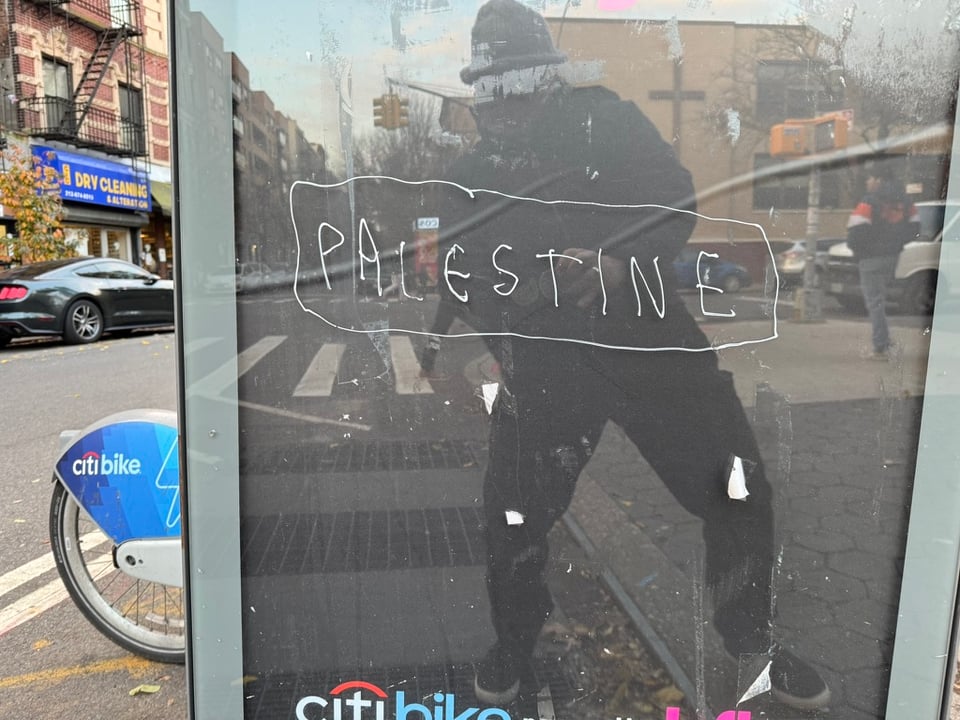
Lucy Sante: Lying low and working has been my vibe for the year. To some degree that has alleviated the sensation of being crushed by everything in 2025, beginning with but not limited to the current administration. Like I assume most people here, my anxieties were much relieved by the election of Zohran Mamdani, especially as it coincided with the obvious decline of the used-car salesman at the head of the government and the incipient fracturing of the MAGA web. I’m furiously knocking on wood, and I’m taking that little bit of optimism and wearing it for all it’s worth.
Francesca Kritikos: In 2025, reality became less cooperative than I would have liked it to be. I will turn thirty years old in 2026, and I am glad to be entering this new decade of my life with that expectation of dissidence and turmoil. Alors, c'est la guerre.
Chris Hontos: Smoke them while you got them. It was the year I finally watched Where Eagles Dare. It was about time and about time for a lot of other things too. Smoke them while you got them.
Certain types of love only exist in a rarified ether of air, and it's important to know how that air feels in your lungs. I don’t know if I figured anything out at all, but the chord eventually gets resolved.
Richard Burton is sort of like a stand in for who I was, Clint Eastwood a stand in for who I want to be one day and half the Nazi army a stand in for the cough I’m still trying to shake. The world creates and then chokes up lungs, and it has a sick bag on its head. You’ll annihilate half a pack of American Spirits if you have to.
Peace comes to us in some of our dreams sometimes, and that’s pretty good.
JoAnn Wypijewski: The surgeon who performed the second operation of the year on my left hand made an incision that lengthened my life line. I admire the worker’s graceful skill but have mixed feelings about the metaphor. Life is not for the weak. The enduring personal mind picture of 2025 – moving image, actually – is of me slipping on a bit of wet moss at a mostly dry waterfall in August and coming down hard on rock with arms bent back, shattering both wrists. I had just said to myself, above a whisper, ‘I hate this place.’ Now I howled like a wounded animal, which I was; I am. It was as if nature had roared to remind me of the frailty of puny life.
The enduring political image is the spectacle at 26 Federal Plaza in Manhattan early one spring morning. At one end of the building the sign above the entrance read ICE Check-In. Nothing more needed signal that the souls solemnly amassed, waiting for the day’s business to begin, were doomed to deportation. Outside the front entrance, people with court dates – most, possibly all, of them asylum seekers – slowly filled the plaza, a snaking ribbon of humanity, some dressed for Sunday, many with children scrubbed and groomed, and not one of them white. I was there with a Spanish-speaking friend who was handing out palm cards in many languages to inform people of the latest ruse the government was using to trick them into foregoing their rights. My friend was having animated conversations. I was reminded that ‘English Only’ has been promulgated in part to lull the native-born, to keep us stupid and alienated. ‘Parlez-vous Créole?’ I asked random black people in line, ridiculously, since even if I were able to recognize Haitians by sight I couldn’t have said anything more in French, which I’ve forgot, let alone Créole. No one answered Oui, though there was the bundle of cards in Créole I’d been given to pass out so I pressed on along the line. I was trying to help, a useless sort of help in a year when the government’s function was to make the masses feel impotent. Inside, court stenographers dressed down and went badgeless, supposedly to protect them from our small band of community witnesses. We were lectured against using phones while plain-clothes ICE agents broke courtroom rules without consequence. Their masked cronies, men and women in camouflage armor stationed menacingly by the elevators, hand-cuffed then-mayoral candidate and city comptroller Brad Lander the first day I went to court, as community witnesses recorded the scene and shouted ‘Shame, Shame.’
Months later, winter now, a church lady at an anti-ICE training regarded my bandaged or splinted hands and said, ‘You might not want to be doing this just now.’ She gave me a whistle, as she and a group of seemingly mild-mannered people talked of disruption, replaying a scene that has been occurring quietly all over the city and the country. Eventually, puny life also roars.
Samaa Khullar: “Grief” is the only word that encapsulates this year.
I’ve been thinking a lot about something my mother once told me about when she first saw the photos of the Sabra and Shatila massacre in the newspaper as a teenager. The carnage was so brutal it’s still seared into her memory 40 years later. She told me no one in the community celebrated any Eids that year out of respect for the martyrs. If that one massacre rightfully deserved the mourning and respect of the Arab world, Gaza demands that we stand still, stand silent forever. We will never be able to properly grieve every life lost in this genocide, and now, that small notion, the basic act of mourning, has also been ripped away from us by Israel. Moving on feels like betrayal. It feels like we are leaving our martyrs behind, only to be remembered on the anniversaries of their deaths.
I think about myself 40 years from now: how will I explain this time to the next generation who didn’t see it in real time? Perhaps I’ll describe the moments that felt like slow-motion. The numbness followed by guilt. The disgust. The crippling anxiety. The grief. The grief. The grief.
I hope and pray — despite the continuous disappointment of the past two years — that this time next year, I can say our people were finally able to breathe and rebuild.
Abdaljawad Omar: This year a new frame entered the frame of my being. An intimate confidante told me, with her straight face and her big hazel eyes, "I am only a suggester; you are the decider." When I first heard her sentence, it sneaked up on me. What is it to decide, when decisions have been made, are being made, and will be made on your behalf? The word lingered like dust in a sunlit room—visible only when one stops moving and looks closely, investigating that veil of dust that reminds one of the barrier windows like to pretend they are not. Decider. It sounded heavier than it should, like a crown placed on a neck untrained for such balance or glory. I carried it with suspicion.
For years, we Palestinians have inhabited a pre-scripted architecture: corridors crafted elsewhere, doors labeled in advance, exits that masquerade as options. Outcomes arrive already stamped, issued from faraway capitals, while decisions descend through Israeli interfaces—software thinking for humans, algorithms anticipating our moves, Artificial Intelligence rehearsing our lives and determining our moment of death. Choice, in this regime, becomes a hollow ritual, a theater of consent: you are invited to sign, politely, knowing the document was finalized long before you were even conceived.
The arrival of a new year in Palestine and elsewhere is also the arrival of a long list of deferrals—those things we have already decided to quit or leave behind, the items and relations we claim to be ready to move beyond. Yet they linger in our dark attics, neither fully with us nor entirely outside of us. It is also a time of reckoning with the self: with the things we have done, with the things we still wish to take up, and with the things that haunt our sleep, reminding us of our personal failings.
Antonio Gramsci hated New Year's, because for him every day should be a reckoning—an invigorating reckoning with the self. Every day should be a new year: reckoning with the past, the ability to take up, to abdicate, to escape or confront or move on.
It is the day we, too, should hate, because in our coded, algorithmic, sliced, racialized, and surveilled lives, decisions and suggestions have collapsed into one another—a collapse that is itself decided, suggested, pre-scripted into the interface. The only decision is to unmake this order. But unmaking carries its own cost, heavy and dreadful, a weight that refuses the fantasy of clean breaks or revolutionary purity. Here, the regime offers only one suggestion: resist or surrender, die or die. It is a reckoning that wrecks—not metaphorically but materially, concretely, through rubble piling up across emptied streets, a decision already taken every day, and placed on repeat. Here the suggester and decider collapse onto each other, and the decision is always the same: a wager on the perhaps of freedom. In 2025, that decision and the debris of the attempt to annihilate the Palestinian people linger. They remind us that we live in a world where neither the decision nor the suggestion is fully our own, at least not yet.
Lindsay Turner: In my head the year 2025 started in August, on my forty-first birthday, with death. My dear friend the poet Stéphane Bouquet died after a short illness and I saw my father, who had been ill for years, living for the last time. The next time I saw him, my father, he was dying. He passed away in October. The enormity of death coupled with the ecstasy of life—my joyful son turns two in January—has made me feel more unhinged than usual. Every single act of caring for my child since his birth—feeding, administering medicine, calming, shushing to sleep—is intimately doubled by this act’s negation, by the impossibility of doing these things, in other places, and especially in Gaza. How to hold it all together? No one has any idea, I know. Sometimes this feels like the only question there is.
Of course the year didn’t start in August: in April we went with the baby to Los Angeles where he ate pancakes and charmed the Silver Lake playground scene, and then we took him to Paris for July, where he ate baguettes and couscous and watermelon from the Belleville market vendors and fell in love with sandboxes in the Buttes-Chaumont. I wrote a bunch of poems but read few, saw maybe one movie, listened only to the music my friends sent me. I found great pleasure and energy in contemporary novels by women, though: books by Claire-Louise Bennett, Makenna Goodman, Caren Beilin, Joy Williams, Olga Ravn, and many others helped me imagine what a response to this world in writing might be—a response that has some counter-pressure, that pushes back, that explodes things as they are. And running through my head, even before his death, were Stéphane’s words to me in an email (subject: "tristement") after his sister died in mid-January ten years ago: because life continues, and because it’s the beauty of life always to continue, I wish you all a happy new year.
Will Harrison: 2025: the year I quit smoking weed; the year I moved out of Bushwick; the year I stopped shitposting. It was a squalid, repulsive, disquieting year, and also the first year of my life spent entirely in love. And while a lot changed, both around me and within me, it was a year that was dominated, like the last several have been, by a compulsive engagement with images. I saw anthropomorphic war planes dropping bombs and disgraced mayors smoking hookah and Chuck E. Cheese in handcuffs and MLK drinking a Slurpee. I watched fact blend with fiction, I watched the Epstein files redact and unredact themselves, I watched the footage coming out of Gaza slow, thin, and sometimes fail to arrive at all. I watched snow fall outside my parents’ window as I type this, and I watched the sun send rainbows dancing fleetingly upon the walls.
Lara Sheehi: I’ve been thinking (and feeling) a lot about the power of having one’s heart seared; about revolutionary love and the imprint(s) it requires that I/we must feel fully so it is not stripped of the political power it can harness. This is not professional brooding. I am here out of political demand. I feel the knowing ache, the visceral knowledge, of the affective connectedness that is needed if the world insists we remain inextricably tied up in affective states that detract, derail, and displace this searing pain through the empty promise of relief. Relief through looking away from Gaza; through compartmentalizing Palestine into a Strip, a Bank, a series of ’48 and ’67 Borders, an Occupied Eternal Capital and a floating Al-Aqsa, even if it brought The Flood. Relief through enforced amnesia of the forever wars of US empire that have always engaged in extra-judicial killings, whether in Venezuela or Iran. Relief through dislodging us from history such that every moment feels unprecedented; as though the kidnapping and tearing apart of migrant families are freshly pruned phenomena of imperial and settler colonial violence. Overwhelming, atomizing relief meant to crush us under the misplaced belief that our struggles must continuously be invented from scratch because they constitutively failed on arrival. This is the relief of dysregulating psyops. The refrain in my mind goes: “Your heart being seared is inoculation against disavowal”. It matches the rhythm of ache and joy, among other feelings.
I have been thinking about how allowing one’s heart to be seared, to be imprinted through the expansiveness and depths of revolutionary love, is to live with a psychic and emotional register that refuses to be subjected to the forgetfulness on which oppression relies. By living, feeling, and importantly, enduring, with a seared heart, Khaled Nabhan’s روح روحي –soul of my soul—is not just an affective fetish exported from Gaza. Or an extractive emotional device from which we can derive warmth. Or an offensive reminder of the humanity of Palestinian men. With a seared heart, روح روحي is a provocation that reminds me that the revolutionary struggle, especially if it is fought with the fiercest revolutionary love, is one in which life-making and loss are coterminous imminent possibilities. In their most powerful versions, they have the vertiginous effect of one’s (my) heart swelling and shattering at once, multiple times a day sometimes, as we yearn and fight for things that may never come to fruition. And yet, they still matter deeply.
This seared heart of mine has been acting as a stunning reminder to fight against the demands that we vacate our affect, numb ourselves, “rest,” excise the risk that threatens to unbind us, as my comrade Avgi always reminds me. In my hyper-awareness, especially now, of how my Arab Lebanese immigrant heart and body live across multiple time zones and places at once, I am reminded not to shy away from the burning hot sensation of searing. A ferociously repetitive return both to what constitutes violence so that it cannot seduce me and the presence we need to live in the fullest expression of militant commitment to revolutionary realities—now, in emergence, and in the future.
It is no wonder I have been spending more time with Walid Daqqa’s writing. His words crystallize with the power that propelled them to alchemize his prison walls: “I confess now, after twenty years of imprisonment, that I still do not know how to hate, nor to embrace the harshness that prison demands//I am still human, holding fast to my love as one holds burning coals. And I will remain steadfast in this love//I will keep loving you. For love is my humble victory, and my only victory, over my jailer.” Burning coals of refusal and defiance against his skin. Inoculation against disavowal. An imprint that defies his oppressors and connects him to his love, his land, and the certainty of (his) return, even if the form it takes is still unimaginable to us.
روح روحي tethers me to the centrality of this tenderness at the core of militancy, a lesson I had previously conceptualized mostly intellectually. With the unexpected gift of this year, with the globally connected struggles for dignity, self-determination, and revolutionary worlds, with Daqqa, it is a lesson that now lives deeply burrowed in my heart. Seared.
Benjamin Krusling: This year, I got tired of my tone, how it flaps like a dying fish between mournful, weary, and annoyed. I am all those things, and crazy, but events made me consider a new position on things, something more “adult,” without the pejorative, since I’m now unquestionably responsible for the state of the world, for how I’ve lived and not, for what I said and didn’t. I’m saying, obviously, my life has my fingerprints on it, even if they aren’t the only ones. So I’m thinking about that, as I’m packing up six years of living to move to Kensington, watching dark gray clouds sprint kind of sinisterly across this window on Gates Ave. I thought about how I spent the year tangled up with Vijay Masharani, way on the other side of the states, the “guilty strangeness” of art and the sad ghoulishness of discourse. I thought a lot about what Black said, about the “problem of partiality, of the necessity of living only one life” since I was pierced by the same feeling finally and irrevocably. Last night, I couldn’t sleep again, in bed and overcome by this immense metallic chime coming through the wall, like someone striking the beam of a scaffold with a sledgehammer, and thinking of all that had to get done, all I’m still trying to learn. And I asked myself, in one of those pitched-up inner dialogues whose total drama nauseates and inspires, is this really my life?? It was! And so it is, all cut up and singular, with new love on the way like a rock from outer space.
Lynn: Total Anthropophobia...2025 made me fully aware for the first time in my life that even those closest to me are totally OK with murder, war, mass extermination, forced starvation, genocide, and mass torture. They are not only OK with it, they like it, condone it, and will happily play with my toddler son with no qualms as they support American-funded Israeli bombs blasting children in Gaza to oblivion. I now realize that humans are not only still the same violent apes that we have always been, but that this ancient passion for violence and cruelty is now more present than ever in our species, fueled by the technology we wield. This is not end-times fascism. For me, what we are facing now is something that was always there, in our essential primate brutality, the insane death drive which nearly outweighs the nurturing life drive of our mammalian child-rearing. Silvia Federici and Ben Morea are right: this is a mortal struggle for life itself, against ourselves and the techno-capitalist monster we've built.
January: Living in Budapest with my family, it became clear after the US elections that Orban's Hungary was a preliminary version of what was ahead at home. In February, after giving a public lecture in Budapest, a man in the audience shook my hand and then, in a calm and rational manner, looking me in the eye, tried to persuade me that it was perfectly fine to shoot a child in self-defense if someone holding that child in front of their body as a “human shield” was trying to kill him. March: unbearable, frantic psychological pain while breastfeeding my son as Israel commences its stranglehold food blockade and the situation in Sudan worsens...about three people are willing to talk to me about this in any fashion...silence...April: I face censure in the academy and am socially shunned for my public critique of Israel's genocide...people literally hiss at me as I walk by...meanwhile, Orban hosts Netanyahu in Budapest despite his ICC arrest warrant...Israeli flags are flown on the bridge I have to cross to work...one brave soul throws one into the Danube...May: I am reproached and censured by a close family member for my repeated pleas to send aid to those starving in Gaza due to Israel's heinous and illegal aid blockade...I realize I want to write a book that is a weapon...June: my former best friend shames me in a blistering rant for betraying my extended Jewish family, "you are a curse" she says...July: I am warned that I'm being watched and that I need to stop talking about Gaza...August: I looked my closest family members in the eye as they told me that the endless horrors in Gaza are just part of the "war zone" and that they preferred to enjoy every day and not talk about it because "life is so short"...September: a return to teaching spreads the silence in new ways...people thank me for talking about it in hushed tones but refuse to speak out themselves...October: the infinite sadism of the false ceasefire...November: the hypocrisy of the academy and my discipline...December: red and green only mean liberation to me...FREE PALESTINE
Nora Barrows-Friedman: 2025 was mostly horrific. I can't get certain images from Gaza out of my head, and probably won't ever be able to. Actually, we should never be able to. This is what the world allowed to happen, without consequences (yet) and without punishment (yet). I think if there were a pathology that encapsulates how I feel about what we witnessed in 2025 it would sound something like chronic spiraling psychotic rage-shame, cured only by methods that I can't say on this platform. Gulags would be too pleasant for these genocidal fucks. We, who have kept our eyes open and not turned away, have collectively amassed so much anger that if it were a tangible object, it could eclipse ten thousand suns. We need to be patient, yes, tactical, yes, strategic, yes, and we need to stop it.
So, I wish for two things in 2026:
1) The whimpering end of "Israel."
2) Revenge.
Séamus Malekafzali: It’s difficult to think about this year as one cohesive span. Ever since October 7th, I feel like I’ve been unstuck in time. God knows how many people have said much the same, but talking about air being dry and water being wet doesn’t make it any less true.
I have spent the entirety of this year in a place I did not want to be: New York City. When I write that sentence out, all I can think of is childish petulance, but it is a fact, despite the ebb and flow of my love and hate. I left Beirut last year on the eve of the Israeli invasion, unceremoniously, suddenly. I regretted my decision immediately.
I watched the destruction of neighborhoods I knew from afar that year, and this year, I watched the killing and maiming of my own people from afar. I still find it bitter and difficult to revisit images from that war. I hate knowing there are people around me in this town who cheered this mass murder in the streets.
I remember seeing the martyrdom poster of a nuclear physics professor, Ali Bakouei, and his two children. His apartment was targeted on the first day of the war. The faces on the poster looked like my cousins, family friends, relatives I had fond memories of. The airstrike took out not only the entire floor his apartment was on, but the adjacent floor as well. I read in a newspaper that the firefighter who responded to the call was Bakouei’s brother-in-law. He found his sister beheaded by the blast, as well as her son. Her daughter had been disintegrated. The only way they knew it was her was through a DNA test.
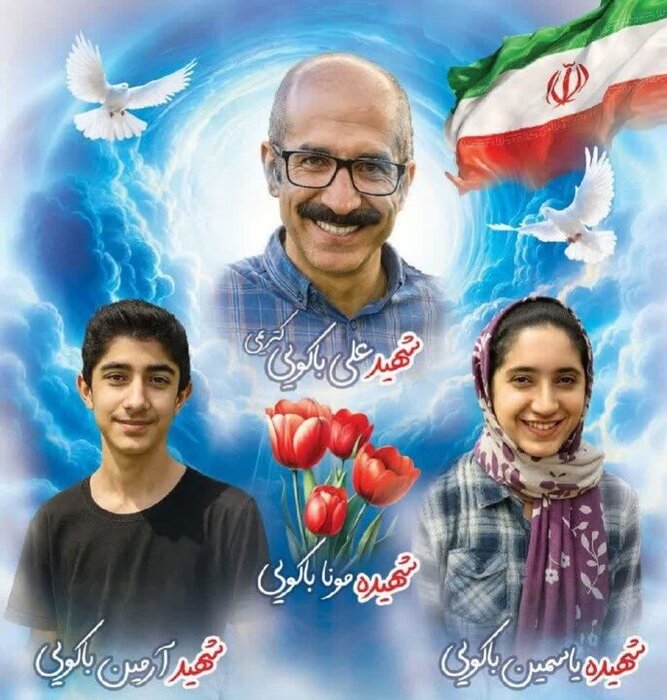
God damn anyone who tried to imply we were above the Arabs, that we shouldn’t have allied ourselves in any way with the subjugated of the Earth. I have seen what civilization brings, and I side with barbarism.
I have become extraordinarily alienated from the country around me. I’ve been blessed (or cursed) to not be jaded interpersonally. I still laugh, I still find joy in things. I haven’t become a bitter misanthrope, much to sometimes even my own chagrin. But I have become disdainful of ignorance, of rabid optimism and of miserable pessimism. I beg to be able to see things as they are.
I want to see the Mediterranean again.
Myriam Amri: This year, I realized that fascism was distorting my relationship to time. I experience things one part of the year, but they return as sensations months later, I have sudden flashbacks, but I’m never quite sure if I dreamt or actually lived through them, I remember events, but there is no longer any chronology to my memories, and I cannot recall a single thing about the month of February. Not one thing.
I spend January in Tunis applying for jobs all day and watching Al Jazeera with my mother all evening. Sometimes I go to my grandmother and find her glued to the same channel. In the fog of that repetition, mother, grandmother, Al Jazeera, cover letters, it might have rained a day or two, I can no longer distinguish between the winter of this year and that of the last, except for the destruction which keeps growing on my mother's and grandmother’s screens. In March, I’m on a US college campus, a friend texts “don’t walk alone” and I wonder whose number I should learn by heart “just in case” and I can’t feel anything apart from physical exhaustion. Instead, I become on edge but not while on campus. It hits me right in the chest in the middle of July, while I’m driving my friends around Tunisia, and we’re all pretending our friendship is not trauma-bonding and the sea is forgetful. It’s right there that the muddy mix of rage and fear that I hadn’t realized was lodged in me from March or from years, boils to the surface and I become snappy, I toss all night, and I can’t really explain to the others that there is mud and it is choking me because it’s July and I’m so far away from March. By November, I’ve received the meme of the world on fire a dozen times, and in Tunis everyone around me is having their own struggles with chronology. I listen to two friends debate whether the next revolution is in seven or twelve years, and I don’t ask who came up with these numbers. By November, I count the number of sighs attached to “this fucking year”.
In the last days of the year, my friend Malek drags me to the press archives. I spend the morning trying to come up with excuses not to go, and I have no idea why I resist it so much, except that time neatly aligned inside cardboard folders feels like a spit in my face to end this year. I look at the state press for the 1st of January 1984. Half of the front page is wishing a happy new year to the authoritarian ruler and no one else, and the other half is Palestine and Southern Lebanon and war and invasions, and I even find the word genocide. On page 2, there are photographs of protesters, but they’re called “looters” and “enemies”. In the economy page, it says “debt” and “crisis” and even neoliberalism was already spinning around the sun in 1984. Malek is looking at the summer of 1965, and she says it already tasted like now, back then too. We leave the archives, I tell her we need better records of our present, to document the details, the small gestures, the feelings, when you choke, when a chest is filled with mud. In 2026, I want to record time better, but I’m afraid of what there will be to record in the first place.
Lucy Ives: I don’t have much to say about 2025. I had a lot of weird dreams this year, including one about “tiny frogs born inside my clothing” (as my diary records). I also spoke to strangers on airplanes more than usual. On a flight from Chicago, I met a guy in his 20s who was traveling with his fraternal twin Rocko and who showed me drawings he had made of flowers emerging from skulls. From this person, who generously held my hand for several hours, I learned that air travel is the “safest mode of travel ever invented,” and that if I am as interested in time machines as I claimed to be I should “look into qubits.” Among my resolutions for 2026 is to (finally, after several decades) more concertedly look into, and deal with, my fear of flying.
Rouzbeh Shapdey: I spent the calendar year doing an international art residency in the south of the Netherlands. We were thirty or so artists, and each of us immediately regressed upon setting foot in the institution. Petty drama, gossip, romance—I fell in love and had my heart broken. Meanwhile, the question of what it meant to make art during a protracted genocide remained unspoken. At talks or in conversation, I parroted the same question: Where is the unconscious? Our world-historical moment is without symptom, repression, or ground to dig—only the brute violence of empire’s rabid decay foaming at the surface. I largely stopped writing and returned to music, probably to defend against this symbolic desertion. Music still felt nice, as did time spent with friends by the sea.
Or by the pool. When Israel first bombed Iran, I was in London staying at a friend’s on Stillness Rd. I went to Brockwell Lido and managed to get a sunburn. A few days later, I received an email from the institution titled “WALNUT DAY!” It ended with an injunction: Let’s go nuts!
Alisha Mascarenhas: Having entered the year under the cold winter sun of despair, I strengthened the muscles around my chest to meet it better. Spring bloomed, disentangled my ache. I rushed to meet the light and love entered, became my surrounding. I established a practice of stillness with others, sitting upright every morning with a hooded gaze. Summer was wet and stressed with longing and bewilderment, so I tried to let confusion be my teacher. Fanny died, and her presence came closer than ever in spirit: an ecstatic occupation of the mind. I was chasing something outside myself on the rocky shore, bound for the horizon. It wouldn’t come to me and I had to run, I thought, and I did, until my ankle gave out under a full moon. Stillness called me back. Fall came, and the children drew me out of gravity’s force, the melancholic tug of personal drama. I wrote down the poems they spoke to me; dedicated my effort in service to their ways of knowing, their affection for the sway of the grass in the wind. I crashed my bike into a car and felt bone break and slowly heal. I was often internally clenched with dread, pessimistically reckoning with the conditions that make connection difficult and necessary. Prayer came most easily when I was smoking alone on the window ledge in the kitchen at night. Something both deep inside and way beyond me kept glowing in the dark of catastrophe, reaching for something real.
Tessa Norton: 2025 definitely happened, which is more than you can say for some years. I’m prepared to accept that either 2023 or 2024 happened, but not both. This year, I started writing again, a lot—too much, really. I cannot believe the specific details from Gaza, from Sudan, which we now carry in our heads at all times; as a writer, there is no way to describe anything anymore without noting that every single word we form in our mouths also has this whole other set of words behind it which we are often very conspicuously not forming. I thought of Sean Bonney’s fuck the police poem a lot—too much, really. I changed shampoo, and although the new one is better for my hair I’m paralysed with an acute nostalgia for the old one every single time I use it. Every Monday I started filming a single minute of the same river flowing. There is a reason but I’m not going to tell you what it is. Despite all this, I carry some residual awareness that my favourite genres remain: screwball comedy, structural film, pilaf, household objects that are shaped like different objects for a joke, extremely long email threads, and parodic novellas of under 300 pages. I wonder sometimes if these things will ever return. Sous les pavés, encore plus pavés!
Jasmine Sanders: I have often felt that my early motherlessness left me too porous, without a proper barrier between myself and the world. In The Autobiography of My Mother, Jamaica Kincaid expounds upon this sentiment or state, via a protagonist whose mother died in childbirth, so that throughout her life “There was nothing standing between myself and eternity; at my back was always a bleak, black wind.” Of course my mother did not die upon birthing me. As a child, I was removed from her custody by the Department of Children and Family services. This separation felt like death, yet without its finality or clarity, so a kind of loss or lack or wound, which I have compulsively made public and therefore sensible, eternal. Winnicott famously believes there to be no mother or baby, but a “mother-baby,” a lone unit of two. I think of my mother’s uterus and I imagine there to still be a plate sized lesion marking our parturition, still weeping at 432 months postpartum.
Over vulnerability leaves one neurotic, indulgent,”defiantly sentimental,” as Margo Jefferson said. My life has been a series of vacillations, wild vaults from yawning, infantile neediness and stony impenetrability, just as pathological but more dignified. This is all to say that in 2025, too much happened. I grew tired of living through the wild tides of history. History of course paid my comfort no mind. Like everyone decent, I spent some of my time participating in the Palestine solidarity movement, where I attempted to be politically useful, but my revolutionary commitment was limited by the problem of my personality. I awoke one day and suddenly I was surrounded by Marxists, Leninists, Marxist-Leninists, Maoists, Dengists, an avowed Assadist (she/her) such that I begin to wonder whether one arrives at their political orientation by picking a man and adding a suffix to his name. Everyone was very into Fanon. At some point, I grew tired of this priapic mode of study. I wrote exactly once the phrase “imperial core” and decided to schedule my own intervention. I went seeking in my reading a certain gendered, essentialist (I know, I know) mood. I wanted a rendering of colonization so incisive, it needn’t utilize the word itself. A reminder that One needn’t hammer at something (penile) head on. I desired an approach that was more…slant. Annie Ernaux on the taste of class subjugation. Duras delivering with “the base facticity of stones” life in French Indochina. Arundhati Roy. Rosa Luxembourg. Kincaid, always. Gayl Jones. Historiography is brutal absent some smattering of sex. Attraction during capitalist extraction. In that vein, I read Tony Harrison’s poem, A Cold Coming, for something improbable and boldly seminal. Re-skimmed compulsively certain sections of Against the Loveless World. Susan Abulhawa is so romantic, though I don’t know that she’s thought of that way. Rosa Luxemburg certainly is. So is Sally Rooney. If anyone else has noticed the ample descriptions of skin color in Rooney’s Intermezzo, they haven’t mentioned it. White arms. White faces. Enough descriptions of milky white breasts, that I began to wonder whether she had seen any other color. Maybe nonwhite women can never be thought of as romantics, and white women are only ever considered such. The problem of womanhood persists across the races, though there was a time when I suspected otherwise.
Beguiled by the lush, batty interiority of the modern British subject, I read Virginia Woolf, whom I adore though she would have called me a negress, which I might have found funny. I need to think about it some more. Woolf refused many elements of her stodgy Victorian upbringing, forsaking the heavy furniture and mores around women’s creativity. Yet the help, she kept, relying on live-in domestic help, with whom she had fractious relations, for the remainder of her life. Conveniently Absent is the role of the help in minding that room of one’s own. Jean Rhys felt necessary after. Then Derek Walcott. Then Ariel Saramandi’s essay on being sexually harassed by Derek Walcott. Sad Tiger. The Incest Diary, another perpetual re-read.
In September, Buoyed by faith in my knowledge, I volunteered to go to the West Bank for the tail end of the olive harvest season. Upon entering from Jordan, the first emotion to visit me was a shocking, radiant loneliness, a loneliness that punctured the veil of competent placidity I had donned for the border crossing. I have often feared that my lack of proper (by which I mean bourgeois, nuclear) parenting, left me unsuited to family life, any coupling aside from my mother. Yet I was placed within a family and found every member completely gorgeous, a tragic, near stupefying kindness. “They don’t deserve this,” I cried stupidly. I experienced my American-ness, acutely, as a state of uncouthness, which everyone says we are. The only suitable payment for the generosity I was paid is an end to Zionism. I’m not hopeful but I am devoted!!
Since returning, I have a certain inability to narrate. There are my 36 years of life, then there are my 3 weeks in the west bank, existing outside of linearity, just beyond myself, outside of me, outside of my mother to whom I lied about the visit, outside of our time or any other. I don't think that my time in Palestine was “traumatic” but exists, for me, with a trauma-like resistance to integration.
It is supremely ungraceful, even arrogant, to reduce the bald brutality of life under occupation to an affective encounter by a Western visitor, this insistence on minding my own knotty, gothic interiority. Palestinian authors are best suited to writing about Palestine. I’m dubious of the political project of “bearing witness” and the limitations of emotional transformation, expounded upon by the likes of Lauren Berlant and Saidiya Hartman. .
Witnessing, like feeling, is only so useful. Yet, for now, it is all I have. I offer all of it, humbly, to you.
Samantha Hinds: Ghoulish, slithering, kinetic 2025. For three months every fall Saturday, I spent hours crawling on a dirty church floor pretending to be an anemone. I wrote about migrant biometric dragnets and doxxing but read about silk and hijackings. For a ritual séance for Ulrike Meinhof, I bought everyone stiff black night guard shirts from “Propper,” the prepper outlet. (The tactical world has much to teach us about hidden convenience zippers.) I was dragged naked down a silver tarp covered in orange sigils and wetted with a medical-grade lubricant, because that is how I cope with fascism. A year of wincing through interminable dark: When Divya and I rode the Spook-A-Rama in Coney Island, I squealed and clutched her hand. For work I reviewed war crimes and surveillance loopholes. My front tooth incurred an indent from grinding on the day of the Kirk assassination.
A bad year for survivors. On our second date, a millionaire with one glass eye took off his suit jacket to reveal suspenders depicting the faces of Henry VIII and his wives. I was invited to perform a group effigy of Epstein directed by Alice Aster, who dressed me in a deconstructed Laura Ashley cocktail gown and a red sash embroidered with a loopy cursive “SCHIZOFEMINISM.” For Halloween I was Lucifer just after losing the battle for heaven. An SFX artist kneeled to glue a severed artery to my bare thigh. I woke up on November 1st smothered in migrating stage blood and yellow-blue airbrush splotches, then walked to get coffee with the bulging “wound” stuck to my sweatpants.
Do you believe in life after love? On January 1st I had dedicated this year to “devotion.” Shedding maneuver, apparently. I craved romance, but instead rejected everyone in what my little sister Olivia called “The Rampage.” Better: I made covens and troupes of haunted-looking water signs who laid their heads on my shoulder hesitantly. Who texted me boppy little .aif files late in the night. At year’s end I attended the final noise set at Intercomm, a DIY space that would not survive the Ridgewood of imminent Whole Foods. Bongowattz whipped a bulb around his head in krunk pantomime, leading us in a call-and-response of Cher’s “Believe.” We made the kind of stomping that makes the floorboards feel like a tumbling academy trampoline.
I became an Aktionist in practice and usually chose celibacy in private. My instincts were mostly right.
Olivia Crough: In January, Anthology Film Archives played Peter Watkins’s La Commune (2000), a 345-minute document of a mass reenactment of the 1871 Paris Commune in an empty factory. The Courthouse theater was full, and I think this was the most ecstatic communal viewing of my life. Watkins – who died in October – recruited hundreds of non-actors and asked them to form study groups to assess the relationship between the Commune and the present. These discussions continue, improvised, throughout the film. After the screening, Sarah R. and I agreed that we should all participate in group reenactments, not as fixed rehearsals but as something spontaneous and open. Adelita Husni-Bey does something like this in her art, which I hope we will see more of in New York.
In May, a terrible anniversary: 5 years since I lost a beloved friend. His death was sudden and violent, and I don’t have language for it. I remember feeling embarrassed by my banal and dumb feelings: my private anger at him and my belief that the uprising that spring would have kept him alive. I remain fixated on my own aging as a marker of distance—just as I feared, every year my friend looks younger, smaller! In Bob Glück’s About Ed he describes “sickening tears, because the shape of Ed’s life had become apparent.” I keep returning to this exquisite book to try to deal with the intolerable fact of living (and writing) after such death.
What else? Hicham started a cool film magazine (Narrow Margin) and I regressed to a teenage passion (snowboarding). Bryce, Sheehan, and I drank from a holy well at my great-great grandmother’s grave in Ireland. The universities are imploding, but I taught courses on Marx and cinema with funny and curious students. Palestine will be free.
Nour Ammari: Another year since I last wrote for this bulletin, and I'm not sure much has changed. I thought I'd gotten braver, but maybe not. Wishful thinking hits hard until you crash into the reality that your efforts may have meant nothing. I don't feel nothing—I feel guilt, recklessness, and the weight of things I can't control. What feels catastrophic to one person barely registers to another, and none of us are victims in this. That's just how it is. We all live with the consequences of our actions, even when we feel simultaneously that we deserve harsher judgment and no judgment at all.
There’s so much happening with my family that I don't know where to begin, so I won't. What troubles me is how deeply I feel about my own life while efforts for Palestinian liberation, against ICE, for trans and BIPOC communities continue with such resolve. The contrast makes me feel selfish. Maybe that's the point: we all have things that feel enormous from our vantage point but shrink under objective scrutiny. I'm not interested in fixing this tendency since it seems fundamentally human. What matters is staying conscious enough not to let personal turmoil eclipse what's happening in the larger world.
Maybe growing up in America programmed this individualist reflex into me. Maybe not. People everywhere look out for themselves and their own, just with different cultural packaging. We’re all navigating the gap between what feels true and what is true, between the scale of our private pain and the scale of collective suffering.
It's fine to feel bad about your own selfishness. Feel it fully, even. Just don't let that guilt become another excuse for inaction. The helplessness is real and palpable when you're day to day feels this close to the Palestinian genocide (multiple genocides, actually... how completely fucked is that. Seriously, how fucked up is it that I even described my daily life in New York City as something with even an iota of proximity to a fucking civilization destroying war crime?) you can't directly control.
Your feelings are valid, so okay, feel them. But feeling them doesn't exempt you from showing up. We live in a world where personal convenience and private pain constantly compete with collective responsibility, and the truth is neither cancels out the other. You can be drowning in your own problems and still be expected to care about someone else's survival. That's not unfair, that's just the deal. Your emotional bandwidth doesn't determine what's happening in Gaza or the West Bank, at the border or in your own community. The work exists whether you feel capable of it or not. So feel incapable if you need to, then do it anyway. You have absolutely no excuse to sit around lamenting how things are if you're not in the fight. Your feelings about injustice mean nothing without action. Want a seat at the table? Pull up a chair.
Here's to another year of trying.
Jessica Stoya: I started 2025 feeling pretty OK about the relative stability of my business in Serbia—providing my advice column to Slate, and intimacy coaching services through a friend’s California-based practice. I was in university part time. Yeah, it had been a couple of years of hell trying to set everything up to function, work wise. I’d run into issues because OnlyFans suddenly and inexplicably couldn’t send payouts to my company here. Other issues because Stripe believes that Serbia is under sanctions (is it because they’re confusing Serbia with Siberia? They think we’re still sanctioned from the 90s? Unknown. Regular customer support couldn’t answer those questions). By NYE 2024, though, I’d figured out what functioned in combined terms of market and access to payments and infrastructure, and it was supposed to simply be a matter of streamlining the system. SPOILER: It was not simple. It was not a matter of streamlining.
I see my hairdresser fairly regularly. She’s lived in a few places and paid attention to politics in all of them. We chat, throughout the appointment, about politics—local and international, formal and also in the sense of how these things affect the, well, the complex and manifold majority of the population who have to navigate what has been wrought. In early December she told me she had to apologize. I thought she was going to apologize for the fact that the woman ahead of me had taken an hour longer than expected. No, she needed to apologize for spending the previous year thinking that I was being hysterical about the US. That maybe a third of what I feared would occur over the course of the whole four years. She was apologizing because, in less than a year, everything I’d spoken out loud had happened and often progressed to an even more unnerving place. I said “ennnh—the whole situation is so insane that I don’t blame anyone for assuming I was overstating the depths to which it would descend.” She agreed. What has happened was unthinkable to the rest of the world. Even the parts of the world which have capitals which are still scarred by American Overreach from decades prior.
People who worked for organizations supported by USAID felt it first—before spring had even started. Then people like me, who are profoundly tied to both countries. Then those whose business is wholly or significantly patronized by US clients. By July, the dollar was worth 80% of what it had been at the start of the spring. I had an ever-present math problem—income in dollars, fixed costs owed in Serbian dinar, euro, and British pound. By July, it took every last shred of patience in me to not hang the phone up in a rage as a friend in the US went on about what would happen “when” this started to affect people. By July, I’d banked my test scores and processed the shock of hearing student services drop their usual “you can do it, give it a go” tone to flatly acknowledge that most folks actually wouldn’t be able to juggle everything during these specific circumstances.
Here, at the beginning of 2026, I feel pretty OK about the incontrovertible reality that I have nearly zero ability to affect any real stability for myself, my household, community in any of the many senses which are applicable, or really anything. But I’m in a place where people are used to chaos. Where the culture was formed and forged in centuries of chaos, every generation, near to the tempo of clockwork. Yeah, things are crumbling—the US, here, everywhere. And spring will come, and we’ll cope. Summer, and we’ll navigate. Autumn, and we’ll mostly survive. Sometimes something gets significantly better for a while. All you can do is your best to keep your head—to be smart.
Flo Li: Every morning, I make a cup of tea and do morning pages—3 pages, longhand, stream of consciousness. I don’t always make it to 3 pages and I don’t always do the morning pages, but I always end them with a list of 5 things I feel grateful for, a practice I started in 2023 during a period of prolonged dread and depression. Scanning over my daily “5 things” from the past year, the heaviest hitters include: “good sleep”, “smooth poo”, and “wheel keeps turning”, which became my euphemism for the inevitability of change. This year I tore down several load-bearing pillars in my life. I quit my jobs, moved over 8000 miles, and left one family and home to make sense of another. If I flipped through a rolodex of experiences from the past 12 months, I suspect the cards would either turn in perpetual motion, or accidentally fly out. This year the wheel turned, and gratefully, I was steering.
This year began with my screens ablaze with the LA fires. I texted my aunt and uncle for updates from Pasadena, and received photos of my 78 year old uncle, masked up and shovelling leaves outside their, thankfully, unharmed home. This year I did many things for the first time. I swam in Lake Michigan, attended an artist residency, lost my mind at said artist residency, made a leg of lamb, left my birthday with a surprise hickey, cried as I watched one of my oldest friends get married in front of a double rainbow, was graced by the sweeping and alien splendour of the desert. Lately, I’ve been returning to an image from mid-summer. It was Mena’s birthday. Full from haphazard tacos, spaghetts, and belly-laughter, we stared into the bonfire. In the image, the flickering embers mimic the view from a descending plane, like when you’re flying just high enough for the wavering city lights to paint a pointillist topography. We called it a night. In the dim glow, Tara stared at the fire and whispered, “how do you say goodbye?”
This year closed with a silent, whipping fire that engulfed seven of eight buildings in an apartment complex in the city I call my new old home. In the hours following the fire, people immediately set up several mutual aid systems. In the ensuing days, there was a near-constant stream of people paying respects and leaving water for the departed spirits at a self-erected memorial. A couple days after the fire, Stefani and I signed up for a volunteer shift via a chaotic Telegram channel (read: 150 new messages every hour). Every volunteer site we visited was almost comically overflowing with donations and eager volunteers—there are only so many ways for 15 people to pass and stack toilet paper across a metre-long stretch. Described by the government as “blotting out” their own relief and rescue operations, these mutual aid systems disappeared two weeks after the fire. The Telegram channel vanished, and any sign of the memorial existing is untraceable. This year, like most, the ceaseless glare of authoritarianism, repression, and climate catastrophe continued to stretch across borders and screens. This year the images were resplendent and searingly irrevocable. This year, the wheel kept turning.
Juliana Halpert: Berenice died in my arms at around three in the morning in early May, lying on a metal table at the animal hospital on San Fernando Avenue. The vet techs let me sit on the metal lab stool awhile as I wept on the phone with my mom. They cut a few pieces of the long fur on Berenice’s hind legs, gave it to me in a small glass vial, and took her away. It had all happened so fast. She wasn’t even four yet, I whimpered as I wiped my nose on my fleece. The vet techs were kind. I could tell she was a special cat, one of them said, rubbing my back. A dog whined in a cage nearby.
The intensity of the grief surprised me. It seemed insurmountable. It was possibly the most painful thing I had ever endured. I was reluctant to share that with anyone lest they think I have never endured anything painful. I couldn’t shake the impression that Berenice was still out there somewhere, suffering, lost, abandoned. That she might think I had forgotten her.
Her ashes sat inside a yogurt cup wrapped in a blue velvet pouch on my nightstand for months, until the day after Thanksgiving. That afternoon, I had decided to dust and clean my whole apartment. I moved all the stuff atop my dresser and bookshelf and nightstand outside. The sun had finally come out and the air was clear and the highway was quieter than usual. My upstairs neighbors were away. It was a lovely day and I had it all to myself.
I couldn’t find my garden trowel so I grabbed a pie server from the kitchen and picked up the velvet pouch and walked up the rickety stairs to the hill above my backyard. It’s steep but wide-open and has a great view of Mt. Washington. Berenice used to love bounding through the long yellow grass up there. I dug a small hole in the soft dirt with the pie server, opened the yogurt container, and poured the coarse white ashes in. I covered them back up and put a stone on top. The soil felt cool and soft on my hands. This is the only way, I realized. Berenice didn’t belong down there, in a cramped studio, amid my mortal concerns. I said goodbye, squinting in the sun, and shed a few tears. Then I walked back down, threw the yogurt container in the recycling bin, and finished tidying up. Soon after I started to feel a little bit better.
Sana Saeed: Another year comes to a close and I am still in October 2023. Not because of some morose dedication to misery, grief and performative martyrdom in front of the mirror but because that is the moment in time that grabbed me and rooted me firmly into place. I am still in October 2023 because that is the month that whatever remained of my already fledgling grasp on hope--the belief that good will prevail and that people will point at Evil and condemn it, when it is so utterly undeniable and declaring itself as such--completely let go. This is not to say I embraced nihilism - not at all. As a person of faith, a Muslim, there is no room or allowance for nihilism in my belief system. As an adherent of Marxism, there is also no room or allowance for nihilism. We fight for the Unseen. The fight for justice is long, it is difficult and it is not within our immediate grasp - we do the work we do, in pursuit of good, for a world we will never get to see but must believe is possible; we must believe it is inevitable even when we feel our last breaths as we drown in the dystopic hell created to maximize shareholder profit.
But I am in October 2023. This is what mourning has looked like - frozen in place but living life, every day. Waking up, working, loving, laughing while carrying the knowledge that something fundamental has been revealed and cannot be undone. It is moving through the world with the understanding that the lines we were taught existed -- between right and wrong, between life and expendability, between humanity and cruelty -- were never as firm as we were promised, never as firm as the history books and sermons promised.
In 2026, I will continue mourning and I will continue fighting - not only is this obligatory, but it’s all we can do.
Dave Tompkins: Leslie Tompkins began her 89th year at Mercy Atrium, recovering from a TIA (Transient Ischemic Attack) and spending her New Year’s Eve with a Twilight Zone marathon. Episodes “Where Is Everybody?” and “After Hours.” Everything too close to home, where she wishes to remain. The next morning she recapped for us while the Andy Griffith theme whistled down the hallway. (Wish it was the Fresh Gordon version but hey.) The Mayberry laugh track was at full crank in another room. We got her home on her birthday in time to tear up while Mayor Mamdani was sworn in. So much respect for the healthcare workers who took such good care of my mom, listening to her time-bending, laughing with her while working over the holiday and navigating a system that's being gutted. And those who do it while being bombed. And love for my partner Frances who helped keep my mom comfortable and quelled her worries about the house (“Dust is a sign of a life lived”) and planned for future steps. The basement is no longer on the map. So many lists. A new one every day for the woman who signed her mix tapes as Lister. Or Listered. Listening in the hospital parking lot: “Protection (Kwes Remix)” The Invisible, “Rage Love Strange Love” Ugnė Uma, '“Lead Paint Test” billy woods, ELUCID & Cavalier, “Beach” (esp second half) HxH, al.divino “moon&stars,” “Love Is A House.”
Sadie Sartini Garner: It was the year of the Cybertruck. It was the year of generative AI. It was the year of Geese. It was the year in which the present—always composted with the past—abandoned its forward march and surrendered plainly to outmoded futures and fantasies, warping them into disproportionate but familiar shapes. In other words, it was the year of caricature.
It was the year of Zoloft. It was the year of industrial, harsh noise, spooky ambient. It was the year of happy black metal. It was the year of Lana Del Rey and Lana Del Rabies. It was the year of me not being fair to Geese. It was the year fairness gave way. It was the year my football team won a trophy. It was the year my football team nearly got relegated. It was the year of failed regulation. It was the year of the nervous system.
It was the year I began and ended watching John Lennon sing “Everybody had a hard year” over and over. It was the year of secondhand crack smoke on the Metro. It was the year of the no-longer-mentioned fires. It was the year of Katrina’s unremarked-upon 20th anniversary. It was, like every year in the decades before it, the year temporary shelters were washed away in Gaza. It was the year in which it’s happening again. It was the year of looking back in anger.
It was the year of Hunter Schaffer’s new passport. It was nearly the year of exile.
All year long, it was the year of things I’m not talking about yet.
It was the year of shame. It was the year of being humbled. It was the year of humiliation.
Emily Hilliard: 2025 was the year my grandmother Georgette died. It was not unexpected; she was 94, had been living at a memory care home for several years, and was no longer speaking in the weeks before she passed. Even though she had been in what felt like an interstitial state for a while, her death was a massive loss for me.
Auspicious circumstances—I was her first born grandchild and only granddaughter —primed us for a special relationship, but we found early on that we also just enjoyed the hell out of each other’s company. We were both Tauruses, so her love of little delights (often sweets), whimsy, and artful curation of her domestic space found a welcome home in me. There was a stretch—me in my 30s and her in her 80s—where we both lived alone. We kept each other company with regular letters and calls. I loved her hands and her laugh and when she taught me words in Flemish (her first language). When she graduated high school in South Bend, Indiana, she got a scholarship to the Chicago Art Institute, but her parents frowned upon her attending. I wonder what her life would have been like if she’d gone, and though she never talked about it directly, I think she did too, but she found ways to bring her creativity into everything she did.
There’s so much of her that’s a part of me and the years to come will be about learning what the world is like without her here, at least in this realm. But a friend told me that I will continue to have a relationship with her the rest of my life and that it may even deepen in unforeseen ways.
Loss has a way of reminding you of all the other losses you’ve experienced, and bracing you for all the other losses you will experience. It also makes you more empathetic to others’ losses. It reminds you that loss at an immense scale is made up of so many individual losses. Empathy is not the same as solidarity, but it can be the seed for it.
Catherine Quan Damman: Next year I’d like to alleviate suffering instead of causing it.
A.J. Daulerio: I woke up many mornings this year in a state of frantic misery exacerbated by my phone usage. I don't know how I became addicted to my phone again—it’s such a 2016 addiction, like synthetic weed, or ketamine—but as we all know, this was a uniquely terrible year to relapse because the world is full of terrible people.
This is how 290 to 312 mornings went for me this year: Open eyes, paw at bed for phone, unlock phone, scroll emails, half-read newsletters, fuck up Wordle, delete text messages. Self-soothing!
Sometimes I’d check the time, and it would be something, like, 3:38 A.M. Instead of turning the phone off (or throwing it out the window), I’d turn it face down and stick it under my pillow so I could get two or three hours of fitful, gurgling sleep.
Check this out. One night, I was delirious and practically dead on the couch, but my eyes cracked open and immediately got swallowed by Instagram. Even in my catatonic state, I signed up for a fitness app designed to help fat-ass middle-aged men who are phone addicts reanimate their disintegrated cores by rolling around on the floor for 15 minutes per day like a wounded walrus. It was only $4 for the first 10 days, but then it was, oh, I don’t know, $3,000 a month after that? $300,000 maybe? $200,000 if I used my vampire coupons? I didn’t give a shit.
The point is, I don’t know how I fell into this hole again. Oh, and also, you know what? FUCK One Battle After Another. We’re such tools.

Isabel Ling: Last New Year’s Eve I thought I was going to begin 2025 stuck on the BQE. A sixteen wheeler carrying diesel had tipped over, blocking the freeway exit and setting our plans for a big feast at East Harbor Seafood Palace back by two hours. With traffic at a complete standstill we tumbled out of Lo’s car, our still-festive mood buoyed by the novelty of being able to stroll on this forbidden infrastructure, and peered over the edge of the freeway squinting at the wreckage. Just as things were getting desperate, there was movement, unexpectedly, in the opposite direction. We ran back to the car to find that an uncle had seemingly single-handedly gotten two MTA buses to block the road from oncoming traffic and was directing cars to turn around and get off at the previous exit. It felt monumental and lucky. We whooped and hollered, exhilarated to be in motion. Someone pulled out the huge Palestinian flag Lo keeps in the trunk for actions and flew it out the window.
Personally this was a year of learning to be with others in new ways. This looked like closing out MOLD, the magazine that I had edited for four years, with LinYee and the rest of the community that has grown up around the publication in Brower Park. It looked like celebrating one year of knowing and loving Thomas. Like navigating conflict with a neighbor. Like Kat sitting with me at the doctor’s when I fractured my hip. Mostly, it was practicing asking for help.
Across the year, I’ve found myself returning to something Jamieson Webster writes about in her book, On Breathing. Framed in the context of our shared air and the politicization of breath during COVID, she explains that in order to achieve collective liberation, there must be a sacrifice of personal freedom. As I’m writing this, my mom is telling me that these words, which felt revelatory to me at the time, echo an old saying in Mandarin: “犧牲小我完成大我.” This year liberation has felt especially far away, but I’ve found shreds of comfort in knowing that a better future lies in drawing each other close, making myself small for a bigger, more whole us.
Nina Renata Aron: I began the year lying on my living room floor listening to “Sailin’ On” by Bad Brains, which made me cry for some reason. The news threatened to sink me, so it was a year of continuing to do things I knew would help keep me on an even keel. I continued to read and write. I continued to research a book I’m trying to write. I continued to not use AI. I devoted myself to soccer, playing and watching many times a week. I continued to grieve my father and learned more about the phases of his life, the many selves he contained. These selves now fan out before me like a deck of cards when I think of him. I cooked and traveled as much as possible. I visited the Ruth Asawa retrospective twice and Copenhagen twice. In Copenhagen, both times, I found myself out late laughing with a group of smart, interesting people in their 30s, 40s, and 50s, having actual fun. This year, I plan to investigate whether such a thing is still possible in America.
I finally wrote about my nose, in an essay about Moshtari Hilal’s wonderful book, Ugliness. I wanted a dirty martini at least five dozen times, but didn’t have one, and made it to eight years. I did annoying guided meditations from a little app, rolling my closed eyes at the exhortations of chipper Australians, but day by day, the practice softened me. I especially like the way many of the recordings end: when you’re ready, open your eyes.
Adnan A. Husain: Every day begins with a scroll through the carnage and suffering of the Palestinians in Gaza who continue to post shamelessly the shameful atrocities against them. Frankly, there has never been a people of such dignity confronting such indignities. Some of my days in 2025 have not revolved emotionally around the present awareness of such genocidal horror, but they have been very few. Since the “ceasefire” and return of the “hostages,” the chorus on social media has shrunk to fewer, quieter pleas, despite the ongoing killing and continuing obstruction of the necessities for life. Instead, the Gazans drown quietly in winter rain flooding their encampments beside the ruins and rubble of their homes. This is the reality of how 2025 began and ended in my imagination.
However, I’m supposed to feel good about achieving a political victory for Palestine! After multiple attempts to bring our pension divestment motion over three months this Fall term were derailed by procedural games and obstructive tactics deployed by a few inveterate ultra-zionists and acceded to by the weak liberals running the union, finally late in December my university faculty union held a vote. It went in favor, by a substantial margin, to demand our pension – shared with several other universities and their employees – divest from military industries and violators of international law, citing specific examples of Israel’s illegal occupation of Palestine. Hooray!!! A Sisyphean labor for what felt a pyrrhic victory: nearly a year of organizing for a valuable but narrowly framed symbolic vote when a full BDS endorsement might have been possible. Even so, two years of genocide and we should celebrate such a tepid collective response from only the twenty first university faculty association in Canada to take such a vote? It seemed to sum up to me the futility of politics in the West or, at least, North American academic institutions.
Perhaps I would have felt more connected to the collective political achievement had I been at home and able to join my “comrades” in celebration afterward. They would prefer not to be called comrades, and I wouldn’t have preferred to be in a bar, so perhaps it was just as well! Instead, I was battling spotty internet to attend the online union meeting late at night, eight and a half hours ahead, alone in a hotel room in Tehran. That made for quite an incongruous feeling of the contrasts! Earlier that day I had visited the former US embassy, now renamed the “jasus khaneh” or “den of spies” and repurposed as a museum of American espionage. Perhaps it was only natural to feel just a muted satisfaction at the successful divestment vote while absorbing life in Iran, the only state in the world that has openly aided Palestinian resistance while suffering “maximum pressure” and “snapback” sanctions after the 12-day war Israel launched six months earlier that claimed over a thousand dead Iranian civilians. My friend’s aunt showed us her back bedroom window that shattered from the bombardment of a major tower block over a kilometer away in Vanak district, a skyscraper still visibly disfigured. Parenthetically, Tehran was very different from what I expected and nothing like portrayed—a whole other set of reflections!
2025, I realized, has been my year of escaping the West and dreaming the East. I spent several weeks in the Spring in places like Granada’s Albaicin, which felt like a liberated enclave from Europe; Cairo, which I had never really liked for only my third visit and first in twenty years; Tehran for the first time ever; and Istanbul, where I have traveled to on three separate occasions in 2025 for lectures, conferences, summer workshops. Although I have studied and teach the history of the Middle East and Islamic World, the last couple of decades, I hadn’t spent much time there – a family vacation trip to Morocco, a period in Amman, a couple of brief touristic visits to Istanbul. My most memorable visit was in 2006 to the West Bank for a couple of transformative weeks. After years of language learning and research, there hadn’t been as many occasions for really living there. My favorite country, Syria, where I had spent half a blissful year studying Arabic in Damascus during the early/mid 1990’s had been destroyed by war; the places I most wanted to visit since university days, Iraq, Iran, Afghanistan and Yemen remained “dangerous”. Even so, I still couldn’t live now in the Middle East with my family at home and work obligations at the university. But, I had suddenly seized almost every opportunity in 2025 to spend time in the region. Why?
I think the genocide has changed everything emotionally. It is excruciating to be in social spaces where it is abnormal to acknowledge the horror of the genocide. In Turkey as in Canada or the US, most people can do little, it seems, to change their government’s complicity in Israeli crimes against humanity, but in Istanbul you simply feel that it is normal to reject the genocide as repugnant to human decency. Somehow, this is still contested, awkward and embarrassing to highlight in almost every space in my normal existence in Canada. That has just become intolerable to me. It now strikes me as wholly unsustainable to live such a contradiction daily.
Walking the streets of Cairo, Istanbul, or Tehran provided an unbelievable relief and genuine sense of freedom when I have felt through so much of 2025 that I could barely breathe. But dreaming a different life is simply impractical. Dreams meet the realities that no place can simply resolve all the problems and contradictions. Imagining a different world is my only answer. The choice seems either to slip into unconsciousness and amnesia or to continue the laborious, frustrating, and barely rewarding struggle to make change in these sclerotic late capitalist consumer societies that claim to be democracies in the hope that 2026 might be different or at least a substantial step in the direction of dignifying humanity.
Chris Molnar: Biking to work across the Manhattan Bridge for the past few years, I passed a little plywood shack growing on the Chinatown side. Constructed in the gap where the subway line doesn't quite meet the bike lane, it blends in to the concrete, built to resist weather and curiosity. As months went on, it became obvious the location had been carefully, wisely chosen; neither parkland nor roadway, the padlocked shack evaded official responsibility or scrutiny, and in time developed sophisticated features like a closeable window and reinforced door. Still, while I had occasionally seen clothes and bedsheets fastidiously hung nearby, a pail for water, milk crates and an extra sheet of wood stacked as if for further development. I'd never seen anyone going in or out, but it had the qualities of the finest reclaimed space (a dwindling resource in the city), land forgotten and then tended to with patience and care, attention and invention.
One cool evening this past summer, biking back to the city on the weekend not early or late from work but at sundown, coming from Transcendental Meditation in downtown Brooklyn, I looked to my left and saw the sheet of wood laid down across the milk crates, with a simple table setting of soup, rice, appetizers. Under the backdrop of the golden hour, unreally blue and tinseled white, a middle-aged man wearing changshan sat eating dinner, the door and window to the shack open, inside dark but still clearly larger than it appears from the outside, at least as big as my first room on 1st Ave. (a closet with a window and a futon that could not fully extend). This was the moment when I realized anything could happen, that a modern Dersu Uzala not only could but did exist in 2025 Manhattan, beholden to no one, a hero to me, to anyone who believes that real dignity and beauty can emerge from under the dark clouds that shade us.
Salma Shamel: “Sorry, I don’t vote for Arabs,” a man told me outside BAM when I approached him for a signature. “Never mind why, Sir, but Zohran is not Arab,” I replied, feeling a kick from my cold, analytical somersault where I can both sidestep his offence and transcend the provinciality of my own culture and identity. Trumping little trumps all over the city.
“But what is he?” he asked, and I hesitantly identified him as “American, American from India,” worried I was another lousy canvasser who did not care about her candidate’s preferred identity, like she never cared about her own. “But why does he have an Arab name?” he asked. “But Mamdani is not an Arab name,” I responded, “You mean Muslim?” “Yeah, that, Muslim,” he responded, “Why does he have a Muslim name?”
I explained that Islam has been present in India since the seventh century, and found myself recounting the involvement of former pan-Islamists in the rise of early communism in colonial India, which was a real source of anxiety for Imperial authorities in the 1920s. “You know, the British Empire, that kinda stuff.” I went on about how after the Ottoman Empire’s collapse, thousands of Pan-Islamists fled from colonial India into the Soviet Union, where they joined the Bolshevik army; and how other groups of Indian Muslim soldiers, disillusioned by being forced to kill fellow Muslims during Britain’s Mesopotamia campaign, followed a different yet parallel path by joining communist movements in northern colonial India. You know, because the Russian Revolution erupted where it was least expected, because it erupted within a peasant society under an impressive Imperial regime, the constellation that made such an explosive event possible turned into an obsession for Imperial authorities. This is why anti-communism emerged as a paranoid response to the so-called imagined confluence of Bolshevism and Islam. This is also why communism was often portrayed by Imperial authorities and others as a religion, where someone like Bertrand Russell would say in 1920 that Bolshevism is to be thought of alongside Mohammedanism. You know, this comparison went on and on, and was, in fact, a key element of Cold War discourse from figures like Jules Monnerrot to Bernard Lewis. “Is this maybe why you do not like Muslim candidates with supposedly socialist tendencies? Because you do not know much about history or Cold War logic? Or maybe because you do not know how imperialism and global capitalism create interdependencies by forging centuries-long connections between disparate peoples and places and establish the material conditions for international associations? Or because it is hard to imagine that colonized cultures have long ceased to exist in isolation, and that “Western” culture has never been exclusive to white Americans or Europeans?” I asked him. “I have no idea what you’re talking about or what you’re up to, but here’s my signature.”
Idris Robinson:
It is you who have looted the property of orphans.
It is you who have disputed the sacred text of the Quran.
But when your final moment comes and the angel of death appears,
then, instead of your Muhammad, you will accompany
the foul-smelling accursed one.
Convey and explain something else from me as well:
I have heard that the Europeans have levied a tax on you.
I have heard that your possessions have been confiscated by them…
I have heard that your elders have been reduced to menial servants.
I have heard that they have given you only a few female camels.
I have heard, you mindless ones, that your blood money has become worthless.
Among all these calamities, what I find most amusing
is that you have paid blood money for snakes and serpents,
but when a lion devours you, you do not even stretch out your right hand.
— Sayyid Muhammand Abdullah Hassan
Around every New Year, I inevitably find myself thinking about how I was granted 8,760 long hours and still let so much fall by the wayside. Even now, with less than a day left, I wish I had both the time and the strength to regale you with stories of Muhammad Abdullah Hassan’s three-pronged revolt against the combined British, French, and Italian occupation of Somalia. I would have loved to explain the contemporary relevance of Hassan’s 1896 campaign against British Somaliland in particular, because that territory is entirely coextensive with the Somaliland that the Entity became the first to cynically recognize last week.
There is also a profound spiritual significance in the way Sayyid Hassan, a visionary poet, sustained the so-called Dervish Rebellion by organizing insurgents—men and women alike—along the lines of the Salihiyya Sufi order. And while ICE and CBP now terrorize the streets of Little Mogadishu, it is worth remembering how he dealt with one especially irritating imperial agent: after completing his pilgrimage to Mecca, al-Hajji Hassan promptly tossed a British colonial officer off the Somali port of Berbera for having the audacity to demand a reentry fee into his own homeland.
January first has always been a time for me to reflect on what remains undone and unwritten. This year, however, is different, because now I’ve got my boy—and he’s going to take care of everything, but with far more style. Since all credit belongs to him and his mother, I can’t claim any for myself. This is why, in the iconography of the Five Percenters, the mother and child are symbolized by the moon and the stars, as well as the earth and the seed.
There is an old Gullah tradition of taping a silver dollar to a baby’s navel. Likewise, there is a wider Black tradition of preparing a New Year’s Day meal for good luck: black-eyed peas for coins, collard greens for paper money, and cornbread for gold. Let this New Year bring everyone a prosperity and success that will never again be traded for snakes and serpents.
Lily Puckett: What I can tell you about this year is that on a personal level it was absolute horror, horror in the way that every time I told people about what was going on they would look terrified, they would look tragic, they would slowly back away and say “oh my god,” in that way that you know that what you are going through is not a normal or casual or even outrageous thing, but actually something no one ever imagines themselves to be going through. In the face of that what I did was the same thing I’ve been doing for the last decade, which is work as hard as I can on whichever available project seems to bring the most justice into this world. This ongoing decision allowed me to know that the destruction of my individual life was not in fact the destruction of the entire world. I would not call this therapy, and I would not call this healing. I would only call this work, which is the only thing besides art that I think I believe in.
And I can tell you this too: at the end of the year, long after I’d decided that what was going on with me was not really very good conversation, I saw several friends who I had not truly been able to spend time with in months. And I found out that everyone else was going through something horrible too, and in fact it seemed like everyone was nearly boiling over to talk about that sort of thing, either just to me, or to everyone, I obviously can't know. And I did not come away from this revelation with the feeling that everything will always be okay, because all of us are always to some degree going through something and ultimately there for each other. I actually came away from that thinking that everything is just getting worse, so much worse. But I realized that this means I really have no choice but to keep dedicating all my time to both work and art, and the reason for that is simply that I personally cannot survive on brooding alone. I have tried a lot, I have actually gotten really close to success in trying, but eventually it just isn't enough. So at the end of the year I have nothing at all to offer except the solace not that everyone is suffering in some way, but that most of us are in fact making it through that suffering, and I guess we'd better keep doing that, because the alternative is actually much harder.
Ryan Sawyer:
It feels good to want nothing.
Happens all the time but it doesn’t get noticed
And it feels good when noticed Really good
It feels like something.
The newest death happened on the eve of the eve, yesterday.
Ethan.
There was Rich a few weeks ago and then before that, exactly 11 months ago, there was Susan Alcorn.
The most important death of course is my own.
Every morn and every night as they say.
I have put to bed many anxieties
Without alcohol and the accompanying forlorn, destitute guilt.
This end of the year is only beginning as I have fallen in love.
Now I am embracing second chances like never before.
The compassion activated is allowing forgiveness and hope to shine. Informed and destitute hope. Forgiveness of wanting.
I desperately wanted during the early parts of this year. I could not let go.
Now, not so much. I am happy to let the craving go. It has been replaced with the deep need for nothing.
This year I moved on, found myself and immediately got lost again. and still am; I am in love.
With two people, both new. Clare and myself, we are all getting lost together.
I will thank Susan for this ability to love. Her leaving the way she did shaped a part of me into something I thought I was done being, a leader. I led her group without her physical presence into a tribute to her legacy. For one night and one show and yet it was one the most difficult things I have ever done musically and otherwise. It has helped me embrace a part of myself I was drowning.
Thank you Susan for being so courageous with your sound and continuing to be a guiding light even in your death.
Rich Jacobs was someone I got to know thru his death and have many knee-jerk wants to kick myself for not getting closer sooner. I always kept him at bay in the way that we do, foolishly. For want of self-protection. I held his enthusiasm suspect. Alas, here we are and Rich is gone. And it was because he was sick that I reached out and our understanding of each other was radicalized into love. The love and celebration of nothing.
And Ethan Macdonald will have to wait til next year before I can properly write what it is.
Until then I will write what it is not.
Elisabeth Nicula: I launched a magazine this year, easily the hardest and most alien thing I've ever done. What I want aside from the weakened and the powerful to change places is for the magazine to be good. I feel a strong desire to move forward all the time, as they say about sharks. I like to think of myself as a shark, my many ancient rows of teeth and other steadfast qualities. Traveling in muffled sound. A burst of warmth, diffuse at the edges. I find myself playing with risk in weird, small ways, such as composing this on the online word counter tool, wordcounter.net. So far this website has always saved my last entry indefinitely. Next time I need to know the length of something I will find my shark waiting.
Zac Hale: My two big things in 2025 were watching Hamlet and reading about insurance. I have thoughts about how those are connected, but this isn't the place to wring all that out.
The best Hamlet I watched was Grigori Kozintsev's 1964 Гамлет, released the same year that Kozintsev was named National Artist of the USSR. Honorable mention to Rosencrantz and Guildenstern Are Dead, which is not exactly Hamlet but is very good. RIP Tom Stoppard.
The best book about insurance I read was Bench Ansfield's Born in Flames, which I think will come up a lot in 2026. Honorable mention to Robert Meister's Justice is an Option.
Natalie Weiner: I spent most of 2025 pregnant, which is generally unpleasant even when you aren't compelled to reckon with the ethics of bringing new life into a world on fire (and, specifically, the fascist republic of Texas). Nothing tasted good for 41 weeks, and then with a cartoonish pop my stomach deflated and my appetite returned — and I was responsible for a beautiful new life, whose only original sin seemed to be peeing on me twice within the first ten minutes outside the womb. He's not been an "easy baby" (that would be boring anyway, I tell myself) but he's big, vocal and alert, seemingly precocious in his smiles and shrieks. He, like all of us, requires immense tenderness, humor and generosity; as he demands them, my reserves grow bigger. I needed that.
Eunsong Kim: I begin each year by telling friends, comrades that 1/1 only marks the beginning according to the gregorian calendar—and that I will start the year on the lunar timeline, in February. This is to say I always want more time.
I have been belated all year. I have never been someone without follow through or who cannot keep promises—but I have needed so many extensions and have offered profuse apologies for needing new and newer deadlines, this year. I know I am not the only one. I apologize for the belatedness of my promise to send notes (to Sasha! to Bhanu!). It has taken me longer to do everything and poetry has taken me even longer. Not because I’m not interested in poetry—but because my language feels somewhat suspended.
I spent the year thinking about how the counterrevolution becomes mistaken for revolution and the normalization of counterrevolutionary art. I looked at cybernetic archives and listened to Asian American interviews on magnetic tapes and continue to think about repetition, mutation, and control. Pragmatism is a disease that maintains the power dynamics in place is someone working on this? I hope. Something something, wait, I learned is not imagination, never hope but fantasy. This learning comes from the conference and talk [organized by Kerstin Stakemeier and Devin Fore] I went to this year — fantasies of the people —how beautiful is that. Fantasies of the people.
Hannah Zeavin: We lost so many comrades, known and elsewhere, this year. For me, most centrally, 2025 will forever be the year of losing Joshua Clover. He was born on December 30, so I closed the year swimming a mile for him with his (and my) friend Sarah, and then went to dinner with a number of his friends and comrades. I miss him every day.
This is some of what I said at the beginning of his memorial in Oakland:
In our last hang, Joshua told me he was looking forward to getting home. I asked if he meant up the coast or back to the apartment he and his partner Seeta had rented. And he said “to Seeta, anywhere Seeta is is home.” After an earlier hospital discharge, driving up the coast to bring him there – from the hospital to home in and with Seeta – he told Geoffrey and me that he had been crying a lot, crying when he listened to music, crying when he said the word “friend.” He wondered if it was a symptom, a medical one. We put on some tunes we thought would keep the tears at bay, “Ray of Light,” by Madonna. Joshua later told me that the most beautiful music criticism in history was a single sentence review of that album. It was as follows: She got knocked down, but she got up again. I started repeating this to myself. Knocked down. Up again.
I also started to cry a lot around this time, and I haven't stopped. My tears might result from what one could call an identification – he was crying, and so I was. I think it was my unstated fear of losing Joshua. I was crying because I really never could let myself have that thought; it just came out through my eyes. If my tears were a psychological symptom, maybe his were a medical one, I’ll never know. Joshua hated psychoanalysis, so he would probably argue with me about this, much like he argued about everything, but I began to think about his emotionality this way:
Joshua had been really brave, and he had made us all braver. I mean these two things as deeply as someone can mean anything: Joshua Clover was tough. And as he began to leave this world, he started to cry, started to soften, to cry all the tears he needed to cry for what he had gone through, but also what we all were going through–the need to be tough coming to an end. And to cry all the tears he needed to cry–whether it was about his fear of leaving this world, leaving his students, Rhianna, Taylor, Brad Paisley, poetry–but most centrally to leave his struggles that he was still deeply participant in, even while so sick, to leave his people known and unknown to him, and to leave his family, to leave his partner, to leave home.
But Joshua also is still here in this very world, at home in it. Not long after Joshua passed, his friend Sarah said to me that Joshua was still giving to her. By this, I think she meant that in the wake of his loss, she had come into contact with other friends of his, becoming their friend as well. This is no small feat, to keep giving the gift of your life after your lifetime. Joshua has, in this way and in so many others, and he will.
We will experience that this evening, that Joshua still gathers us, bringing us together not just as a ballast in our loss of him, but in everything we are up against, an “up” that Joshua spent much of his life describing in his poems, theory and criticism, and an “against” he illuminated in his actions in the street and behind closed doors and in the encrypted thread, and to remind us how we might move, greet each other, momentarily make a new structure to aid in our tasks.
So if our task is to remember Joshua–both easy and absurdly painful–to cry his tears and ours—the new structure we make to hold doing so is up to all of us, something we can generate together. Nothing is Over. Joshua Clover Forever.
Mirene Arsanios: I thought I didn’t like working out but grew steadily addicted to it in 2025. I got a yoga membership at a franchise whose in-house style (weightlifting while chataranging to house music) felt like the ultimate expression of western spiritual decadence. I got really into it, building strength at 45, witnessing, with real enthusiasm, the delineation of a muscle, gaining physical stability while the world crumbled around me: crisis, episodic or protracted, sustained genocide, all of it collapsing into an uneasy hum of low-grade and periodically heightened annihilation (Gaza, Sudan, Lebanon, now Venezuela). Maybe it’s the realization that obliteration can be sustained, prolonged, organized, that an endurance no human should ever be subjected to is being witnessed in Gaza, in Sudan, in Lebanon, in the U.S. itself, normalizing a baseline of ongoing calamity. That’s what got me this year, the bottomlessness of the west’s civilizational low, its degenerate spirit. It’s been low.
And of course, there have also been leftist wins, with Zohran, whom I feel deeply protective of, a political climate that has renewed my belief in culture as a site of struggle. This year I met the spirit of Jayne Cortez at St. Mark’s Church. The dead come back differently, more defiantly, with steadiness and real friendship. This is also the year my app-driven love life app was just miserable (the disposability of every encounter, the low tolerance for deviation, the narrowing of possibility). A systemic intimate low.
I’ve been thinking lately, I should go, visit my grandmother in Caracas, find the cemetery where Rosa is buried and fall in love again with the gardens of my childhood. When I become a citizen (in 2026?) living and paying taxes in a country that actively bombs the places I come from, will I be better at learning to live with all these eroding, core-building paradoxes? I hope not. The rage I live with every day will still be nourished and channeled into programming, organizing, writing, finding love in sonic barricades and necromantic sessions. “We celebrated the day of the dead rapist punk / and just what the fuck else were we supposed to do?” (Jayne Cortez, Rape).
basalt hsu: In 2025, we saw the resurgence of panic over forever chemicals and microplastics. And so, I ended the year with a series of conversations about Teflon.
Y and L kept parakeets for years. Teflon cookware is nowhere to be found in their kitchen. This was because, as L told me, parakeets have tiny but highly efficient lungs. When scratched Teflon pans are heated up over the stove, parakeets immediately sponge up the toxins released. Teflon toxins → tiny bird lungs → death.
The day after Christmas, I relayed this to A and R who have been adapting Chinese astrology to make sense of our late capitalist world. What I wanted to know was this. Of the five elements in the wuxin—fire, earth, metal, water, wood—where is a petrochemical like Teflon? What is plastic? What are compounds? Because wuxin is not simply about the elements but also about life processes and movement, I wanted to know what wuxin would reveal about our industrial infrastructure, one that transmutates the world around us into tonnages of toxic waste. Is this waste not also part of the elements, part of our world’s life processes?
Illustration courtesy of Alice Sparkly Kat
A suggested we begin with the wood element. Their reasoning was that plastic is made from decomposed trees that, under immense pressure (fire) of its own death, have turned into petroleum (earth, or “lowly matter”). Petroleum, then, is necessary to fuel the infrastructure of industrialization (metal). In fact, we can think of the commodities produced by industrialization as well as its waste–not just plastic but also microplastics, not just Teflon but also toxic compounds–through the element of metal. Metal, which feeds back into the circulatory system (water) of our body while also cutting into and oppressing wood—which, as A writes, is not just the wood of trees, but “all matter that grows automatically. It represents the entirety of vegetation, which provides all life forms raw energy… It is the body of life itself.”
Of the slew of multinational companies responsible for this perverse transformation, there is none more prominent than DuPont, the maker of Teflon. When a corporation is more than two centuries old, you know it gorges itself on blood. DuPont got its start producing gunpowder. It proceeded to supply gunpowder for the Civil War, run plutonium production for the Manhattan Project, contract with Nazi Germany’s military, among other war-making projects. Today it is best known for petrochemical production, Teflon being one of its many commodities. Over decades, mass pressure has forced DuPont to unbury decades of buried experiments: enlarged livers of rats and rabbits, workers sickened with mysterious illnesses, smokers getting sick from Teflon-stained cigarettes, etc. It is also known for a wake of crazed and dying cattle; for high rates of cancer around its toxic dumps; for strings of lawsuits; for sacrifice zones that grow larger and larger with each new compound. In 2025, the Trump administration packed the federal Environmental Protections Agency with former executives and professionals from the chemical and oil industry, including DuPont. Then in March, the Trump administration dismissed a DuPont case in St. James Parish in Louisiana’s Cancer Alley—where more than a quarter of petrochemicals are produced, and where majority Black residents have the highest rates of cancer in the country. (And now, as the new year turns, the U.S. wages an all-out war with Venezuela to take over its oil reserves, one of the largest in the world.) Gorged on blood, remember?
My mother was the first person who warned me about Teflon. She also warned against cooking non-stick pans without a vent; against heating up plastic containers no matter how “microwave safe” the marketing claimed; against using black plastic takeout boxes; against plastic forks, knives and spoons; against plastic parts in water boilers, pressure cookers, rice cookers. She drilled this into my head long before the frenzy of exposés, headlines, lawsuits, and studies (followed by stretches of amnesia) about forever chemicals over the past decade or so.
My mother would say “I knew it”—and it’s true. She grew up in a time and place where life and labor were fed as cheap fuel to produce and export commodities to the U.S., and so who knows what went in the water, the soil. If she didn’t see how plastic was made, she knew what it did. There were stories about where she lived and the neighboring towns: people getting sick, grass yellowing, freshwater turning bitter, fish floating belly up. She knew what it looked like for a whole world to be disposable and so when she immigrated to the U.S., there was no reason to expect anything different.
The imperial boomerang is not just about the export and return of military force but also of industrialized toxins. Teflon was accidentally created by a DuPont chemist in 1938. A couple decades later, Formosa Plastics formed in Taiwan with USAID money to create PVC, eventually offshoring production to the American South: Point Comfort, Texas; then along Cancer Alley running from Baton Rouge to New Orleans in Louisiana. Now, for the third time, residents in St. James Parish along Cancer Alley are fighting off a $9.4 billion Formosa Plastics complex planned right up against a DuPont facility. The arc of the boomerang is hidden in plain sight.
Earlier this year, I started translating a book about the Lukang anti-DuPont movement in martial law Taiwan. The essays are written by fishermen, teachers, students, scientists who came together in 1986 to block a DuPont factory slated for their village. The temple overseer and woodworker Mr. G writes, “We depended on the ocean to harvest oysters. Without this piece of land, how will we live on? This is at the heart of why we rose up.”
As long as DuPont, 3M, Formosa Plastics, and the like are around, there is no getting rid of Teflon, really. That is the devastating part of Capital eating up the world’s wealth and shitting it out as waste. My mother now uses all her Teflon pots and pans as planters on her windowsill. Wood returning to wood. Earth returning to earth. Rest easy. My partner Z and I phase out the last Teflon pot in our apartment. Tomorrow will be the new year. Yesterday I used our pot to wash vegetables in cold water. The day before we used it to rinse out the bathtub. Today I’ll use it to water the plants. Just as Teflon will not part easy with us, I too am reluctant to part with it.
Nora Treatbaby: In 2025, the scam officially became the game. The long arc of history bends towards fuckshit, it would seem. It’s no secret life has gotten harder, more alienated, more striated, more paranoid. That the last 50 years of austerity, stagnation, and corruption have coincided with the transfer of our time and our money to monopolies in Silicon Valley and the explosive scale of new debt and its purveyors. This is the year I started to feel boxed in. I used live fringe and opted out. I said you got the world but not my spirit. But there’s nowhere else to turn it seems. Those that have all the stuff just rent it all. Foreign Policy is a private equity scheme. Every time I tried to purchase something I had to pay out some extra fee laden on top, felt as though each and every pillar of human life just a huge fucking rip off. College, dog shit. Health care, impossible. Airlines, 9/11. Customer service agents broke my spirit like nothing ever had. This year I read about seven books on the subprime mortgage bubble, its spectacular implosion, and the spectacular way Barack Obama met it with world historical meekness. l learned a lot about what that moment did to my character, to my bitterness. I thought a lot about where we are at right now. We got hundreds of billions of dollars invested in the data center build out. Vast, gray, cold voids of compute for token prediction machines. My brother works for Microsoft and he told me the CEO talks to six AI assistants every day. The leader of the third largest company in the world is schizophrenic. I thought about 2008, what happens when the world makes the same big bet at the same time, what happens when the magic value machine gets going with no brakes. In 2008, the smartest guys in the room were fucking dumb. Now, we’re putting it all on a technology that will make you poorer and stupider. Leveraged to the hilt on the bet that corporate managers can squeeze enough productivity out of half of you to lay off the other half. Do I have hope? Of course. Friends check up on me, don’t let me get too lonely. I saw political vision and the swell of action it takes to make it real. I helped others, I stayed sober, I fell in love, I was humbled and felt unloved and got through it. I think it's gonna get worse. Hundreds of billions more poured into the bubble so that number would go up on too big to fail tech stocks. More layoffs, tighter job market, more debt, less honesty, more fees, less people dealing with people, more illiteracy, more psychosis. So, okay, it's not hope. Its reasons. To keep going and stay alert. My people, myself. All people. I love nature and Earth. Canyons. Rivers. The bubbles keep coming as long as the world turns on the trading around of interest obligations. Some year soon we will have to get real.
Rachelle Rahmé: Maybe this year, in response to systematic erasure, I will obsess over lists, starting many of my own.
Sophie Abramowitz: In the deserts of Nevada, into California, you can find chalcedony and jasper, chert, sea fossils and petrified wood, and borax—the intersection of capital, nature, and the music industry etched in fragile off-white panes. I’d thought the best part of combing the sand for the rocks I’d leave in haphazard piles by the car would be the sun on my shoulders, but it turns out that I love the focus and the slow hunching tiptoe across the sand, retraining my eyes to the dun-colored slope and bulge that signifies crystals underneath. Another year of horror in Palestine, ICE agents crawling the streets of our cities like disgusting bugs, and I’m still trying to focus and to pace myself. I think this will probably go down for me as a year of setting up and continuing, not a bad thing. Just don’t want to delay too much. There are things I want to build, and to destroy.
Jazmine Hughes: I can finally roll my own joints. 2025 was for patience, parceling, and spit.
Fette Sans: No resolutions but to contemplate the unresolved parts of being alive. I think about how a body doesn’t have a beginning—or does a body begin at the head because we are told that this end is the most porous? How we exalt the optic nerve—when it drowns the brain, keeps us drunk on the displays of the worlds we make up—when between ourselves, we know that the ulnar nerve is the most tender. I suppose our principle of perception is so flawed it must sit atop everything else to compensate. The same burden that makes us pray for a head first birth and causes us to build machines to measure the growth of children. I remember wishing the nurse would kneel to note how much of me the ground was tending instead of having to be crowned with a height.
I say that what I see of this world comes from how much blood boils in and out of my heart. And if my body doesn’t begin at my umbilicus, then it has to begin with the hole that was not sutured, the hole that couldn’t be heard screaming (my cunt) open to the system of blood vessels running to my heart. Mon cœur mis à nu.
Now imagine a tower of books and their thousands of reading ribbons flailing the sky with predictions, imagine becoming the haruspex of these guts. So I decide that my body begins at the fingers and never ends. And last year, at the beginning of the summer, I started to bend metal with it, to use it to occupy the body of others with object-spells, to decorate wounds with jewels.
Tiny pieces of brass, aluminum, iron, sometimes silver, rarely gold. I have been rummaging through cities looking for metal—in the trash containers of car and bike repair shops, through the piles of debris at every construction site, delving into the skins and innards of the apartments whose residents have passed away, all exposed on the sidewalks. Steel parts, chrome plated parts, bent and rusty parts. Anything with a hole. Something to slip my fingers through, something to taste from the inside, a thing to bind to another thing, a path to press my body against what’s left of an island.
Time circles on and eventually my fingers run black with dirt and blood and in this grief and with furious desire I think about gutting pomegranates under water, I think about rivers and the subsoil, about states of disappearance—the moist decayed organic matter on the forest floor near the house of my parents, and states of reappearance—the part of a burnt lock laid on Kottbusser Brücke like a knife on an altar, and I become overwhelmed by chance encounters and by the feeling of not being able to grasp a memory, only to see it through the blur of a window made secret by condensation. I think about the bodies of those who, in their attempt to evade conscription, would mutilate themselves. Orders make refusal difficult, and control forces bodies in the posture of defiance through their dissent. I think about the eternal costume worn by self-inflicted pain so it seems a work-related accident, a mysterious skin disease, and—always—a cursed lineage.
When I hold a piece of metal I have found, I always think of this: the ways we bend. All of us only a same-and-different sort of waste. How we erect excesses continually discarded and then recollected—the serendipity of inherited agony. How we persevere, and turn all this into any poetic-epistolary-loving revolutions because safety is an illusion and what has been carved into my bones will eventually become a small story in stone that you must crouch to read. This is how I think of my blood each time my fingers slip from the red vinyl boots of the pliers and I cut myself. My blood is the litter from the moon, is a mirror not used to guide personal grooming but employed for divination, is the longing I forever carry for my lover. And each new spell I bend is the frozen friction with which I curse the scale of Earthly devastation and use to rewrite trouble and tenderness over it.
Ayanna Dozier: I rung in 2025 by breaking up with my girlfriend and part-time fiancée in a hotel room at the Roxy. Mid-way through the year, I impulsively ended an eight-year on-again, off-again affair with my ex-boyfriend. I did some reading, writing, filming, and lecturing and came to the realization in December that I probably have acute psychosis and lack the sanity to reliably mediate my existence to others.
Harron Walker: Last night while waiting for the train, on our way to our New Year's Eve plans, my boyfriend and I were scrolling back through our respective Instagram Story archives trying to figure out what we did for New Year's in 2023. (We'd managed to account for the other three we'd spent together, but the remaining fourth—dinner at the Ayat near our place, we later figured out—escaped us.) As I made my way back towards the beginning of 2025, I was taken aback by all the earnest posts I'd made promoting my book that came out last summer, almost like the feeling you get when your phone is like "look at these memories" and it's pictures of some ex-boyfriend or other who made you want to kill yourself. "How naïve!" I thought in my finest Norma Desmond, by way of Bette Davis in All About Eve. "Naïve and stupid!" For I didn't realize at the time just how many silly and unrealistic expectations I had for how my book "would" "do" or how it would or would not change my life until it came out and failed to meet them, so these archived Story posts now read to me like drafts of Oscar acceptance speeches "just in case I ever win one!" (I like how my friend, Charlotte Shane, put it in a newsletter: "I had a lot of control when I was self-publishing so my expectations were largely in line with reality. When a big publisher is involved, a wider variety of success and affirmation felt possible no matter how unlikely... I expected something to happen after it was published…and nothing really did.") Every book's life cycle is long as hell, for the author if not for anyone else, so I know I have no idea what the book will mean for me in the future. But for now at least I've found a worthy lesson in there, one that I've extrapolated in broader terms to help myself cope with having to leave my job of three years, and other disappointments big and small over the past 12 months: that I could only hope to continue experiencing such unmet expectations over and over because at least it will mean that I'm still writing and that I still think what I write is worth sharing.
Jason Evans: Many of my favorite books from 2025 consider the ways in which we inhabit time. Stories where the past and present, the dead and the living, memories and dreams overlap, these include: I Gave You Eyes and You Looked Toward Darkness by Irene Solà (tr. Mara Faye Lethem), The Place of Shells by Mai Ishizawa (tr. Polly Barton), On the Calculation of Volume (I-III) by Solvej Balle (tr. Barbara J. Haveland, Sophia Hersi Smith and Jennifer Russell), Journey to the Edge of Life by Tezer Özlü (tr. Maureen Freely), The Endless Week by Laura Vazquez (tr. Alex Niemi), The Sunbird by Sara Haddad, Fire in Every Direction by Tareq Baconi, The Eagle & The Crow by JM Field. Some fix on a place as the story unfolds across centuries, others explore the vastness of a single day, or journey beyond multiple borders and timeframes. Though, as JM Field notes while describing his likely failure in translating Gamilaraay concepts into a colonial language, "there is no time without the place and no place without the time". Time and its intimate relation to place also drives The Time Beneath the Concrete: Palestine Between Camp and Colony, in which Nasser Abourahme writes: "Palestinian refusal impinges on settler time, denies it closure and consolidation, surrounds it and smuggles its fugitive temporalities beneath and above it, all the while and with every passing day chipping away at this order’s certainties and keeping the question, a question." Kamal Aljafari's film With Hasan in Gaza is an example of a recent work that denies "closure and consolidation". Like many films I enjoyed last year (see also Caught by the Tides by Jia Zhangke, Escape by Masao Adachi, Levers by Rhayne Vermette, Morning Circle by Basma al-Sharif, Fire of Wind by Marta Mateus, to name a few) With Hasan in Gaza opens up time, sets its own rhythm, not only through its story but as part of its production model. Drawn from three MiniDV tapes the filmmaker recorded in 2001, but had not seen until recently, With Hasan in Gaza shows how, as the filmmaker once said, "cinema can play a role in the reclamation of a place, a narrative, and memory." Not long after I watched Aljafari's film, The Intercept reported that YouTube had removed more than 700 videos documenting Israeli human rights violations and war crimes from public view. Just one of many examples of erasure we must take the time to refuse in 2026.
Trisha Low: In 2025 I thought breaking my own heart was to make sense of what was happening around me. This didn't work. I sat in cars to be loved by people. Chased rats through my home that were fatter and bigger than the cats out on the street. Shed books. Succumbed to neediness. Held my breath against what felt like air. My cat watched martial art dramas with me. I thought not about loving art, but about how I wanted to love art and came up empty. I relished this unreachability like bad religion, or a viewfinder flipped suddenly open. Cute cartoon animals watched me while blood left my body in vials. These things did work. On midautumn's eve the moon was so clear and bright I imagined myself hanging by my fingertips off the porch and being swallowed whole by the light. The next morning, the rat's neck snapped. Recently, I have become too soft for my flesh to give against metal. I used to think it was beautiful to believe in the impossible as means of making it happen. I used to believe it was worth it to stare into my father's face and love it to the point of self-sabotage. I once imagined hacking out futures in order to murder the ambiguity of dreaming. I thought it meant something to confess to you, right here or now. I was wrong about these things too. They used to work but now they don't. The task of repair is just as damaging. This was the year that Juliana texted me that yes, she would see Tatsuki Fujimoto's Chainsaw Man with me and I said, 'If you're serious...' She replied, 'I am serious.' In this, like in buttermilk salad dressing and many other things, Juliana is my model. At Bay Street, we watched Denji slime a half-chewed daisy up from his guts, cheeks contorted with a crush. We watched Reze's head transform into a bomb because fake love is a mass-destructive weapon. I love when characters speak in casual omens. Still, I too wish to be serious. I am about to become very serious. About what, I will not tell you anything at all.
Rosa Martinez: An hour after going on a run and losing an amulet my ex had placed around my neck a year-and-a-half ago—a gift that came the day before a court appearance and after we had been apart for half the summer—Sasha sends his call for end-of-year reflections. Not every coincidence is a poem, Rosa. On the penultimate day of the year, I wake up watching footage of the Challenger disaster. Seven crew members, one of them a schoolteacher. I end the day loaded, dancing in an empty living room, listening to Robert Wyatt. He fell out of a window in the 70s, is a paraplegic, and sings about Chairman Mao. The idea that astronauts can die or that musicians can fall from windows makes me nervous. Upon becoming curious about Wyatt's birthday, I learn that he turned 45 the day of the Challenger disaster. Not every coincidence is a poem, Rosa. I fall asleep watching Sans Soleil, on way too much ketamine, and I realize how obsessed I am with that near-indiscernible line between the past and the present. Where T.S. Eliot would disagree, Little Edie Bouvier would side with me. I think I'll go with the latter. I lost a relationship in the spring, wasn't good enough for another in the summer, and in the depths of winter, I find myself making an elaborate gift for someone I'm slowly, but ever so surely, and unfortunately, falling for. I’m lying to you—I fell for them back in November and there are certainly more unfortunate aspects of my life, but now isn’t the time. I believe I can keep this crush to myself and express my devotion via letters, gifts, and the image. 2026: The year of compartmentalized crushes and devotion in the form of letters, gifts, and the image. Upon completing her gift, quotes and miniature photographs-as-posters for her dollhouse, I remind myself, “you’re leaving the city in seven months.” Not every coincidence is a poem, Rosa. She's so god damn quotable that I have no choice but to gift her quotes, from both Big and Little Edie. "He lived. I never lived." For a month now, I've been struggling to write a short story, a letter to my dead brother, something in-between J.D. Salinger's Seymour: An Introduction and Pete Rock and C.L. Smooth's "They Reminisce Over You (T.R.O.Y.)." He died seven years ago. I'm ashamed to have not written him before. I'm ashamed to have not attended his funeral. I'm ashamed it won't be a good story, and that I'm just selling him out in the name of my Substack. The story, I think, will be a triptych. It’ll open on a mid-summer’s afternoon in 2016—the last time we played basketball before his cancer diagnosis. I kicked his ass and then bought him food afterwards. We ate while he lectured me about the importance of family. I wasn’t listening. Several months later, we're sitting in his living room, watching Seinfeld. Brain cancer moves fast, in case you didn't know. He sits in silence, weak, in and out of consciousness, as his infant son pulls himself up and uses the edge of the couch to take some of his first-ever steps. The sun divinely sits on the two of them as I realize I've never stood at the intersection of life and death. I won't see my brother alive ever again. The story will end with a phone call that Christmas. I'm drunk and my mother puts him on the phone. Not only can he speak but he finds the time and the strength to make a joke. "Of course you kicked my ass last summer. I had a god damn tumor in my head." I cry before I laugh. We'll never speak again. He died at 33. I’ll turn 34 this year. I'll write the story this year. I'll try to link these images with other images but nothing will work. "One day, I'll have to put it all alone at the beginning of a film, with a long piece of black leader. If they don't see happiness in the picture, at least they'll see the black." I don't know why I'm telling you this. I've noticed there is an indiscernible line, for me, certainly not for you, between confession and conferral. I choose to speak anyway.
She once wrote to me, “The line between memory and poetry, that near-indiscernible line, is where the image, the song, the loss(es), the disappearing—it’s where they all live. When you reach for them, remember: It's all poetry, and poetry is mere coincidence.”
Charlotte Morlie: In March, I got hit by a car. Savage is the name of the paramedic who sat next to me in the ambulance going to the hospital. Lying on a bed in the ER, waiting for the scan results, I asked my friend: do you think it will change my life? It can if you want it to, she said. It didn’t. I was fine, just concussed for three weeks which meant I couldn’t read or look at screens. Instead, I stared at the sky, cooked a lot, slept. I had my friends over; we sat in the garden in the sun and they relayed to me the news from the outside world: genocide, starvation, ICE, all the bullshit. 2025. There was joy and laughter and silliness in the midst of it all. My landlords' fig tree gave me figs, a lot of figs. We elected a socialist mayor and felt hopeful. I got into face masks. I learned how to make a home in the chaos.
Harmony Holiday: I don’t really wanna talk about it, but I think we all have to join Twitch and become marathon streamers and talk about it all day every day while playing video games and threatening to rap. The only video games I’ve ever played are Tetris, on a gameboy my grandmother bought me because I kept stealing hers, and Home Alone at my cousin’s house around the time the movies came out. My grandmother died this year at ninety-six and when we went to clean and divide her belongings, my books were at her bedside with the family photos. Success is devastating because it only really exists in moments like that, fleeting, hidden eternities that make you feel at home and alien all at once. Now my lights flicker at the same time each night like an angel winking at me, not to be sentimental but there are such miracles and in the words of Curtis Mayfield “I Plan to Stay a Believer.” I recently learned Macaulay Culkin had a tyrannical father he had to escape and ward off and that many have a strange shared memory of Macaulay being dead after his struggle with drug addiction. On the record he’s alive and a recovering child star, relatively well-adjusted even. The Mandela Effect is very potent and I like the idea that there might be alternate timelines and we can finally discuss them simultaneously without budging from our own irrational attachment to the one in which we’re situated. Everyone wants to microdose but no one wants to be trapped between dimensions hallucinating Dianna Sawyer archives. Podcast mics should be harder to access, but everyone should scream into the void simultaneously.
2025 was multi-dimensional; it was not one calendar year but a nexus of endings of broken and malfunctioning cycles. And at the same time very little was resolved. Hollywood burned and reconstituted itself, the new celebrities are streamers and you can tell because they’re already losing their minds and using highly-publicized love triangles to bait you into joining them. The phrase “live-streamed genocide” is in part a symptom of this mounting transfer of cultural currency and I think the empire fell and changed hands somewhere between the Charlie Kirk assassination in September and forever. Everyone is either too flippant or too intense and the most well-meaning are both. I’ve been enjoying the texture of 50 Cent’s smile on “The Reckoning” press tour, it’s a good refrain for the year it’s been. Another Curtis, he is neither flippant nor too intense, he’s just intent and living in his purpose. I wonder if he has veneers. I know that despite his impressive handling of a worthy vendetta, he too could be a terrible and predatory behind-the-scenes and on the record, but I have decided not investigate yet. I played “Many Men” every morning for a week as my mini-trampoline anthem after the documentary came out. Time to cancel Netflix again but it was a fun interlude. What timeline do I have to invent to host a conversation between him and Greta Thunberg, I wonder. I think that convergence could cure some collective dysfunction, just the texture of their auras co-existing in one room, the absurdity of it might blunt the world’s crisis addiction. Or is every pact between unlikely allies a stunt? Who knows. Triumph is sweeter after devastation. We’ve landed on our feet in a year as if emerging from a distracted riff exactly in sync with the band. I have no regrets.
Arielle Isack: This year was a strange thing. In 2024 I tried to blow up my life or freeze it and in 2025 I realized it’s not possible to do that. You can’t break from the phalanx. I think if I tried to condense things into a moment, or a posture, it’s me in analysis, flat on my back on a hideous pleather sofa talking to the ceiling while a man seated behind me listens and asks occasional clarifying questions. I think I discovered the symmetry of turning away and looking closer. I became paranoid that everything was becoming incorrigibly stupid and cruel and that it was impossible to truly connect, or to only connect, whatever EM Forster said. But I was wrong and he was right. Only connect. Desire is a natural disaster.
Anahid Nersessian: People close to me or close to people close to me were visited by immense and in some cases unimaginable grief. In a fraction of a blink of a geologic eye Los Angeles burned then flooded. I walked a third of the length of Ventura Boulevard with some friends until it disappeared alongside the 101 freeway. I saw friends from home in another country. My parents began to look old. An owl ate pieces of rabbit, still covered with fur, out of my hand.
Bobuq Sayed: Lately I find myself returning to Eve Sedgwick’s essay on paranoid and reparative reading in Touching Feeling about the hermeneutics of suspicion. Sedgwick riffs on a conversation she had with activist scholar Cindy Patton regarding the probable natural history of HIV.
Patton is quoted as saying, “I mean, suppose we were sure of every element of a conspiracy that the lives of Africans and African Americans are worthless in the eyes of the United States; that gay men and drug users are held cheap where they aren’t actively hated; that the military deliberately researches ways to kill noncombatants; that people in power look calmly on the likelihood of catastrophic environmental and population changes. Supposing we were ever so sure of all those things—what would we know then that we don’t already know?”
Years of organizing and protesting against genocide have been meet with unprecedented repression, the deliberate defunding and defanging of esteemed academic and cultural institutions, and an accelerated deportation campaign targeting our people, the working class.
Were we ever living in a democratic society to now so suddenly decry its demise? In retrospect, my most conspiratorial ideas weren’t nearly suspicious enough. Pessimism of the intellect, optimism of the will.
Mina Tavakoli: Ok. So it’s May and I’m laying out on the pool deck at Chelsea Piers. In Chelsea. Out of nowhere a fish drops out of the sky and slams into the window behind me. I look up and there’s a flock of seagulls squabbling overhead. What I’m trying to say is all year the world went on revolving.
Maral Mahmoudi: This year I thought a lot about what it means to be an artist in a decaying world. We are at a time where art/music is crucially needed to keep the withering human soul nourished but all the systems that supported the artistic ecosystem are being violently torn apart.
Without a support system, participating in art becomes too individualistic when the best part is the community. How do you keep the community when there are no more spaces for it.
I read a lot of music memoirs this year and a common thread in all of them was patronage, someone stepping up and creating a zone for unbounded creativity. That doesn’t exist anymore, there’s very little freedom afforded to the artist.
In early 2023 I said in an interview how I wanted to make music that felt more hopeful since so much of my music is based in historic sorrow, passed down through ancient melodies.
And of course I barely had a chance to explore hopefulness as the world is so unrelenting with its despair & violence. I cherish every glimmer of hope I get, from a walk, a friend's laugh, deep chats, my dog, good good music.
This year I found the most solace in the idea of life as rock rearranging itself.
“Just as creatures are made of atoms that were once part of rock, almost all rocks on the Earth’s surface are made of atoms that were once part of creatures —creatures that built themselves from the atoms of still earlier rocks” — EarthDance: Living Systems In Evolution by Elisabet Sahtouris
This book was written in 2000 with the hopeful premise that earth’s evolution has shown throughout cosmic history a repeating pattern: unity —> individuation —> competition —> conflict —> negotiation —> resolution —> cooperation —> new levels of unity and so on.
Here’s hoping we can come together the way the ancient bacteria did millions of years ago…
I think if everyone goes and watches the video of David Lynch explaining Transcendental Mediation we’d get a lil bit closer.
Jake Romm:
1. “History" is not an agent.
2. The thing we call “History" will judge our enemies only if we win.
3. It’s well past time to get serious.
Mary Kate O’Sullivan: Everything’s great except for my cavity, hopefully I’ll get that fixed soon. Something about taking care of people younger than me who are waiting for a heart transplant makes me really have nothing to complain about.
charles theonia: We made a daily report of everything in the museum someone’s touched. The show’s called “Life,” which covers a lot—in fact, most of it. In love’s study, I have three arms (couldn’t sit still). I think you should get back into whittling. The preceding years swelled up to set me down here, floating on the surface of a lake. We did have romance? Or have I misfiled my feeling? Like this so I can come back here later. “If I had a hundred more days like this, that could be the end of it.”
I read Perfect Victims and thought nothing could be clearer. I read Lilacs and thought, so this is what it feels like to feel the memory of the person next to you feeling it. I read The Arab Apocalypse and felt cosmic; we’re really as big and as little as all that. I read Insomnia and the Aunt and felt the interim melancholy of looking forward to the next trip to the vending machine. I read the letters of Joe Brainard and remembered love is no mystery; you know it when you do it. I read A/S/L and thought about everyone on the internet who might remember me.
The skywriter said “Girl, we’ve got to stop meeting like this.” Stars are jiggling on the jelly surface. Have I learned my lesson? Light sneaks past the clouds and into me. Keep it open? I wake from a dream about taking the fall for an assassination attempt: In the running for most disturbing link, an administrative memo titled “Countering domestic terrorism and organized political violence” redirects to “Enforcing the death penalty.” To become a non-teaching adjunct, I must grant access to data on my “way of living” for the duration of my non-teaching.
I read The Bell and wondered if the novel could exist in a time we didn’t want to be apart from. I read The Weather and felt it accumulating. I read The Golden Notebook and thought about the structures that help us see and the structures that help us not see. I read Terror Counter and thought about formal strategies for maintaining and losing composure. I read Enter, Ghost and thought about the rippling surfaces of avoidance and confrontation.
We looked around at the people nearby and thought, we’re in this together. I misplaced more than a few of your small acts of sweetness, but you were there to remind me. I looked at the reasons to say no and went ahead anyway. The reasons are still there, but so am I. I found myself getting bigger. There was always a little more. I went together and off on my own. I held my tongue somewhat too much. I sent flowers, and I tried it again.
Piper French: This year I traveled the most I have in ages, partially out of a desire to avoid paying rent. In the spring I went to Tyrol to visit a friend of mine who always tells me stories that seem like they could be in Austerlitz, and then London for the first time, where I ran into Joel Meyerowitz in a room full of his photographs, a perfect birthday treat.
April marked six years since my dad died. Ever since I got over the sharpest grief of his passing I’ve had the sensation of living life a little insulated, because even as things get bleaker and more enraging, nothing that acutely painful has happened to me since. Strangely, on the anniversary of his death this year, something incredible: a judge in Louisiana vacated a wrongful death row conviction I spent much of 2024 reporting on and writing about.
In July I took the train to Paris to interview Catherine Breillat. I cried from nerves at the station bistrot where we were having soupe a l’oignon beforehand. As my boyfriend tried to comfort me we began to notice that nearly every other patron was a very very large man wearing Iron Maiden merch. My boyfriend spotted at least one obscure nazi tattoo. It felt sort of sinister and ridiculous all at once and was a successful distraction. In some ways I feel glad that I can’t identify nazi tattoos on sight, in that it allows me to go around blissfully unaware, even as this sort of thing seems to be an increasingly relevant skill.
After lunch, as we waited outside with our luggage, a small child with a distinctly malevolent energy approached and spat on me. His parents seemed less chagrined than I would have been in their situation, as in, they scolded him but didn’t apologize or even directly acknowledge the offense. I guess it was auspicious, though, because the interview went well. CB talked brilliantly and hilariously for four hours and seemed determined to make me blush with a few especially outrageous pronouncements (it worked!). The next day I watched a slightly older girl lean out of the corner window of her beautiful apartment in the Marais to spit very slowly and deliberately on a passing tourist’s head.
Moving around instead of spending money on rent like this can work very well for months on end if you don’t already have an apartment and don’t mind having your things in boxes, and at some point it will abruptly stop working. In November, as I was on the airtrain to JFK to go report on a trial whose endless delays have in some ways guided the course of my life over the past eighteen months, the trial was delayed again. I took the airtrain all the way back around and got on the train back to Manhattan. For the last two months of the year I mostly stayed in one place, which felt like a relief.
Charlie Markbreiter: This year, I re-read an essay by my friend Kato Trieu called, “Body / Cock: The Body That is Not Personal.” Published on Christmas Eve, 2019, the subheading of Kato’s piece was, “This is how I learn to live life with death as my equal.” Less than a year later, he was dead.
This is how Kato’s essay begins:
“While there is still enough estrogen to bind onto membrane receptors in my medial prefrontal cortex, here is a memory encountered through hormones:
In 1999, I’m six, and I know about anthrax, AIDS, and cancer. Chemo drugs are being pumped out of my mother's body because at this point they don’t know to try radiation first. The attending nurse comes in and reports that there is a 50% chance that breast cancer will be passed onto my brother and me.
“Even him?” my dad asked about my brother. “Even him,” confirmed the nurse.
Now they are looking at me. But I am looking at the brown and green sludge travel backwards through the IV. These days I wonder why my mother never got a double-mastectomy—but this is the woman who chose her American name Tiffany after the diamonds.
After my mother dies, I am the last of what she was, and this is how I learn to live life with death as my equal.”
There’s nothing I can say about 2025 here that you don’t know already. I wonder what Kato would have written this past year if he had been alive. In death, he is death’s equal, just as he was in life.
Montana Simone: I've erased and started this thing over five times. It's cold here and I need to go to bed, Sasha. One-sitting, he said. I started writing about wanting a PhD since I was seven, when we used to commute past UC Berkeley on the way to 2nd grade. Something about being pilled higher education, like a kind of escape. This MFA program I just started is like playing violin on the Titanic... and that's before you consider the chilling vacuum of protests, student groups repressed, a chasm greater than just student turnover and burnout.
I've been making traps. After two years of making work about weirs (for catching fish), this gesture of gently gathering is becoming more intense. Creatures in traps, systems as traps. They use humans as bait to trap mosquitos for malaria research. They're called human-bait traps. Maybe in some twisted way, there is hope in a trap - if one sees it, one can avoid it. Or it can fail, or one can escape. When there's total control, the whole thing is rigged - there's no need for a trap. It's a sacrifice, all machine and mentalism. Maybe I'm trying to pull it back down into the dimension where there are still bodies. Undercover, our nervous systems are still counting, the world a pulsing clock of death.
Hope is a strange thing. Idealism is considered an ideology these days, different from "having ideals". Values, morals. This Xmas, I visited my 94-year-old godfather, who's gay and blind. Even in California, he was so excited about our amazing new mayor. Giving him the news that he was also cute was probably the highlight of my year.
André & Evan Lenox-Samour: During Ben-Gvir’s U.S. victory tour, the génocidaire paid a visit to the Chabad-Lubavitch headquarters in Crown Heights. A swarm of hundreds of deranged Zionists physically attacked 30 or so counter-protestors. Chabad-Lubavitch has a proud history funding illegal settlements in the West Bank and terrorizing Black residents here in Crown Heights. Forced displacement is their spécialité.
Reinvigorated by their fanatical leader, the gang of Zionist foot soldiers foamed from the mouth in a fever of excitement. They pursued the group down Eastern Parkway, lashing and hurling tree branches and every blunt object at their disposal, hospitalizing one woman after striking her in the head with a chunk of cement. This is a kind of violence that Palestinians in the WB are confronted with on a daily basis—a reminder of how different our struggles are.
After Israeli police stormed the Palestinian Bedouin village of Tarabin in the occupied Negev region last Sunday, arresting 24, Ben-Gvir was pelted with a hail of stones, his tail between his legs as he retreated under the protection of his entourage of armed officers. 2026 is looking a little brighter.
Becca Teich:
(Free Palestine)
Getting under the skin of things / Perversity does a flip. / Terse with pursed lips / Courtship on the precipice. / The court is not deliverance / But deferral. / Referent exceeds its container / The letter of the__ / I purge rationality for everything. / Time is untidy / Glacial pace of a single rupturous instant / That begins again / Recalls another total break. / Coinciding not converging. / Cold sweats with the same flu across distance. / Diagnostic charm, our shared delirium. / Marry, Fuck, Kill, Watch: Militancy, mourning, anger, ambivalence. / Taking the right risks / And then some more / And more as more ask more / To love is to open oneself up to ruptures / To risk relation is to risk inevitable wounding / Love is the incision / Loving the incision / Confrontation with the tangible / In spite of the same incision / Each wound healed at different rates / Marveling at the scab / Crystalluria relic / Ur in (e) my bed, / which undoes the integrity of ‘my’ and ‘bed’ / Freaked with transformation / Flirting with the metaphoric / Only to tumble into literalism / Living on the edge of the knife / Is not balance but / Means of endurance / Parallelogamy play / What is the sound of five hands clasping / In a temporary bed, shaped like a coffin / Raised from the dead in a cheap hotel stint / Across from the dysfunctional clinic / Unstandardized testing / Testament to will / Collapsed at the feet of domination / Bite off a toe, two, three / A little bit of cannibalism ever hurt / Vampirism, cannibalism, / repurposed from Marx’s metaphors for capitalism / As cult classic dyketactics / So ravenous, voluminous in lockstep with the total transformation / Of psychic architectures / I sit in the freak out dome / I sit in glass bathtubs / I sit in Victorian gossip chairs / I sit at the lip of a certain kind of utterance / Glottal, blunt, clear cut / Are these descriptors or commands. / I aspire towards a clear fine line. / An image appears / The accumulation of all marks and scars / Produced by my hand / Each one preceded by a moment of hesitation / Which is also near disbelief / At the possibility of change / The interstitial / And its gravity / Fragment and striate the parsable form / Dispossess despotism’s / Condition of possibility / Hard lines get harder. / Getting under the skin of things / Like how to distinguish violence and brutality / Like how to keep going / Like how to count to three / Technique of trouble / Use the discomfort / Resulting from struggle / Once stable risk capture / Quote unquote civil society / Blank spaces, abstraction, / Just fun / Diachronic narrative / Static encyclopaedic. / A conquest of words / Exacerbate the crisis of legitimacy / The Preretrospective / Dispensing discourse from the lectern / Turned militarized turnstile / Not transparency or opacity / But the move of grooves of style, / kinds of rooms, repurposed furniture / Evasion & confrontation / Getting under the skin of things / A cut / in the text that points outwards / At something you can’t quite make out / It registers as sensation stirring / Against the grain of order / The shattering act, shuttling / ideal to real / And I am really just straining to…
Chloé Truong-Jones: This year I gave myself the gift and burden of chasing after my impulses. I wanted to see how far things could go. I listened to a lot of smashing pumpkins. I fought with my landlord, almost daily. I drove to the beach a hundred times. I drank an obscene amount when we won, and cried when everything got worse. In the summer, I went on a surf trip, hoping it would heal my broken heart, and it did. Joy and resentment became central to my life (in equal parts, thank god).
But let’s forget about 2025. Next year, we should try to get used to winning. I hope we do.
Wendy Lotterman: This year I spent some time at an elite institution in the UK with minimal affiliation as a visiting researcher and access to only one of its buildings, a Blackstone funded center for the study of ethical AI that housed a few humanities departments. Each day I noticed a strange iron wrought tree with enigmatic banners declaiming pride in abstract democratic principals like “freedom is only and exclusively freedom,” but only on my final day did I notice the plaque outside its entrance explaining that the building sat atop a former mass grave for paupers whose bones were exhumed to made room for the vast subterranean theater that sat empty for the length of my stay but was designed to eventually collect profits from the community, as it had already begun doing with the influx of Harry Potter tourism. My own professional resignation tesselated strangely with the place. It’s hard to describe without bias. Social life was steered according to centuries old architectures and a hierarchy of key cards. I didn’t want deeper in, but it was uncomfortable to be held at a distance. More than anything, these institutions appear to be laundromats for passing off class as a value – intelligence, aptitude, ambition. Once I left, one of its professors wrote an inscrutable essay about the insufficiency of theory to political transformation, strangely performing an enduring commitment to the wrong side of the equation laid out in her argument. Very well, we contradict ourselves. But it would be better to communize Oxford.
Sadia Shirazi: If I dug a tunnel from Chicago through the center of the earth out to the other side, I imagine I’d end up in the city of my mother’s birth, Lahore. Although both my maternal grandparents are buried there, my mother used to say that she wanted to be laid to rest in Najaf. Marriages aren’t for the couple, they’re for the family, and my siblings feel similarly about gravesites. They, unlike me, are mostly in Chicago, and are convinced that proximity and practicality matter more than her desire. I went for ziyarat and called two of my mother’s sisters from Karbala. The youngest said to me, “They called you there. Either you were very hurt or you wanted to let them know.” Both were true. I’d lost something and the pain nearly severed me from my soul. In the way that staring into the sun leaves an after image that imprints itself upon everything, my grief refracted kaleidoscopically around me. The video transmissions of the genocides in Palestine and in Sudan, the bounty hunters in America, deepened my grief and that of everyone, every one I love. Even as public attention wanes, and boycotts go flaccid, I remain firm and bear witness. If the arithmetic of the battle of Karbala unfolds as one story told each night for ten nights, how many nights will it take to tell the stories of these years? Breach and grief, tunnels and trains, border regimes and partitions. Maktoub. Is it written? My grandfather worked as a ticket collector on trains in Nairobi not so long ago when it was a British colony. One day he allowed a passenger on board who couldn’t afford a ticket. He was summarily fired for this so-called infraction by the white station master with no warning. He had no severance, no safety net, and no recourse for complaint. He did have seven children and a wife to provide for. My grandmother had boarded a ship to travel across the Indian Ocean and died young. She is buried near her eldest son in a cemetery off of a street that smells of rubber. No one from that side of my family talks about the past. I listen for it. I smell the soil, pack it into a small circle, and prostrate upon it. I sit atop a stretch of a fault line, in the spiraling orbit of the Anglo-American empire, watching it collapse from my front row seat. I did not imagine I could ever survive not speaking to my mother but I did. I called her recently and we argued about how it began. “Well, it’s nearly our one year anniversary,” she said, “you should travel home so we can celebrate it." We both laughed.
Charmaine Chua: In 2025 I sat on an Orange County beach at sunset sipping mai tais from a can with Annie and Chris and Yousuf and Joshua Clover, whose throat had by then started to seize inexplicably whenever he felt care or joy or concern for someone he loved. The simplest things we take for granted: Breathing. Love. Seeing our friends again. We said goodbye in a parking lot; Two months later he was gone. And so was Amna Al-Salmi. And Omar Harb. And Anas Al-Sharif. And Awdah Al Hathaleen. And Saleh Aljafarawi. In 2025 we recited the official numbers of the dead not knowing how many still lay under the rubble, as we did in 2023 and 2024. Catalogued wounds. The extraordinary renditions. There were lockdowns and blockades and boycott resolutions and nothing worked. I lived by the ocean while the local taco trucks disappeared and nothing worked. Spent languid afternoons in the mountains while aid trucks waited at the border and nothing worked. Smoked cigarettes at the port and moved to Oakland while people I will never meet watched their children die of hunger in a tent under siege and nothing worked. The only things that made sense were screamo and teaching Capital and tracking arms shipments and being in struggle, but if I'm honest, everything felt useless and still does. I ran to the Jacaranda trees at night and watched them spend their petals in the darkness. Something broke in me in 2025, by which I mean that I don't really know anymore what it means to eat well and have friendships and finish a book and fall in love with the world and turn 40 and go to Disneyland and see the dentist and watch the perseids in an open field while our mundane joys are nestled amidst daily tragedies and people proximate and distant dying senselessly of a relentless imperial violence we are too disorganized to stop. I wish I could say something analytic or poetic as a way to resolve these disjunctures in the way Joshua knew how — People struggle where they are; now is the time of riots; It's coming out again night after night more of us than there are of them — But all I have is this sensation that we are all on a raft paddling against a current sweeping us rapidly downstream, and we can't do anything. Every time I think about revolution, which is something I'm not ready to give up on, I think about how our desperation to find hope in the unending churn of crisis compels us over and again to narrate our defeats as victories. If Joshua taught me anything it is that any apprehension of future possibles must arise from our lived confrontations with the failures and antagonisms of our present. 2026 will be full of them. I want to reckon with them and dig in and figure out what it means for us to do that work while laughing and hugging my friends and going to raves and failing to grapple with what it means to live in the simultaneity of these worlds.
Blair McClendon: Almost everyone I knew seemed to be doing poorly for the obvious reasons of politics, age, depression, bad luck, stations in life. Almost everyone I knew was asking for something they couldn’t get. Every three months, I sat inside a room I have come to know well and asked for an answer, a complete answer. I did not get it. I got partial ones at best. Time was asked of me and time was given. I would go back again, and ask again, and the whole cycle would repeat. I thought, "I would like to come down, to land on one side." I assumed that an answer, even a bad one, would comfort. It didn't come. I signed an NDA and wound up in Paris. I went to see my favorite painting. I don’t know why I thought that a burial in a town I’ve never known could comfort, too, but Iit did. The painting had been removed for restoration. I read Underworld. In it, a man says “nothing you can believe is not coming true.” This is about a disaster. I think belief would be a comfort.
Almost everyone I knew, myself included, kept saying we were lucky. Still, it was a crutch. We said it to ourselves, we said it to each other, for relief. It was a way not to say something has torn open and the bottom has fallen out of the world. But that's what was happening. At bars, over dinner we said other words, too: cracking heads, beat, detained, deported, arrested, disappeared, shot, bombed, massacre. We were lucky--unforgivably so. Then on Christmas Eve I met a child, two years old, my niece, whose survival had been miraculous. She gave me a plastic teacup. I pretended to drink. She laughed. It wasn't enough to stitch together whatever was rent. But it was a comfort; it was some kind of belief.
Calla Walsh: In 2025 I saw the land of occupied Palestine with my own eyes for the first time, from the green hills of south Lebanon.
After being banned from leaving Amerika for over a year, the best parts of the year were when I stepped foot outside of empire—Cuba, Iran, then Lebanon. Maybe outside of empire, but lands still suffocated, strangled, mutilated by it—but resisting. Then I left permanently, which was a complicated decision, because I do believe revolution is possible in Amerika and we shouldn’t abandon struggle there, I just felt like everything was completely exhausted personally and politically for me. And part of me still wonders sometimes if that was cowardly. But I wasn’t living, and now I am starting to. Alhamdulillah.
Imperialist barbarism in 2026 will undoubtedly be horrific on new scales, but I have faith in the resistance and the long liberatory battle ongoing and ahead. May we all dedicate our precious lives to it. Nothing else really matters.
Typing this on my phone since I don’t have WiFi in my new apartment yet.
